






Application of Mass Spectrometry
Mass spectrometry (MS) can ionize samples and measure the mass-to-charge ratio (m/z) of the resulting ions. Through the combination of mass spectrometers, computer technology, and software, the application range of MS has become increasingly broad. MS can analyze a wide variety of samples, and the breadth of information obtainable aids its application in various research fields, including chemistry, biochemistry, pharmacy, medicine, and many related scientific areas.
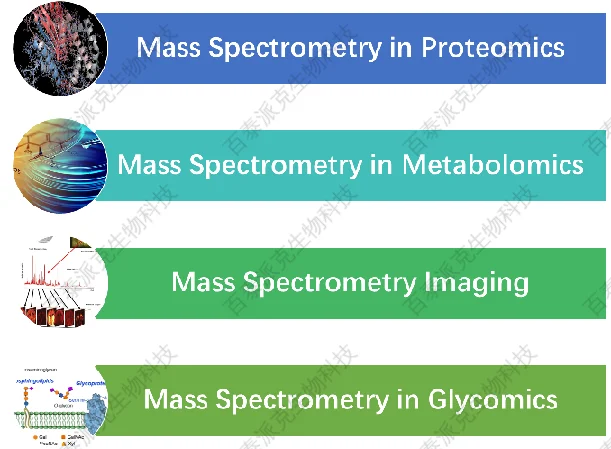
Applications of Mass Spectrometry
Mass Spectrometry in Proteomics
Mass spectrometry technology has become a powerful tool in proteomics research for accurately determining the molecular mass and sequence of peptides and proteins. In tandem mass spectrometry, the fragmentation of peptides and proteins provides sequence information for protein identification and the identification and localization of post-translational modifications or other covalent modifications.
Related Services
Protein Identification by Mass Spectrometry
Mass spectrometry has become the primary method for protein identification. There are two main MS-based protein identification methods, including de novo sequencing and peptide mass fingerprinting (PMF) database search. Ultimately, computational methods are used to identify proteins from the captured mass spectrometry peaks, where each peak theoretically represents a peptide ion.
Related Services
Protein Mass Spectrometry Identification
Quantitative Proteomics by Mass Spectrometry
Proteomics research often requires protein expression levels. With the advent and development of mass spectrometry technologies, we can learn more reliable and dynamic methods to analyze differential protein expression. Quantitative proteomics can be divided into relative quantification and absolute quantification. Relative quantification aims to study the differences in proteome expression under different conditions, where stable isotope labeling and label-free quantification are two main methods. Absolute quantification refers to obtaining specific expression levels of proteins. Some commonly used methods for protein quantification include iTRAQ (isobaric tags for relative and absolute quantification), SILAC (stable isotope labeling by amino acids in cell culture), ICAT (isotope-coded affinity tag), and label-free quantification, among others.
Related Services
Quantitative Proteome Analysis
Mass Spectrometry Analysis of Post-Translational Modifications
Post-translational modifications (PTMs) are chemical changes to the protein structure, often catalyzed by substrate-specific enzymes. There are various types of PTMs, including phosphorylation, acetylation, and glycosylation. Mass spectrometry is considered a key technology for protein modification analysis because it can provide comprehensive information on protein modifications without prior knowledge of the modification sites. Top-down, middle-down, and bottom-up approaches are the three main MS-based strategies for PTM analysis.
Related Services
Post-Translational Modification Proteome Analysis
Mass Spectrometry in Metabolomics
Metabolites are small molecules necessary for cell maintenance, growth, and normal function, involved in general metabolic reactions. Metabolomics is the identification and quantification of all metabolites in a biological system. MS and nuclear magnetic resonance (NMR) are commonly used tools for small molecule analysis in metabolomics. MS-based metabolomics analysis can be used to study the effects of drugs, toxins, and various diseases on metabolite levels, trace metabolic pathways, and measure flux.
Related Services
Mass Spectrometry Imaging
Mass spectrometry imaging (MSI) is a technique for visualizing the spatial distribution of molecules. Mass spectrometry can obtain compounds from surface regions of micrometer size, converting the lateral distribution of compounds on surfaces (such as microelectronics and tissue sections) into images that can be correlated with optical images. Some common ionization techniques include DESI imaging, MALDI imaging, and secondary ion mass spectrometry imaging (SIMS imaging).
Mass Spectrometry in Glycomics
Glycosylation is one of the most important PTMs, with over 50% of all proteins in mammals being glycosylated. Glycomics is a subset of glycobiology aimed at identifying the structure and function of the glycome. MS-based glycomics is widely used to analyze free oligosaccharides, glycosaminoglycans, and the glycan portions of glycoproteins, proteoglycans, and glycolipids. Matrix-assisted laser desorption/ionization (MALDI) and electrospray ionization (ESI) are commonly used for glycan analysis. MS can be used as a standalone technique or in combination with separation methods such as high-performance liquid chromatography (HPLC) and capillary electrophoresis (CE).
Related Services
How to order?




