






KEGG Pathway Function Pathway Diagram
KEGG stands for Kyoto Encyclopedia of Genes and Genomes, a comprehensive database manually curated by Kanehisa Laboratories in Kyoto, Japan, since 1995. It includes information on signal pathways, genes, diseases, drugs, etc., reported in the literature, and is one of the commonly used bioinformatics databases internationally, known as a repository for 'understanding higher-order functions and utilities of biological systems.'
In molecular experiments, KEGG Pathway analysis is a major focus of research. Drawing a core pathway map related to the experiment has become a headache for many researchers. Today, I will guide you on how to use the KEGG Pathway tool to draw pathway maps.
To help you better understand the process, I will use cell apoptosis as an example to create a related signal pathway map. Suppose researchers, through western blot or mass spectrometry, detect significant changes in the expression levels of several proteins closely related to cell apoptosis under certain conditions. They can use the KEGG Pathway tool to further map the upstream and downstream relationships of these proteins in the apoptosis signaling pathway.
1. First, open the KEGG homepage: http://www.kegg.jp/, and click on the KEGG PATHWAY link in the box below.
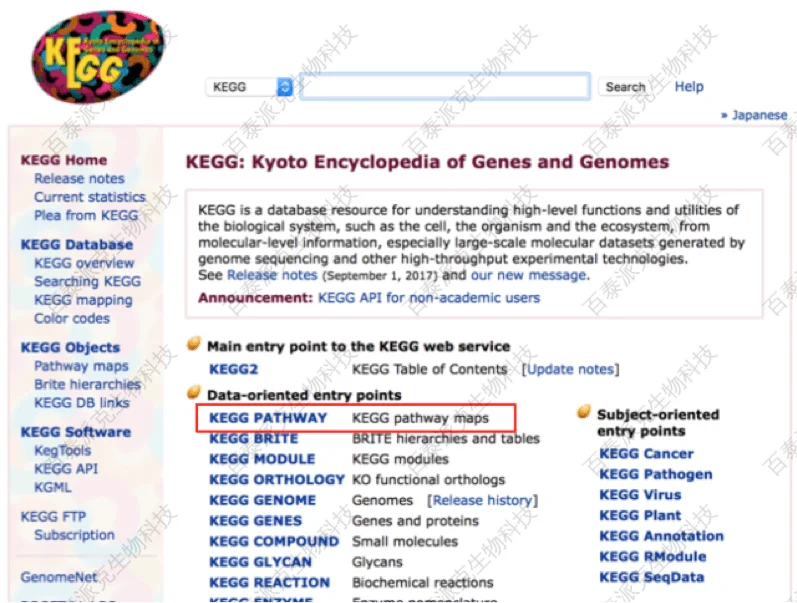
KEGG Pathway Tool for Drawing Pathway Maps - BaiTaiPike Biology
2. Enter the keyword cell apoptosis in the search box to query the content related to the cell apoptosis signaling pathway organized by KEGG.
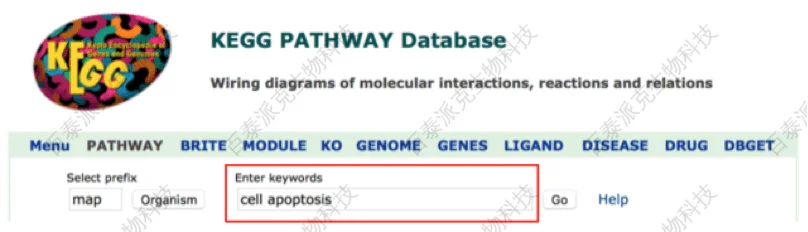
KEGG Pathway Tool for Drawing Pathway Maps - BaiTaiPike Biology
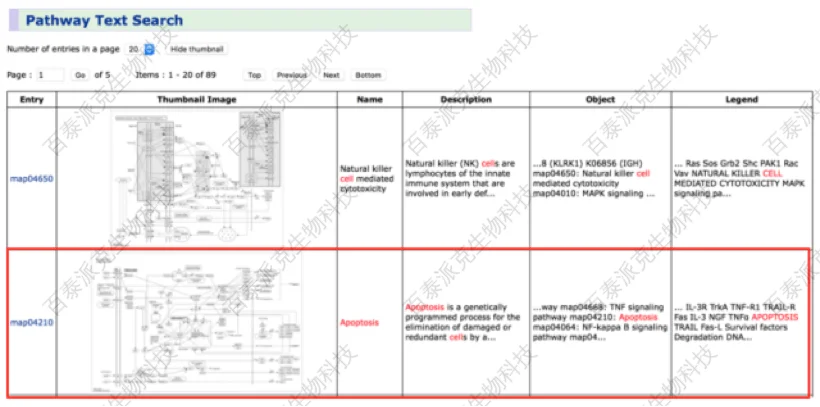
3. In the KEGG search results, select the option closest to cell apoptosis, which is apoptosis. Click on the entry for apoptosis - map04210.
4. The results show all research content related to apoptosis, including descriptions of apoptosis, proteins involved in the apoptosis metabolic pathway, and diseases related to apoptosis.
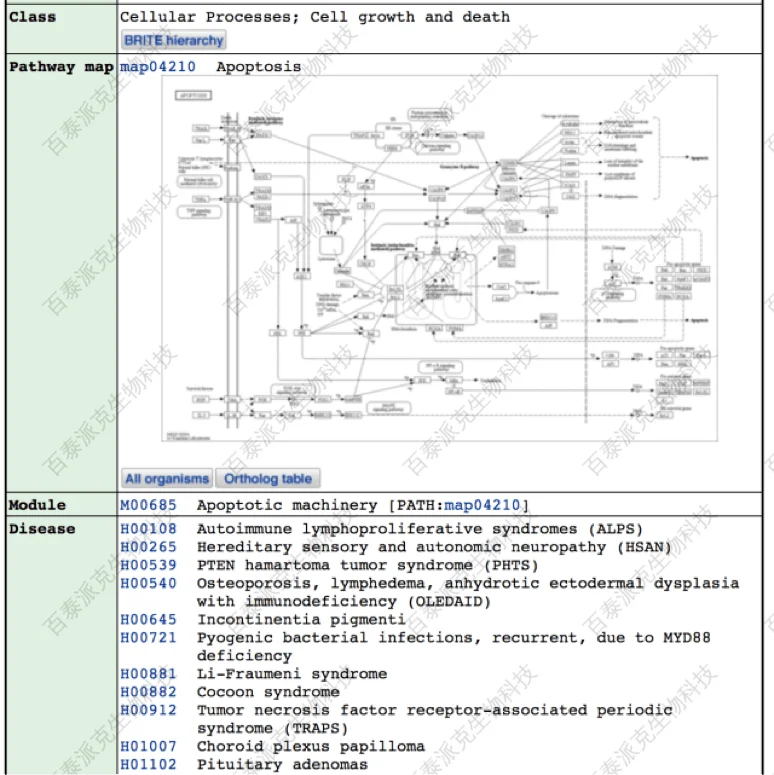
5. Click on the ortholog table below the metabolic pathway in the image above to further obtain information on all the proteins depicted in the metabolic pathway. The results include proteins such as TNFSF10, TNFRSF0, TNF, etc. Additionally, each protein has a specific KEGG identifier starting with K. For example, the protein BID has the identifier K04726, and BAX has the identifier K02159. We can look up each protein using these identifiers and edit the proteins. These identifiers will also be used in subsequent work.
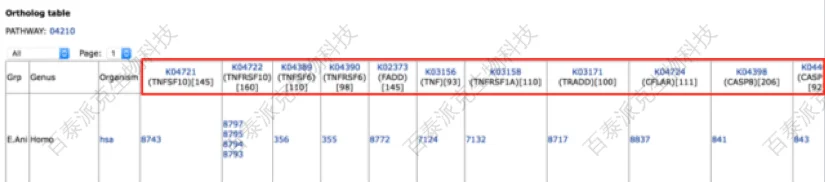
{"src" : "KEGG Pathway Tool for Drawing Pathway Maps-6.png"}

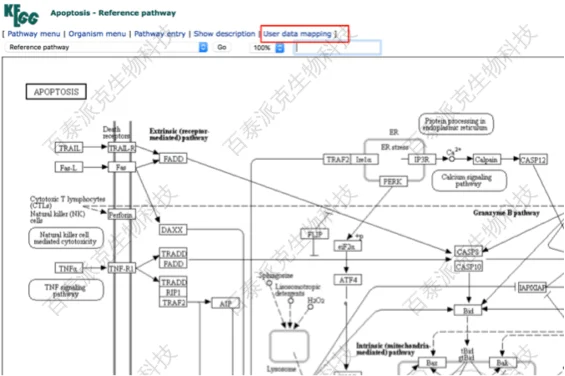
6. Return to the pathway map in Figure 4 and click on map04210, which will display the corresponding signal pathway mechanism map. This mechanism map marks proteins related to apoptosis, as well as the upstream and downstream regulatory relationships between proteins. Based on the protein expression level results from previous western blot or mass spectrometry analysis, we can use different colors to label the corresponding proteins on this map.
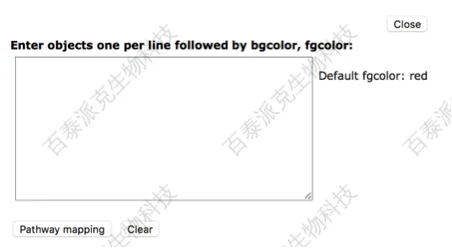
First, click on the User data mapping box below, and in the new window that appears, follow the instructions to enter the protein identifier along with the added color. For example, entering the command BID blue will mark all BID proteins in the signaling pathway as blue (here, blue represents a decrease in protein level). Of course, red can be used to represent an increase in protein level, or other colors to represent different types of post-translational modifications.
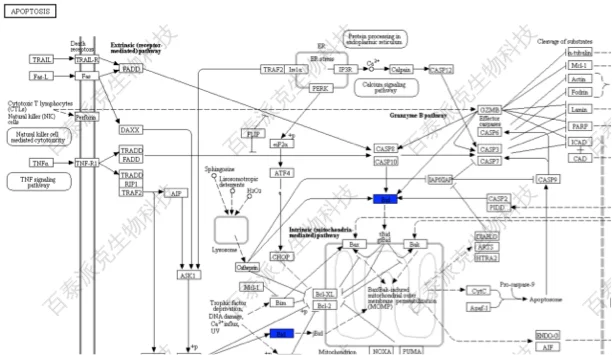
All BID proteins in the signal pathway are marked in blue. BID is just an example here. Similarly, we can label other proteins in the pathway accordingly, enabling us to create a complete dynamically regulated signal pathway map!
How to order?




