






Basic Knowledge of Protein Acetylation Modification Quantitative Analysis
Introduction
• Definition of Protein Acetylation Modification
• Function of Protein Acetylation Modification
• Regulation Process of Histone Acetylation
• Identification Process for Protein Acetylation Sites
• Quantitative Analysis Workflow of Protein Acetylation Proteomics
After translation in cells, proteins undergo a crucial processing step before being transported to specific organelles and performing specific biological functions, which is post-translational modification. The role of post-translational modification mainly includes changing protein activity, localization, or function. This process further increases the diversity and complexity of cellular pathways and life activities. Common post-translational modifications include phosphorylation, acetylation, glycosylation, and ubiquitination. In this issue, we will focus on acetylation.
Protein Acetylation Modification
Protein acetylation modification, as the name implies, refers to the addition of an acetyl group to proteins. In cells, acetylation reactions are catalyzed by acetyltransferases, transferring the acetyl group from acetyl-CoA to lysine residues on proteins. Initially, acetylation was considered a post-translational modification unique to eukaryotic cells, until it was later found in prokaryotic cells as well. Therefore, acetylation is a type of post-translational modification common to both prokaryotic and eukaryotic organisms.
Functions of Protein Acetylation Modification
Current research on the functions of acetylation is mainly focused on transcriptional regulation and metabolic pathway regulation. Among the many acetylated proteins, histones surrounding DNA in the nucleus are the most studied. Histones and DNA form nucleosomes, and histone methylation and acetylation can regulate the tightness of DNA winding, thereby controlling gene expression. Thus, post-translational modification of histones is an important part of epigenetic research. Additionally, acetylation is widespread in various human metabolic enzymes and participates in regulating metabolic pathways and enzyme activity. In metabolic organs like the liver, many metabolic enzymes are highly acetylated. Therefore, researching new acetylation sites and acetylation proteomics can provide important insights into the causes of various diseases and open new avenues for drug development.
Regulation Process of Histone Acetylation
Inside the nucleus, histone acetylation and deacetylation are dynamically balanced, regulated by histone acetyltransferase (HAT) and histone deacetylase (HDAC). HAT transfers the acetyl group from acetyl-CoA to specific lysine residues on the histone's amino-terminal. Once histones are acetylated with negative charges, they repel the negatively charged DNA, making the DNA winding looser and enabling transcription factors to bind and initiate gene expression. Conversely, HDAC removes the acetyl group, promoting tighter binding of negatively charged DNA, making the nucleosome more compact, and inhibiting gene transcription.
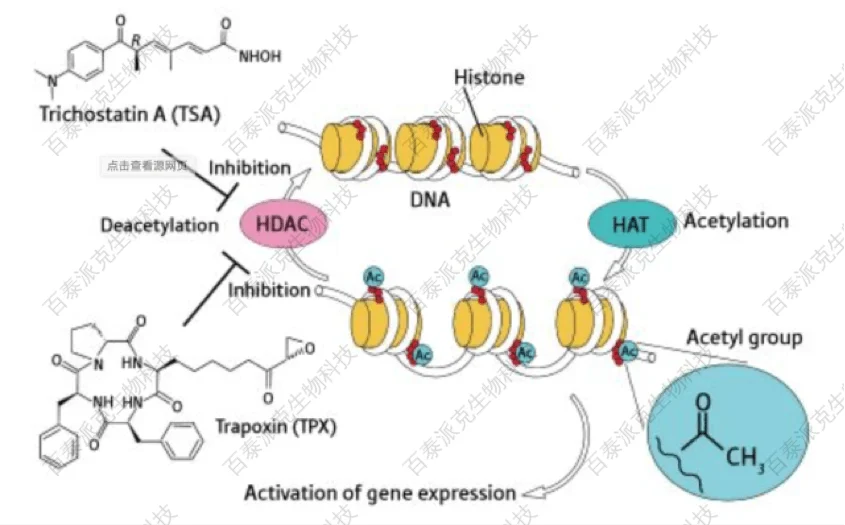
Regulation of Histone Acetylation
Protein Acetylation Identification
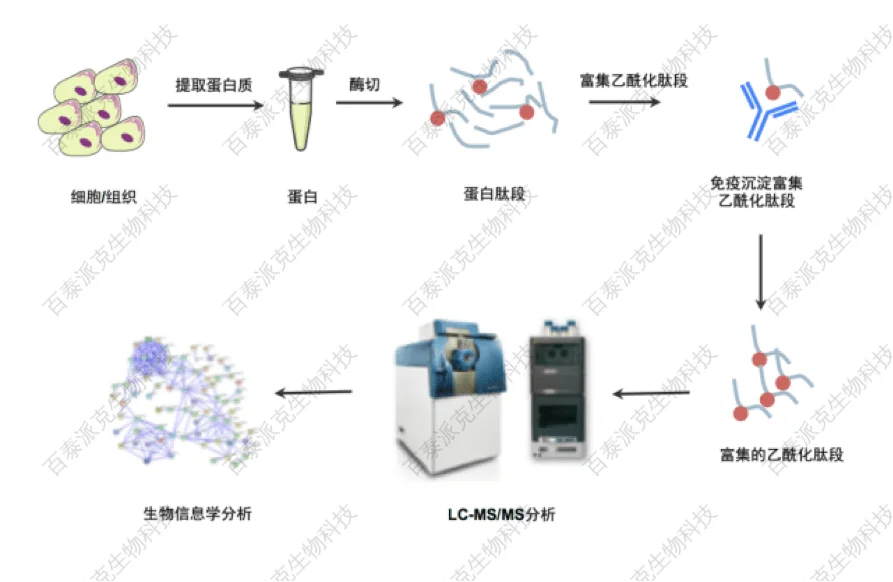
Identification of Protein Acetylation Sites
Protein Acetylation Identification Process
1. Tissue/cell lysis, extraction, and purification of target proteins
2. Use trypsin to digest target proteins into peptide fragments
3. Use highly specific acetylation antibodies for immunoenrichment of acetylated peptides
4. Use LC-MS/MS to identify and analyze the enriched acetylated peptides
5. Data analysis and interpretation of the biological functions of identified acetylation sites.
With the development of proteomics research, we increasingly realize that the regulation and management of life activities are closely related not only to the modification state at the individual protein level but more importantly to the dynamic changes of post-translational modifications at the proteomics level. High-quality, efficient protein post-translational modification enrichment techniques and precise quantitative methods have made it possible to study the proteomics level of post-translational modifications. Using these omics research methods, we can quantitatively compare the post-translational modification levels in biological samples under different physiological and pathological states, revealing the close relationship between the fluctuations in post-translational modification levels and life activities.
In addition to analyzing single protein acetylation sites, we can also use iTRAQ, SILAC quantitative proteomics labeling to achieve quantitative analysis of acetylation proteomics. This allows for the comparison of acetylation levels of various proteins in two biological samples, providing strong support for discovering new acetylation targets and protein biomarkers.
Quantitative Analysis of Protein Acetylation Proteomics
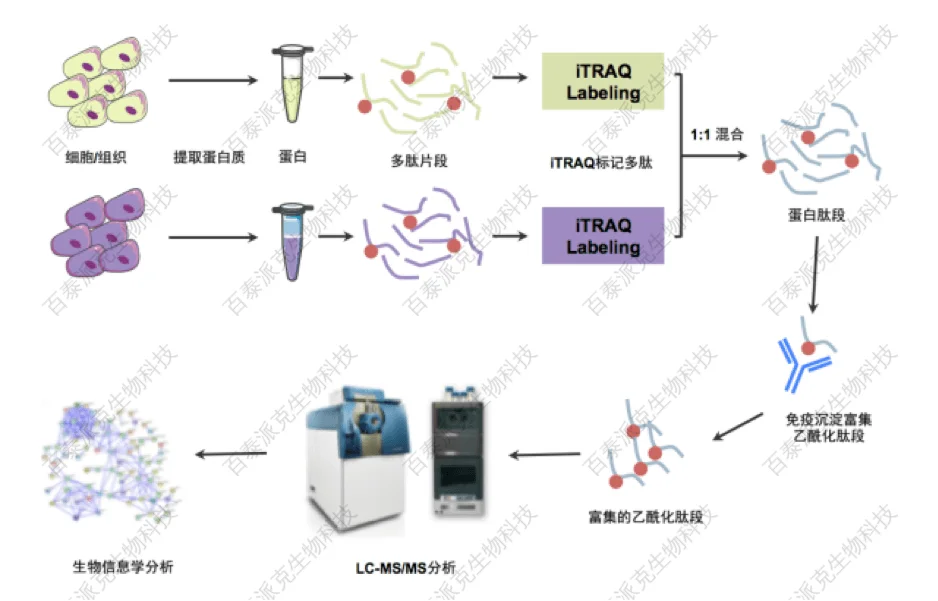
Quantitative Analysis of Acetylation Proteomics Based on iTRAQ Technology
Quantitative Analysis Workflow of Protein Acetylation Proteomics
1. SILAC cell labeling, tissue/cell lysis, extraction, and purification of target proteins (SILAC-based acetylation proteomics quantitative analysis)
2. Use trypsin to digest target proteins into peptide fragments
3. Perform iTRAQ labeling on peptide fragments (iTRAQ-based acetylation proteomics quantitative analysis)
4. Use highly specific acetylation antibodies for immunoenrichment of acetylated peptides
5. Use LC-MS/MS for sequence analysis of the enriched acetylated peptides
6. Data analysis, compare differences in protein acetylation levels between different samples, and interpret the biological significance of the changes.
How to order?




