






Precautions for Sample Preparation Before Protein Mass Spectrometry Identification
With the development of high-resolution mass spectrometry analysis technology, protein mass spectrometry identification methods have become quite mature. Identifying multiple protein samples and low-abundance protein samples in one go is no longer a difficult task. However, due to the high sensitivity of mass spectrometry, the introduction of foreign proteins can cause false positives in mass spectrometry identification. Therefore, it is important to avoid introducing external protein contaminants during the preparation of protein samples. Additionally, compatible solutions and reagents with mass spectrometry detection should be used during protein sample preparation, which can greatly improve the accuracy of mass spectrometry identification. In this issue, we will introduce some key considerations for protein sample preparation before mass spectrometry identification.
1. Protein sample preparation and mass spectrometry identification process
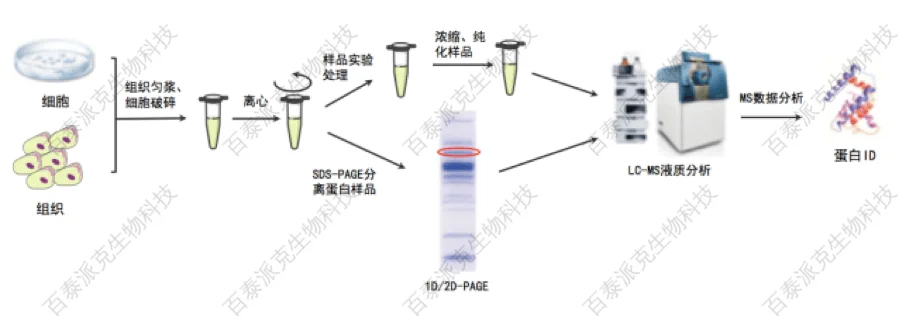
General process of protein mass spectrometry analysis
General process of protein mass spectrometry identification
1. First, the cell or tissue samples are disrupted, with many methods available. Most cells can be lysed using common cell lysis reagents, such as RIPA buffer, with the addition of protease inhibitors and reducing agents. Tissues can be disrupted by methods like low-temperature homogenization or liquid nitrogen freezing and grinding.
2. Subsequently, centrifuge at 12,000 rpm at 4 degrees for 10 minutes to remove insoluble cellular components.
3. Liquid protein samples can be enriched, purified, and processed with antibodies, and the target proteins can be concentrated for detection; alternatively, 1D/2D-PAGE gels can be used to separate proteins.
4. The concentrated liquid protein is digested enzymatically and then analyzed using LC-MS/MS; protein gel samples require the protein bands matching the target protein's molecular weight to be cut out, followed by in-gel digestion and mass spectrometry analysis.
5. Analyze the data obtained from mass spectrometry identification to obtain high-confidence protein peptide sequences, and then compare with protein databases to obtain protein IDs.
2. Types of samples
Cell samples: animal cells, plant cells, and microbial cells such as fungi and bacteria.
Tissue samples: animal tissues, plant tissues.
Body fluid samples: serum, plasma, urine, etc.
3. Sample amount

4. Precautions
4.1. Concentrating samples:
Protein samples can be concentrated using various methods such as precipitation, membrane separation, chromatography columns, or freeze-drying. Users should choose an appropriate method according to the sample characteristics. Proteins can be eluted from the chromatographic matrix using SDS sample buffer, thus keeping the sample volume small.
4.2. Electrophoresis gel:
For SDS-PAGE, traditional Laemmli, Tricine gels, and various modified gels such as two-dimensional or Tris-HCl gels are compatible with protein identification. There are no restrictions on various gel concentrations. Users should choose the gel type and concentration based on the best separation effect for the sample.
4.3. Protein gel staining:
• Coomassie Blue, SYPRO Ruby, and Silver stain samples can all be used for protein identification experiments.
• Silver-stained samples may not be compatible with subsequent mass spectrometry analysis. We recommend using the following products or experimental steps for silver staining experiments:
ProteoSilver Plus, Sigma (Product # PROTSIL1 or PROTSIL2)
Dodeca Silver Stain, BioRad (Product # 161-0481 or 161-0480)
• Additionally, do not destain silver-stained samples.
4.4. Liquid samples:
During sample preparation, minimize the use of surfactants like SDS and reduce salt concentration. If submitting IP elution samples, we recommend using the HPH EB (0.5 M NH4OH, 0.5 mM EDTA) buffer system for the last step of protein elution to ensure compatibility with subsequent mass spectrometry experiments.
4.5. Cutting protein bands:
During the cutting process, avoid direct contact with hands, light boxes, or any other potential keratin contamination sources. When cutting protein gel bands, try to avoid cutting blank gel areas (which might reduce digestion efficiency and peptide recovery rates). Place each gel band in a clean 1.5 mL microcentrifuge tube and carefully label each sample.
How to order?




