






Introduction to Protein Phosphorylation Identification Techniques
After protein expression, before they exert their true function, they undergo various post-translational modifications, such as phosphorylation, acetylation, glycosylation, and other group modifications. This article mainly discusses two methods for studying protein phosphorylation modifications: Western Blot and mass spectrometry.
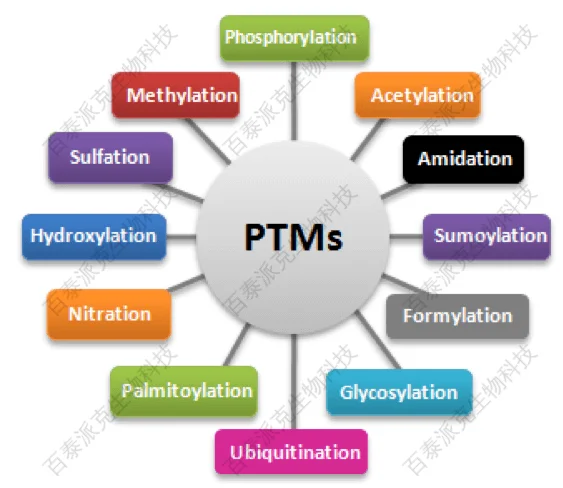
Types of Protein Post-Translational Modifications
Protein Phosphorylation Modification Process
The process of protein phosphorylation modification is catalyzed by protein kinases, transferring a phosphate group from ATP to the serine, threonine, or tyrosine residues of the polypeptide substrate. The phosphorylation process is reversible, with dephosphorylation reactions catalyzed by protein phosphatases.
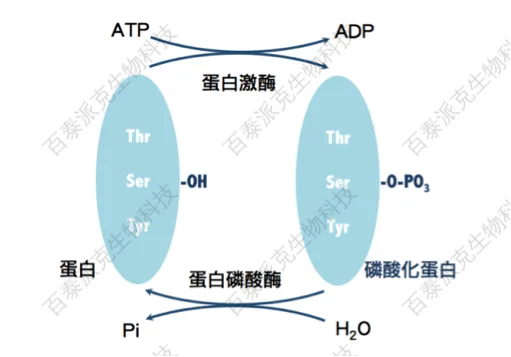
Reaction Process of Protein Phosphorylation Modification
Methods for Detecting Protein Phosphorylation
Currently, there are many methods for detecting protein phosphorylation. This article focuses on explaining two methods for detecting protein phosphorylation: Western Blot and mass spectrometry analysis.
1. Western Blot Detection Method
Western Blot is a common method for detecting protein phosphorylation levels. The main process involves first using SDS-PAGE to separate proteins, then transferring them to a PVDF membrane, and finally using antibodies that specifically recognize phosphorylated proteins to identify the target protein's phosphorylation level. Only proteins modified by phosphorylation will show specific protein bands at the corresponding molecular weight.
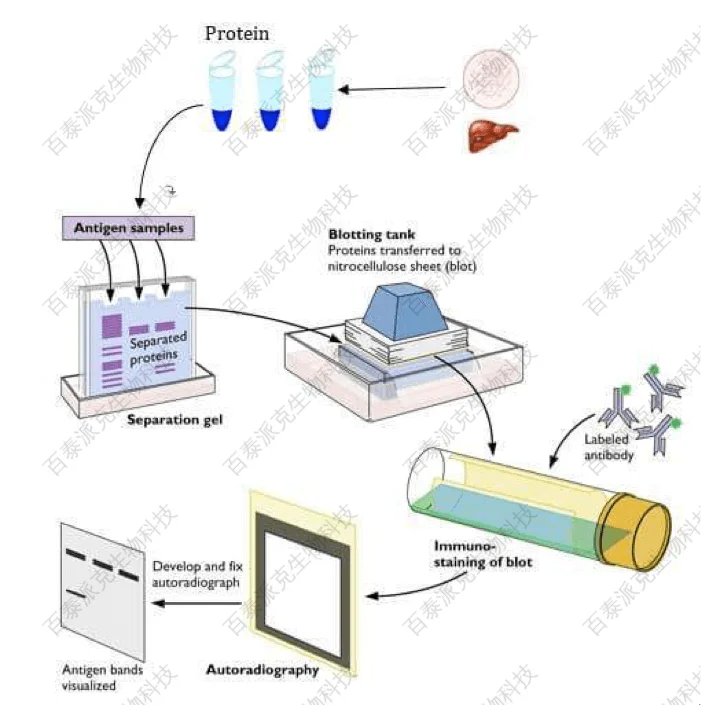
Western Blot Experimental Process
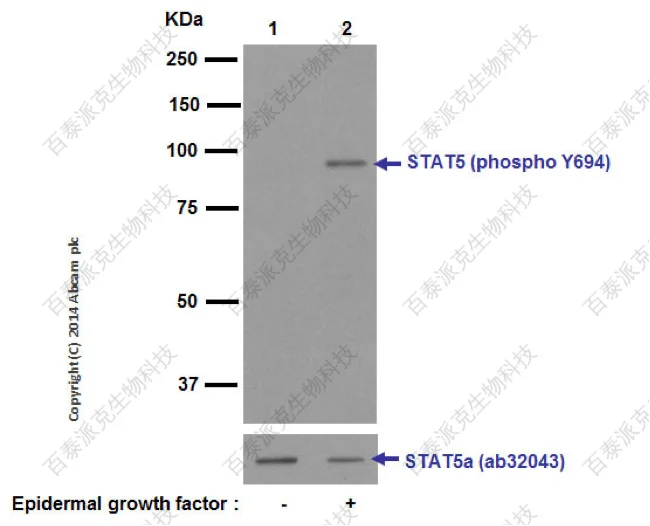
Results of Western Blot Protein Phosphorylation Detection
Advantages of Western Blot Detection Method:
1. The WB method is simple, and most laboratories have the equipment necessary for Western Blot.
2. Many phosphorylation antibodies are highly sensitive, capable of detecting protein samples as low as 10 µg.
3. For proteins with low abundance, one can enrich the target protein using IP with specific antibodies before conducting WB to detect phosphorylated proteins, thus increasing detection efficiency by several folds.
Disadvantages of Western Blot Detection Method:
1. It is challenging to prepare specific phosphorylation antibodies, and detecting phosphorylation at many specific sites is limited.
2. The measured phosphorylation levels are affected by sample handling and loading errors on the gel.
3. Obtaining information on multiple phosphorylation sites of proteins simultaneously is limited.
2. Mass Spectrometry Detection Method
While the Western Blot method is simple, it is not suitable for large-scale analysis of complex biological samples' phosphorylation levels. Mass spectrometry, however, can effectively address this issue. With the help of high-precision mass spectrometers, it is now very easy to quickly and accurately analyze the phosphorylation modifications of high-abundance proteins in cells. The specific detection method involves first separating target proteins using SDS-PAGE or 2D-PAGE gels, cutting out the bands containing the target proteins, digesting with trypsin, and analyzing protein sequences and corresponding phosphorylation sites using LC-MS/MS. This method is suitable for simultaneously detecting the phosphorylation levels of multiple target proteins. In addition, for target proteins with relatively low phosphorylation abundance, methods like immobilized metal affinity chromatography (IMAC) can be used to enrich phosphorylated peptides, followed by mass spectrometry analysis.
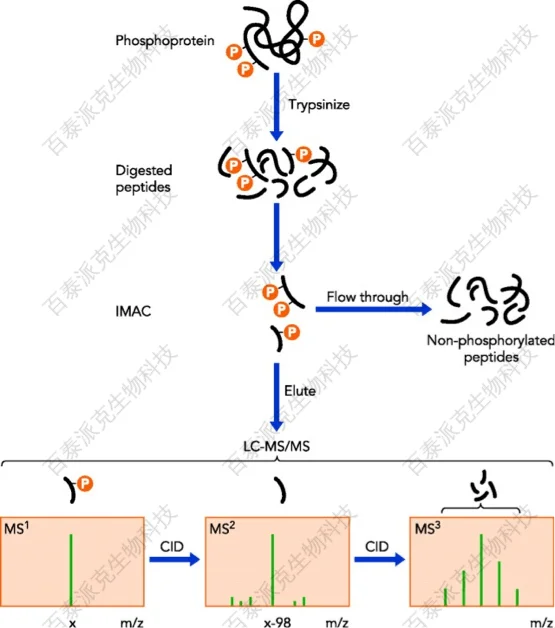
Enrichment and Mass Spectrometry Detection of Phosphorylated Proteins
Advantages of Mass Spectrometry Detection Method:
1. High precision, capable of simultaneously detecting multiple phosphorylation sites of multiple proteins.
2. Suitable for large-scale analysis of protein phosphorylation levels.
3. Does not rely on phosphorylation antibodies.
Disadvantages of Mass Spectrometry Detection Method:
1. Higher equipment requirements, typically requiring professional mass spectrometry analysis institutions.
2. The analysis of sequencing results is relatively complex and requires professional analysis software and bioinformatics platforms.
In practical applications, both Western Blot and mass spectrometry have their advantages, and neither can completely replace the other. Therefore, when choosing to determine phosphorylation modifications, one should decide based on specific needs. If there is a commercially available phosphorylation antibody for the protein under study, then lucky you, you can choose Western Blot for quick phosphorylation research. However, if there is no available commercial phosphorylation antibody for your protein, or if the antibody efficacy is too low, or if large-scale detection of intracellular phosphorylated proteins is required, mass spectrometry would be a better choice.
How to order?




