






Protein Phosphorylation Modification Categories, Enrichment, and Identification Methods
Introduction
• What is protein phosphorylation modification?
• What are the types of protein phosphorylation modification?
• What are the methods for identifying protein phosphorylation?
• What are the enrichment methods for phosphorylated peptides?
In the life cycle of mammalian cells, approximately one-third of proteins undergo phosphorylation modification. In vertebrate genes, about 5% of genes encode protein kinases and phosphatases that are involved in the phosphorylation and dephosphorylation processes. It can regulate various life processes such as growth, development, stress response, and disease occurrence by stimulating and regulating multiple signaling pathways, making it a major focus and hotspot in biological research.
1. Protein Phosphorylation
Protein phosphorylation refers to the process in which a phosphate group (P04) from ATP or GTP is transferred to different types of amino acids (mainly including serine S, threonine T, and tyrosine Y) under the catalytic action of kinases, thereby causing post-translational modification of proteins.
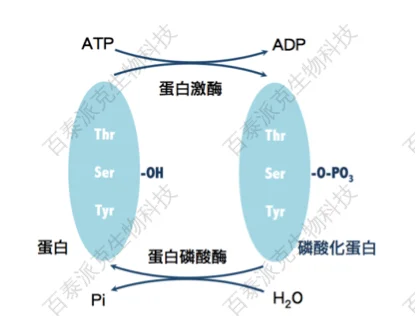
Figure 1. Protein Phosphorylation Modification Reaction
2. Types of Phosphorylation Modification
According to the different phosphorylated amino acid residues, phosphorylated proteins can be divided into four categories: O-phosphoproteins, N-phosphoproteins, acyl phosphate proteins, and S-phosphoproteins.
• O-phosphoproteinsFormed by the phosphorylation of hydroxy amino acids such asserine, threonine, or tyrosine.
• N-phosphoproteinsFormed by the phosphorylation ofarginine, lysine, orhistidine.
• Acyl phosphate proteinsFormed by the phosphorylation ofaspartic acidor glutamic acid
.• S-phosphoproteinsFormed by the phosphorylation ofcysteine
.
3. Methods for Identifying Protein Phosphorylation
1. Western Blotting
Immunoblotting is a biochemical analysis method developed based on gel electrophoresis and solid-phase immunoassay technology, which uses the specific reaction between a particular antigen and antibody to detect a specific protein in complex samples.
Technical Advantages
• High detection specificity
• Ability to specifically identify individual phosphorylation sites
• Phosphorylation identification is limited by phosphorylation antibodies; it is challenging to prepare highly specific phosphorylation antibodies, and newly discovered phosphorylation sites often lack effective detection antibodies
2. Isotope Labeled Method Combined with Immunoblotting
The principle of this method is that when proteins are phosphorylated, the incorporation of radioactive 32P and molecular weight changes can cause gel shifts, which can then be detected through immunoblotting to identify phosphorylated proteins.
Technical Advantages
• Sensitive and intuitive detection technique
• Commonly used for detecting in vitro phosphorylation reactions
• Phosphorylation identification is not limited by antibodies
• Capable of analyzing multiple protein phosphorylations simultaneously
3. Mn2+-Phos-tag SDS-polyacrylamide gel electrophoresis
Mn2+-Phos-tag SDS-polyacrylamide gel electrophoresis uses a dinuclear metal complex (like Mn2+) attached to the acrylamide molecules to bind phosphate groups, causing migration retardation of phosphorylated proteins. The proteins are then transferred to a PVDF membrane and detected using appropriate antibodies based on migration retardation.
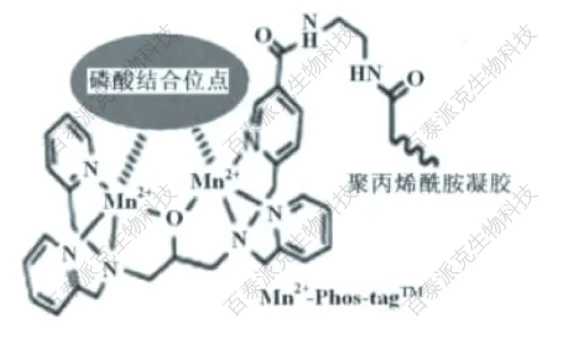
Figure 2. Mechanism of Acrylamide-Linked Phos-tag
Technical Advantages
• No radioactive hazards
• Identification is not restricted by antibodies that specifically recognize protein phosphorylation
• Suitable for large-scale analysis of phosphorylated proteins
• Compatible with mass spectrometry for more detailed analysis and identification
4. Mass Spectrometry
In mass spectrometry analysis, components of the sample are ionized to form ions with different mass-to-charge ratios, which are then accelerated to form an ion beam that enters the mass analyzer. Under the magnetic field in the mass analyzer, ions with the same mass-to-charge ratio are focused at the same point, while ions with different ratios are focused at different points, resulting in a mass spectrum that distinguishes ions with different mass-to-charge ratios. Compared to unmodified peptides, peptides modified with phosphate groups will have an increased relative molecular mass of 79.983, allowing them to be distinguished from unmodified peptides in the mass spectrum.
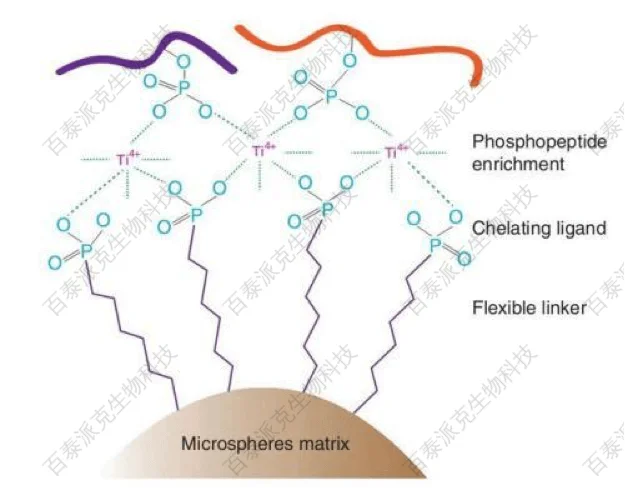
Figure 4. Principle of TiO2 Enrichment for Phosphorylated Peptides
Solid-phase Metal Affinity Chromatography (IMAC)
Solid-phase metal ion affinity chromatography utilizes the high affinity between phosphate groups and immobilized metal ions to effectively adsorb phosphorylated groups, thus achieving the enrichment of phosphorylated peptides. The metal ions chelated on the substrate are usually Fe3+ or Ga3+, which can selectively bind to the phosphate parts in phosphorylated peptides, and phosphorylated peptides can be released in a high pH or phosphate buffer. However, this method cannot effectively enrich phosphorylated peptides that do not bind to IMAC.
pY-1000 Motif Antibody Enrichment
High-affinity antibodies can immunoprecipitate specific proteins from complex mixtures, selectively separating phosphorylated proteins. Among these, monoclonal antibodies for tyrosine-phosphorylated proteins are known to be excellent for detecting phosphorylated proteins, with strong affinity, effectively immunoprecipitating tyrosine-phosphorylated proteins. Although the relative proportion of tyrosine phosphorylation is extremely low, only accounting for 1% of the phosphoproteome, it is crucial in cancer research and cell signal transduction. The aforementioned TiO2 and IMAC methods struggle to enrich this type, and currently, using motif antibodies to immunoenrich tyrosine phosphorylation at the peptide level is the preferred method for analyzing this phosphorylation.
How to order?




