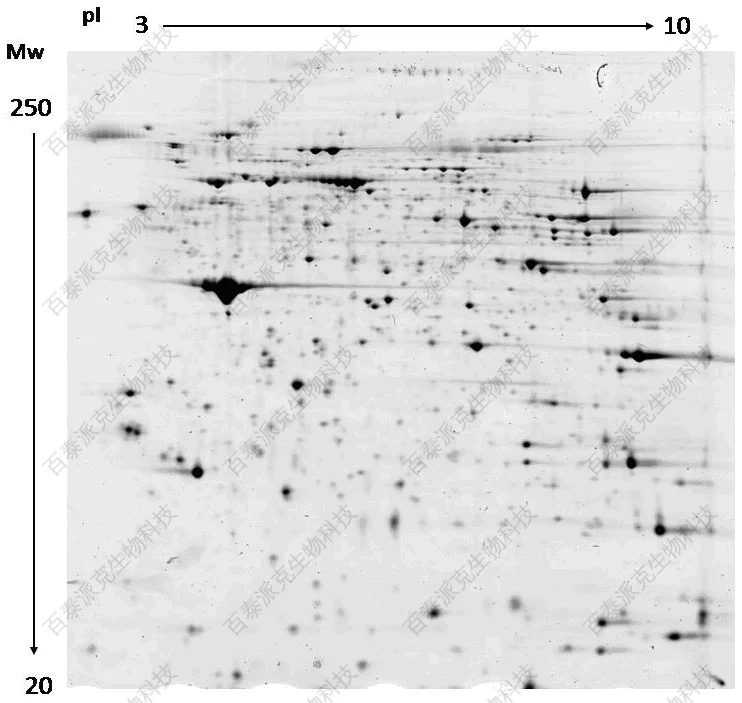
In two-dimensional gel electrophoresis, the most critical and demanding part is the analysis of the obtained protein images. The image information will be compared and analyzed automatically. Comparing two-dimensional gel images is used to detect qualitative and/or quantitative changes in protein expression between individual samples or different groups. Imaging analysis of two-dimensional gels can provide various types of information to detect novel, missing, or modified proteins, quantify protein spots, determine the pI and Mr values of protein spots, and assist in enzymatic digestion and mass spectrometry detection.
Protein Image Analysis
To analyze and compare complex two-dimensional images, a scanner or camera is used to convert the gel image information into digital data for in-depth analysis using computer software. During the image analysis process, a pixel size of typically 100 mm is used for scanning. Higher pixel resolutions do not improve the quality of image analysis; instead, they result in image files that are too large to process within a reasonable time and occupy a significant amount of hard disk space.