






Mass Spectrometry for Protein Content Measurement
Protein is the foundation of maintaining human health. It is not only an essential substance for life but also a crucial element in promoting normal physiological and chemical reactions and maintaining the normal operation of life. With the improvement of living standards, people are increasingly supplementing their nutrition through protein intake. Therefore, establishing a scientific, quick, and accurate method for protein content determination has significant practical significance. In addition, changes in protein content are also related to the occurrence and development of certain diseases, making protein content determination important in biological research and clinical diagnosis.
There are various methods for determining protein content. Traditional methods such as the BCA method and the Lowry method have shortcomings like low sensitivity, complex operation, and susceptibility to interference. In recent years, with the continuous advancement of mass spectrometry (MS) technology, the use of mass spectrometry for determining protein content has become quite common. As an analysis technique based on protein molecular mass, due to its high sensitivity, high resolution, and high throughput, mass spectrometry has become one of the mainstream methods in the field of protein content determination.
The basic principle of mass spectrometry for determining protein content is to convert protein samples into gaseous ions and then use a mass spectrometer for mass analysis of the ions. The ion source in the mass spectrometer converts the protein sample into charged ions, which are separated under the influence of electric and magnetic fields. Finally, the detector detects the ion signals to obtain the mass information of the protein.
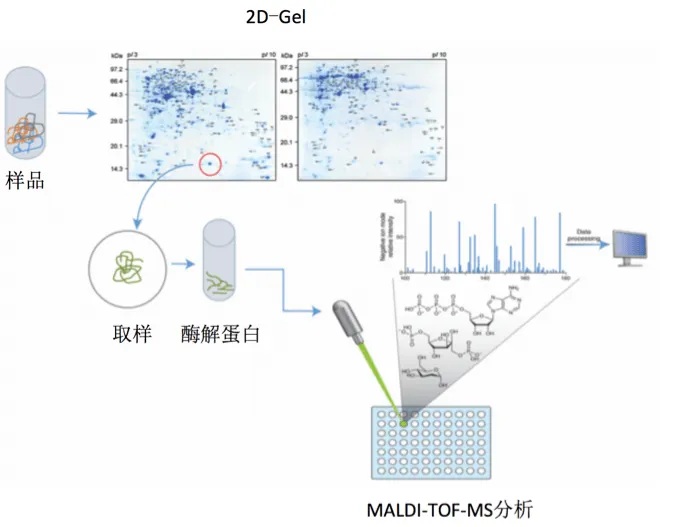
Figure 1: General process of mass spectrometry technology
There are various methods available for protein content determination using mass spectrometry, among which MALDI-TOF-MS and ESI-MS are commonly used. MALDI-TOF-MS is a mass spectrometry technology based on the time-of-flight principle, suitable for analyzing proteins with larger molecular weights, and has the advantages of high sensitivity and rapid analysis. ESI-MS is a mass spectrometry technology based on electrospray ionization of samples, suitable for high-throughput quantitative protein analysis, with high accuracy and sensitivity.
BTP BioScience, based on the dual quality certification system of CNAS/ISO9001, has established seven major testing platforms, combining multiple analytical platforms like chromatography, spectroscopy, and biochemistry, to efficiently and accurately analyze the protein content of biological products. Additionally, BTP BioScience also provides other services related to the characterization of biological products. You can click on related services to learn more.
BTP BioScience - a premium service provider for biological product characterization and multi-group biological mass spectrometry detection.
Related services:
Analysis of other process-related impurities
Analysis of product-related impurities
Protein purity analysis (size-exclusion/reverse-phase chromatography)
Host Cell Protein (HCP) analysis service
Protein content determination based on amino acid analysis
Protein content determination based on colorimetric analysis
How to order?




