






The Importance and Application of p-value Adjustment in Proteomics Differential Analysis
Proteomics is the scientific field that studies the complete set of proteins within a biological organism, focusing on their composition, structure, and function. In proteomics research, differential analysis is a crucial step that helps us identify differences in protein expression between different samples. The p-value is a commonly used statistical indicator in differential analysis, which can assess whether the observed differences are statistically significant. This article will highlight the importance and application of the p-value in proteomics.
1. Concept and Calculation Method of the p-value
The p-value represents the probability of observing the data, or something more extreme, given that the null hypothesis is true. It reflects the significance level of the difference; the smaller the p-value, the more significant the difference. The calculation of the p-value is typically based on statistical test methods such as t-tests, analysis of variance (ANOVA), or non-parametric tests. These methods calculate the corresponding p-value based on the distribution of sample data and assumptions.
2. Interpretation of the p-value
In proteomics research, a p-value for a particular difference is typically compared to a pre-set significance level, such as 0.05 or 0.01. If the p-value is less than the significance level, we usually consider the observed difference to be statistically significant and reject the null hypothesis. Conversely, if the p-value is greater than the significance level, we cannot reject the null hypothesis, meaning the difference is not statistically significant.
However, it is important to note that the p-value does not provide the actual biological significance and importance of the difference. It is merely a statistical metric that measures whether there is enough evidence to support the difference. Therefore, when interpreting the p-value, it is necessary to integrate it with actual conditions and other biological information for a comprehensive judgment.
3. Necessity of p-value Adjustment
In proteomics research, large-scale differential analysis is often required, involving comparisons of multiple proteins. This increases the likelihood of finding false positives (type I errors). Due to the multiple hypothesis testing problem, p-values can be affected by multiple comparisons, leading to a large number of false positive differences.
To control this multiple comparison problem, p-value adjustment is necessary. P-value adjustment methods can correct the significance threshold in differential analysis, reducing the false positive rate. Common p-value adjustment methods include the Bonferroni correction, Benjamini-Hochberg method, and False Discovery Rate (FDR) control.
4. Common Methods for p-value Adjustment
The Bonferroni correction is one of the most common p-value adjustment methods, which adjusts the significance level by dividing it by the number of protein comparisons. The Benjamini-Hochberg method and FDR control are based on the principles of multiple hypothesis testing, adjusting according to the distribution of p-values in the differential analysis.
These p-value adjustment methods can control the false positive rate while improving the accuracy and reliability of differential analysis. The choice of an appropriate p-value adjustment method depends on factors such as research design, sample size, and significance requirements.
The p-value is a commonly used statistical indicator in proteomics for evaluating the significance of differences. In differential analysis, p-value adjustment is an important step to ensure the accuracy and reliability of results. By appropriately selecting and applying p-value adjustment methods, we can reduce the false positive rate and obtain more credible differential analysis results, providing important support for biomedical research and drug development.
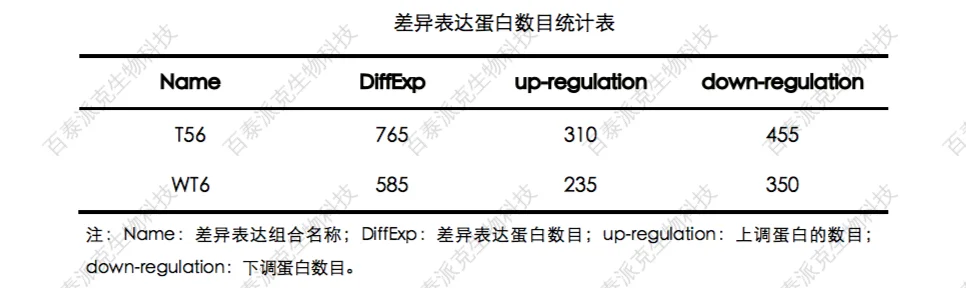
Figure 1
Biotecan Biotechnology Co., Ltd.--BiologicalProductsCharacterization, a high-quality service provider for multi-group biological mass spectrometry detection
Related services:
Statistical analysis of differentially expressed proteins
How to order?




