






How to Choose the Appropriate Polysaccharide Mass Spectrometry Identification Technique?
Polysaccharides are an important class of biomacromolecules with wide applications in the biopharmaceutical field and food industry. Accurate identification and structural analysis of polysaccharides are key steps in understanding their properties and functions. Mass spectrometry, as a powerful analytical tool, plays a vital role in polysaccharide identification. However, with numerous mass spectrometry methods available, selecting the appropriate mass spectrometry technique for polysaccharide identification has become a concern for researchers.
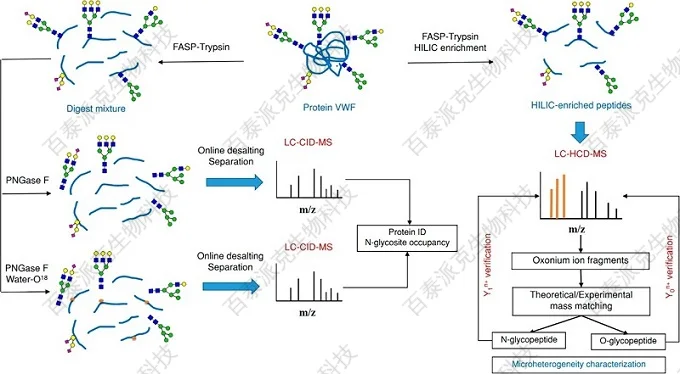
Figure 1
1.Electrospray Ionization Mass Spectrometry (ESI-MS)
Electrospray ionization mass spectrometry is a commonly used technique for polysaccharide mass spectrometry identification. It converts polysaccharide molecules in solution into charged ions for mass spectrometry analysis. This technique offers high sensitivity, a wide mass range, and good structural analysis capabilities. However, for polysaccharides with high molecular weight and complex structures, ESI-MS may encounter issues such as fragmentation and signal interference.
2.High-Resolution Mass Spectrometry (HRMS)
High-resolution mass spectrometry provides higher resolution and mass accuracy, allowing for more accurate determination of polysaccharide mass and structural information. Techniques such as time-of-flight mass spectrometry (TOF-MS) and ion mobility mass spectrometry (IM-MS) can provide more detailed molecular structure and conformation information. However, high-resolution mass spectrometry typically requires more expensive equipment and more complex data processing, which may not be suitable for researchers with limited laboratory conditions.
3.Tandem Mass Spectrometry (MS/MS)
Tandem mass spectrometry combines the advantages of multiple mass spectrometry techniques, such as liquid chromatography-mass spectrometry (LC-MS/MS) and gas chromatography-mass spectrometry (GC-MS/MS). These methods enable efficient separation and structural analysis of polysaccharides, offering high sensitivity and selectivity. However, tandem mass spectrometry requires more complex experimental operations and data analysis, which may present a learning curve for beginners.
4.Surface-Enhanced Raman Spectroscopy (SERS)
Surface-enhanced Raman spectroscopy is a non-destructive, highly sensitive technique for polysaccharide identification. It involves adsorbing polysaccharide samples onto metal nanoparticles modified with surface enhancers and analyzing them using Raman scattering signals. SERS not only provides structural information on polysaccharides but also offers advantages such as simple sample preparation and rapid analysis. However, due to the vibrational frequencies of polysaccharides and the selectivity of surface enhancement effects, SERS may exhibit varying sensitivity and feasibility for different types of polysaccharides.
Choosing the appropriate mass spectrometry technique for polysaccharide identification requires considering multiple factors, including sample characteristics, equipment availability, experimental procedures, and data analysis. In practical applications, researchers can select the suitable mass spectrometry technique based on specific needs and research objectives for polysaccharide identification and analysis. Whether using traditional ESI-MS and HRMS techniques or tandem mass spectrometry and SERS techniques, all play important roles in polysaccharide research, providing strong support for structural analysis and functional studies.
Biotic Peak Biotechnology--BiotechnologyProductsCharacterization, High-Quality Multi-Omics Mass Spectrometry Detection Service Provider
Related Services:
Glycomics Analysis Services
Glycosylation Quantitative Proteomics Research
HILIC-UHPLC Analysis of N-Glycan Bonds
Biopharmaceutical Glycan Profile Detection
4D Proteomics
Protein Structure Identification
How to order?




