






Analysis of the Role of Protein Disulfide Bonds in Cell Signaling Mechanisms
1. What are Protein Disulfide Bonds?
Protein disulfide bonds are a special type of chemical bond formed by two sulfur atoms. In living organisms, proteins are typically composed of amino acids, and cysteine is the only amino acid that contains sulfur. When the sulfur atoms of two cysteines undergo an oxidation reaction, they form a protein disulfide bond. The formation of disulfide bonds can stabilize the structure of proteins, ensuring their normal function.
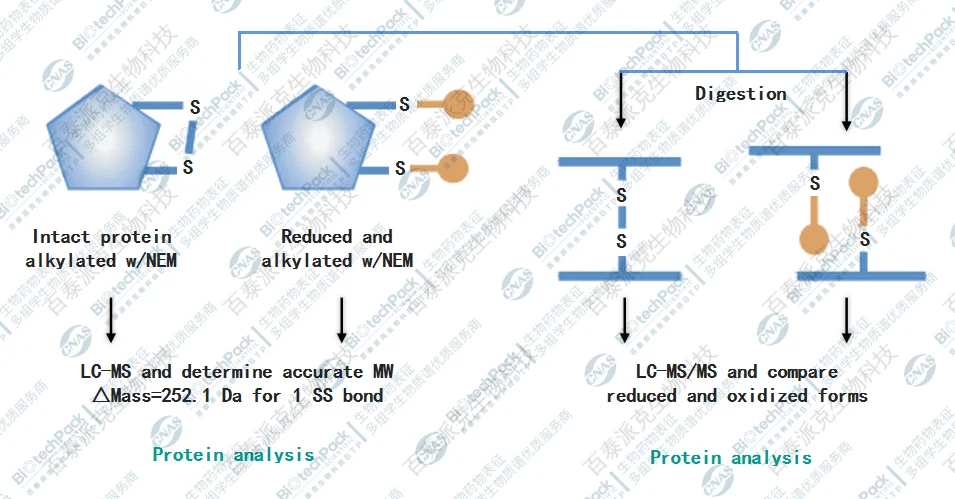
Figure 1
2. Significance of Protein Disulfide Bond Analysis
Protein disulfide bonds play a crucial role in cellular signal transduction. Many signaling molecules are composed of proteins, and the disulfide bonds in these proteins can affect the activity and stability of the signaling molecules. Therefore, analyzing protein disulfide bonds can help us better understand the mechanisms of cellular signal transduction.
3. Methods for Protein Disulfide Bond Analysis
Currently, the most commonly used methods for analyzing protein disulfide bonds are reducing protein electrophoresis and mass spectrometry.
1. Reducing Protein Electrophoresis
Reducing protein electrophoresis is a common method for protein analysis. It uses reducing agents to break the disulfide bonds in proteins, converting them to their reduced state. Then, the proteins are separated by electrophoresis, allowing the observation of differences in mobility between the reduced and oxidized states, thereby determining the number and location of disulfide bonds in proteins.
2. Mass Spectrometry
Mass spectrometry is a highly sensitive method for protein analysis that can directly detect disulfide bonds in proteins. It involves cleaving the proteins and then detecting sulfur atoms in the cleavage products to determine the number and location of disulfide bonds in proteins.
4. Application of Protein Disulfide Bond Analysis in Drug Development
Protein disulfide bond analysis has wide applications in drug development. Many drugs work by modulating cellular signal transduction, and disulfide bonds play a vital role in this process. Therefore, analyzing disulfide bonds in drugs can help us better understand their mechanisms of action, optimizing drug design and development.
Protein disulfide bond analysis plays an important role in understanding cellular signal transduction mechanisms. Currently, reducing protein electrophoresis and mass spectrometry are the primary methods used for disulfide bond analysis. This analysis is also widely applied in drug development.
Bioinformatics Services for Protein Characterization and Multi-Omics Mass Spectrometry Analysis
Related Services:
Detection of Disulfide Bonds/Free Cysteine in Biopharmaceuticals
Post-translational Modification Proteomics Analysis
Biopharmaceutical Analysis
Identification and Quantification of Protein Disulfide Bonds
Post-translational Modification Proteomics Analysis
Protein Structure Identification
How to order?




