






Revealing the Secrets of Host Cell Protein Residue Analysis: A Comprehensive Interpretation from Technical Principles to Application Prospects
In the production process of biopharmaceuticals, cell factories play a crucial role. However, host cell protein (HCP) residues potentially generated during this production process can affect the quality and safety of the drug, regardless of their quantity. Therefore, technologies for analyzing and controlling these host protein residues have increasingly attracted the attention of researchers and drug manufacturers. Here, we provide a comprehensive interpretation of the mysteries of host protein residue analysis, from technical principles to application prospects.
1. What is Host Cell Protein Residue Analysis?
Host Cell Protein (HCP) residues refer to the proteins from production cells that may be mixed into the final drug product during the biopharmaceutical production process. The analysis methods of these protein residues are known as HCP analysis. This analysis ensures the purity and safety of the drug, reducing adverse reactions caused by the drug.
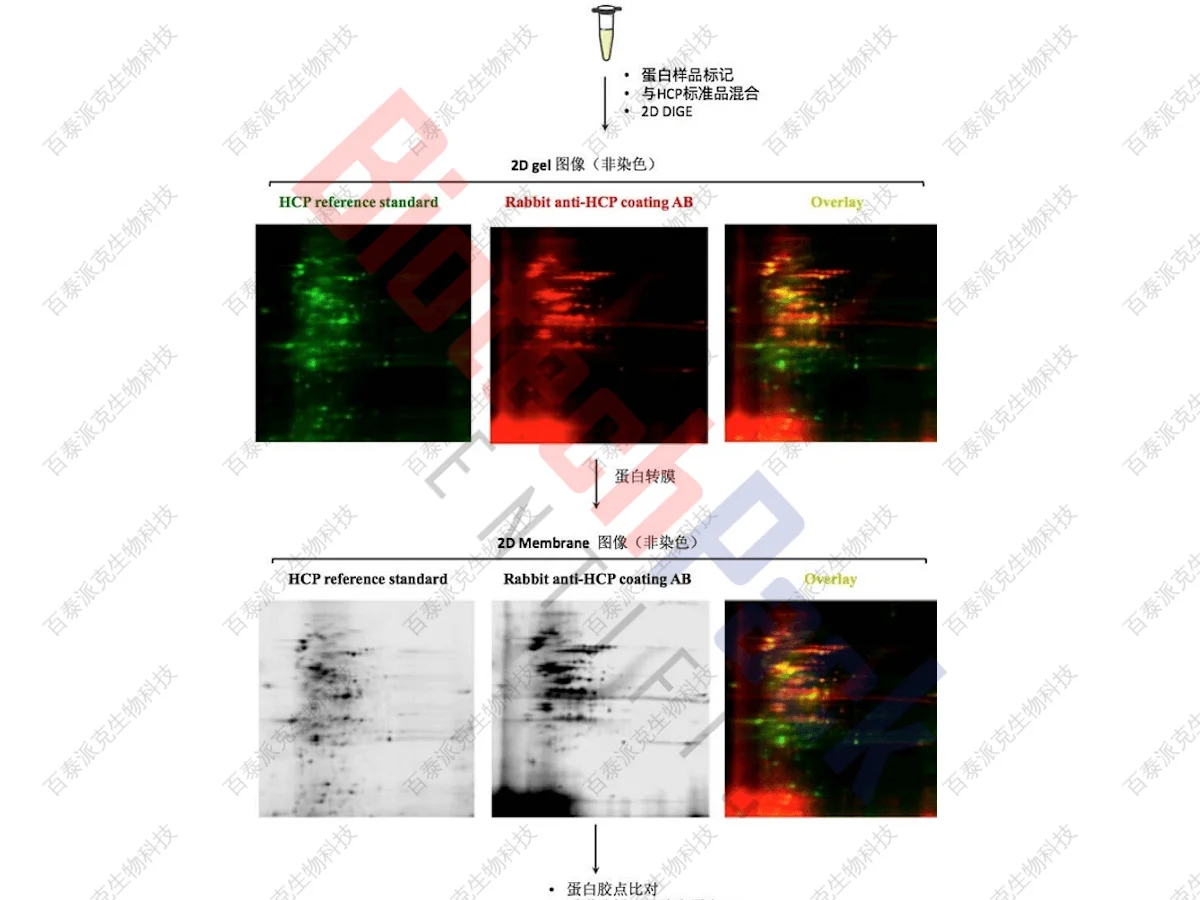
Figure 1
2. Technical Principles of HCP Analysis
HCP analysis mainly includes ELISA (Enzyme-Linked Immunosorbent Assay) and mass spectrometry technology. ELISA is an early and commonly used HCP analysis method based on antigen-antibody reactions, capable of quantitatively detecting protein content. Mass spectrometry technology can identify and quantify the type and content of proteins, which is very useful for understanding the types and amounts of HCP.
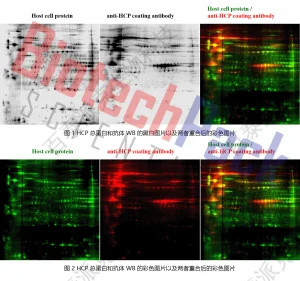
Figure 2
1. Enzyme-Linked Immunosorbent Assay (ELISA)
ELISA is a commonly used HCP analysis technique. It utilizes the specific reaction between antigens and antibodies to quantitatively detect HCP. The main steps include sample pretreatment, antigen binding, enzyme-labeled antibody reaction, substrate color reaction, and absorbance detection. Sample pretreatment is to remove substances that might interfere with the detection results; antigen binding is to form stable antigen-antibody complexes with HCP; enzyme-labeled antibody reaction results in a color change through enzyme-substrate reaction; substrate color reaction further enhances the color change; absorbance detection quantifies HCP by measuring color intensity.
2. Mass Spectrometry Technology
Mass spectrometry is a highly sensitive HCP analysis technique that primarily identifies and quantifies HCP by measuring protein mass. Its main advantages include high resolution and high sensitivity, capable of detecting protein levels as low as micrograms, and it can detect various types of proteins, not only quantifying HCP but also analyzing specific types.
The main steps of mass spectrometry include sample processing, protein sequencing, mass spectrometry analysis, and data processing. Sample processing extracts proteins; protein sequencing determines the amino acid sequence through protein digestion and mass spectrometry analysis; mass spectrometry analysis quantifies and identifies HCP by measuring protein mass; data processing identifies and quantifies HCP by comparing data in databases.
Although mass spectrometry has many advantages, it also presents challenges, such as difficulty detecting low-abundance proteins in complex samples, and high requirements for accuracy in protein identification and quantification. Nevertheless, mass spectrometry plays an important role in HCP analysis, providing a powerful tool for quality control in biopharmaceutical production.
3. Challenges and Prospects of HCP Analysis
Although we have the aforementioned technologies, HCP analysis still faces many challenges. Firstly, different cell lines produce different types of HCP, requiring the development of various antibodies and techniques for analysis. Secondly, the amount of HCP may change with production process alterations, requiring highly flexible and adaptable analysis techniques. Despite the challenges, the importance and application prospects of HCP analysis are undeniable. With the advancement of biotechnology, more efficient and precise HCP analysis technologies will be developed, which will have a significant impact on quality control in biopharmaceutical production.
BioTech Pack BioScience -- Characterization of Biologics, Premium Service Provider for Multi-Omics Mass Spectrometry
Related Services:
Biopharmaceutical Analysis
Purity Analysis
Protein Mass Spectrometry Identification
Host Cell Protein (HCP) Analysis Services
2D-DIGE Quantitative Proteomics
How to order?




