






Decoding Circular Dichroism of Denatured Proteins: Exploring the Evolution and Impact of Structural Features During Denaturation
1. Introduction
The structure of proteins plays a crucial role in their function. However, changes in external conditions (such as temperature, pH, chemicals, etc.) can cause irreversible changes in protein structure, leading to phenomena such as protein inactivation or aggregation. Circular dichroism spectroscopy after protein denaturation is a widely used technique for studying protein denaturation. By analyzing the circular dichroism characteristics of proteins under different denaturing conditions, the evolution of structural features during denaturation can be deeply understood, revealing its impact on protein function.
2. Principles and Applications
1. Basic principles of circular dichroism spectroscopy:Circular dichroism spectroscopy is a spectroscopic technique that measures the optical activity of molecules. The circular dichroism signals of proteins originate from the chiral amino acid residues' resonance absorption. By measuring the differential polarization of absorption in the ultraviolet-visible region, information about the protein's structure can be obtained.
2. Experimental design for circular dichroism spectroscopy after protein denaturation:In experiments involving circular dichroism spectroscopy after protein denaturation, it is first necessary to select appropriate denaturing conditions, such as temperature, pH, or the addition of denaturants. Then, the proteins are exposed to these conditions to induce irreversible structural changes. Subsequently, by measuring the circular dichroism signals of the denatured proteins, the evolution of their structural features can be analyzed.
3. Evolution of Structural Features and Impact
1. Changes in protein secondary structure:The secondary structure of proteins refers to the arrangement of amino acid residues, including α-helices, β-sheets, and random coils. After protein denaturation, its secondary structure often undergoes significant changes, such as the transition from α-helices to β-sheets or the partial or complete loss of secondary structure.
2. Changes in protein tertiary structure:The tertiary structure of proteins refers to the spatial arrangement of amino acid residues. During denaturation, the tertiary structure of proteins tends to be disrupted and loses its folding, leading to a disordered, partially unfolded state.
3. Impact on protein function:The structure of proteins is closely related to their function. After protein denaturation, due to structural changes and partial unfolding, the function of proteins is usually lost or significantly affected. For example, loss of enzyme activity, protein aggregation, and deposition are all closely related to protein structural denaturation.
4. Examples and Applications
1. Stability studies of protein drugs:During the preparation, transportation, and storage of protein drugs, they may be affected by various factors such as temperature changes, ionic strength, and pH. Studies using circular dichroism spectroscopy after protein denaturation can evaluate the structural stability of protein drugs under these conditions, providing a basis for quality control and determination of storage conditions.
2. Research on protein denaturation diseases:Some protein denaturation diseases, such as Alzheimer's disease, Parkinson's disease, etc., are related to abnormal folding and aggregation of proteins. Circular dichroism spectroscopy after protein denaturation can reveal abnormal structural changes in proteins in these diseases, providing clues for research into the disease mechanisms and treatment methods.
5. Conclusion
Circular dichroism spectroscopy after protein denaturation is a powerful tool for studying the evolution and impact of structural features of proteins during denaturation. By revealing changes in protein structure, we can better understand protein function and related biological processes. With continuous technological advancements, circular dichroism spectroscopy after protein denaturation will play an increasingly important role in biomedical research and drug development.
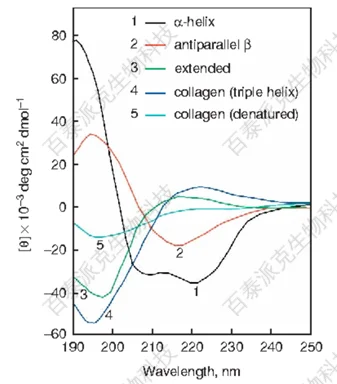
Figure 1
Bioanalysis and characterization by Biotech Co.-- Leading service provider for multi-omics mass spectrometry analysis
Related Services:
Protein circular dichroism analysis
Determination of protein primary structure
Protein secondary structure analysis
Detection of disulfide bonds/free cysteines in biopharmaceuticals
Identification and quantification of protein disulfide bonds
Protein identification
How to order?




