






How to conduct high-throughput lactylation modified proteomics detection?
Protein Lactylation revealsa novel coupling mechanism between lactate metabolism and epigenetic regulation. With the exploration of its functions in immune metabolism, stem cell differentiation, and tumor microenvironment, researchers urgently need to construct asystematic high-throughput lactylation modification detection platformto precisely capture its modification profile and dynamic changes. However, due to thelow abundance, weak specificity, and high backgroundof lactylation modifications, proteomics strategies often find it challenging to meet the demands. This article will systematically analyze how to conducthigh-throughput lactylation modificationproteomics detection, analyzing core points and optimization strategies from experimental design, sample preparation to mass spectrometry analysis and bioinformatics interpretation.
1. Project Design
High-throughput lactylation modification proteomics research usually revolves around the following questions:
1. Profiling of lactylation sites at the proteome level
2、Dynamic changes of lactylation modifications under different conditions
3、Co-regulation networks of lactylation with other PTMs
4、Functional validation of key lactylated proteins in specific pathways
Recommended Technical Path:
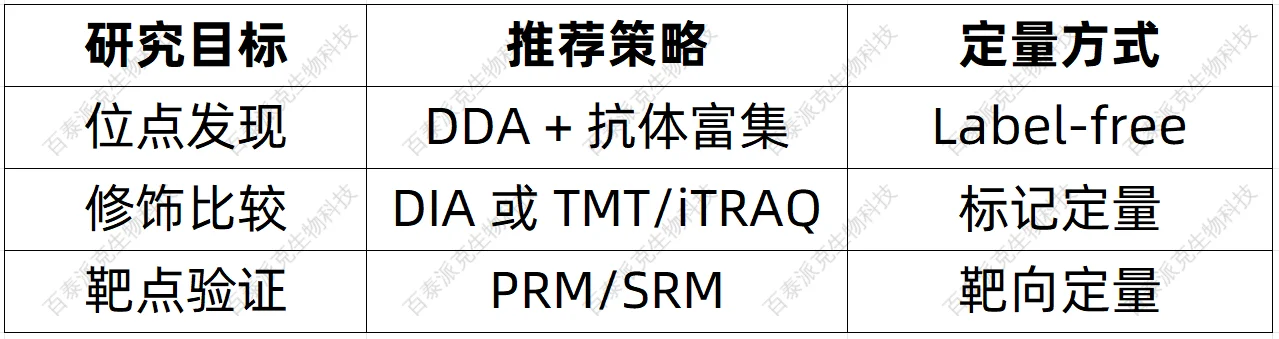
Biotechnology company BGI can provide customized experimental design and grouping strategy suggestions based on research needsto assist clients in enhancing data utilization and scientific output efficiency.2. Sample Preparation
The prerequisite for high-throughput lactylation modification proteomics detection is
consistency between samples and stability of modification states1. Recommended Sample Types:。
(1) Cell lines/tissue samples (such as tumor tissues, macrophage cell lines, etc.)
(2) Metabolically active models (such as LPS stimulation, hypoxia treatment, high lactate exposure)
2. Protein Extraction and Inhibition:
(1) Add broad-spectrum deacetylase/delactylase inhibitors (such as TSA, NAM) in lysis buffer
(2) Cold chain operations to prevent activation of modification enzymes
(3) Add protease inhibitor mixture to prevent degradation
BGI's optimized buffer system can maximize
the protection of the original lactylation state, ensuring data reliability.3. Enrichment of Lactylated Peptides
Enrichment Method 1: Anti-Kla Antibody Immuno-enrichment (IP)
Using commercial anti-Kla polyclonal antibodies
-
coupled with Protein A/G magnetic beads for peptide-level immuno-enrichment
-
Multiple rounds of enrichment to increase recovery of lactylated peptides
-
Enrichment Method 2: Chemical Labeling Enrichment
Utilizing lactyl group functionalization for selective derivatization
-
to enrich lactylated peptides using affinity materials
-
suitable for exploring non-histone lactylation profiles
-
BGI has developed
a sequential enrichment process (Sequential Kla Enrichment)to effectively capture low-abundance lactylation modifications, suitable for parallel processing of high-throughput samples.4. LC-MS/MS High-Resolution Mass Spectrometry Analysis
Mass Spectrometry Platform Recommendations:
Analysis Strategy:

DDA (Data Dependent Acquisition): suitable for discovering new sites
-
DIA (Data Independent Acquisition): suitable for large-scale comparative quantification
-
PRM (Parallel Reaction Monitoring): Used for site-specific validation
Provided by Biotech Pack CorporationFully automated mass spectrometry operation + QA QC monitoring system, ensuring inter-batch consistency of high-throughput data.
V. Data Processing and Bioinformatics Analysis
1. Data Search and Lactylation Site Identification
(1) Using mainstream software like MaxQuant, Spectronaut, PD, etc.
(2) Set mass shift for lactylation modification (+72.0211 Da, K)
(3) Use PTM Localization Score to filter high-confidence sites
2. Quantitative Analysis
(1) Labeling methods (such as TMT/iTRAQ) suitable for high-throughput quantification within 10 groups
(2) Label-free is suitable for time series, dose gradient designs, etc.
(3) Use MSstats, Perseus for statistical analysis
3. Bioinformatics Interpretation
(1) GO function and KEGG pathway enrichment of lactylated proteins
(2) Motif sequence analysis to identify potential modification enzyme recognition sequences
(3) Construct regulatory networks using protein interaction databases (such as STRING)
Biotech Pack Corporation can provideIntegrated analysis report with lactylation modification profile + differential sites + functional annotation + pathway enrichment + interaction networksto facilitate rapid biological significance discovery by clients.
VI. Project Cycle and Sample Requirements Reference

The core of high-throughput lactylation modification proteomics research lies instandardized sample processing, specific enrichment strategies, high-throughput mass spectrometry platforms, automated data analysis. With the continuous maturity of technology platforms, protein lactylation is expected to play a more significant role in epigenetic regulatory networks, becoming crucial technical support for target discovery, disease mechanism research, drug screening, and other cutting-edge directions. Based on nearly ten years of proteomics experience, Biotech Pack Corporation has developed an exclusivelactylation modification omics service platform, covering the entire process from samples to insights. Welcome to schedule a technical consultation for a customized project plan.
Biotech Pack Corporation — A premium service provider for biological product characterization and multi-omics mass spectrometry testing
Related services:
How to order?




