






Determination of Protein Molecular Weight by Ultracentrifugation: Methods, Strategies, and Current Status
The determination of protein molecular weight is an important means to study its structure, function, and biological characteristics. Ultracentrifugation is based oncentrifugal force and solution dynamicscharacteristics, and it is a method used to study proteins'molecular weight, aggregation state, and interactions.Compared with methods like SDS-PAGE, mass spectrometry, and gel filtration, ultracentrifugation can directly measure the true molecular weight of proteins in solution without relying on external standards. This article will delve into the principles, experimental strategies, data analysis methods, and latest applications of ultracentrifugation in protein research.
I. Basic Principles of Ultracentrifugation
Ultracentrifugation uses the centrifugal force generated by high-speed rotation to cause proteins to sediment in solution, and then calculates their molecular weight based on sedimentation velocity or sedimentation equilibrium. Common measurement methods include:Sedimentation Velocity (SV) analysisandSedimentation Equilibrium (SE) analysis.Sedimentation velocity analysis studies the sedimentation behavior of proteins over time during centrifugation. It is suitable for molecular weight determination, homogeneity assessment, and protein aggregation state analysis. Sedimentation equilibrium analysis studies the concentration distribution of proteins when sedimentation equilibrium is reached. It is suitable for high-precision protein molecular weight determination, detection of protein-ligand binding, and oligomer analysis.
1. Sedimentation Velocity Analysis (SV)
Sedimentation velocity experiments measure thesedimentation coefficient (s)of proteins under high-speed centrifugation, thereby calculating their molecular weight. The formula for calculating the sedimentation coefficient is:
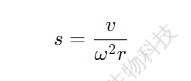
where:
-
s: sedimentation coefficient (Svedberg, S)
-
v: sedimentation velocity
-
ω: angular velocity (rad/s)
-
r: radius from the particle to the axis of rotation
(1) Data Analysis
-
The Lamm equation (a mathematical model describing sedimentation and diffusion) is used to fit sedimentation curves to calculate molecular weight.
-
Combined with density gradient centrifugation, it can distinguish proteins of different molecular weights.
(2)Applications
-
Detection of protein aggregation states: can distinguish monomers, dimers, or higher aggregates of proteins.
-
Determination of protein complex composition: can be used to study protein-protein or protein-nucleic acid interactions.
2. Sedimentation Equilibrium Analysis (SE)
Sedimentation equilibrium experiments are non-destructive, thermodynamically driven methods that can be used todetermine the true molecular weight of proteinswithout the need for external calibration standards. Its core lies inthe balance state where sedimentation force and diffusion force counteract each other, and the concentration distribution of proteins in solution follows the formula below:
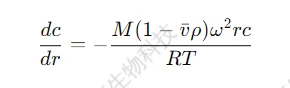
where:
-
M: protein molecular weight
-
vˉ: partial specific volume of the protein
-
ρ: solution density
-
ω: angular velocity
-
r: centrifuge radius
-
T: temperature
-
R: gas constant
(1)Data Analysis
-
By measuring the concentration gradient at equilibrium, the molecular weight of proteins is determined using nonlinear fitting methods.
-
SE can distinguish different oligomeric states (such as monomers, dimers, trimers, etc.), but is not suitable for highly aggregated samples.
(2)Applications
-
High-precision molecular weight determination: more accurate than the SV method, suitable for studying the true size of proteins.
-
Protein complex analysis: can be used to study protein complexes with weak interactions, such as DNA-binding proteins, antibody-antigen complexes, etc.
II.UltracentrifugationExperimental Strategies and Key Technical Parameters
1. Sample Preparation
(1) Buffer Selection: Avoid high salt concentrations to prevent interference with sedimentation behavior.
(2) Sample Purity: Proteins should be highly purified, as impurities can interfere with the analysis.
(3) Concentration Range: Typically 0.1-1 mg/mL; higher concentrations can affect measurement accuracy.
2. Operating Parameters
(1) Centrifugation Speed: SV is generally 40,000-60,000 rpm, SE is usually 10,000-20,000 rpm.
(2) Temperature Control: Typically operated at 4°C or 20°C to maintain protein stability.
(3) Detection Method: Primarily uses UV absorption (UV 280 nm) or interference optics to record data.
III. Application of Ultracentrifugation in Protein Molecular Weight Determination
1、Studying the Native Conformation of Proteins
SE can be used to determine if proteins remain in their native monomeric state in solution or form dimers, tetramers, or higher oligomers. For example, some proteins (such as P53) oligomerize under different conditions, and ultracentrifugation can detect this phenomenon.
2、Analyzing Protein Complexes
Used to study protein-protein or protein-small molecule interactions, such as antigen-antibody complexes, protease-inhibitor interactions, etc.
3、Determining the True Molecular Weight of Glycoproteins
Glycosylation modifications of glycoproteins can affect the molecular weight determined by SDS-PAGE, and SE can provide the true molecular weight of the deglycosylated protein portion.
4、Studying Protein Stability
By monitoring changes in the sedimentation coefficient, protein denaturation, dissociation, or aggregation can be assessed.
IV. Advantages and Limitations of Ultracentrifugation
1. Advantages
(1) Label-Free, Non-Denaturing: No dyes or denaturing agents are needed, allowing direct measurement of proteins in their native state.
(2)High Precision: SE provides molecular weight measurements that are close to true values.
(3)Can Study Protein Interactions: Capable of analyzing the stability of protein-protein and protein-nucleic acid complexes.
2. Limitations
(1)Expensive Instrumentation: Ultracentrifuges are costly, and operation requires professional training.
(2)Time-Consuming: SE experiments typically require 12-48 hours.
(3)Complex Data Analysis: Requires specialized software (such as SEDFIT, SEDFIT-MSTAR) for fitting calculations.
Ultracentrifugation is a high-precision, non-destructive method for determining protein molecular weight, widely used inprotein structure research, protein-ligand interaction analysis, and drug development. With the development ofcomputer fitting technology and new ultracentrifuge instruments, this technique will play a more important role in the field of protein research. Additionally, combining withlight scattering (MALS), isothermal titration calorimetry (ITC) and other methods will further enhance the accuracy and broad applicability of protein molecular weight determination.Bio-Techne Biotech CompanyWith its advanced technology platform, provides efficient ultracentrifugation services for protein molecular weight determination. We are committed to revealing the biological functions of proteins through precise data analysis, and we welcome researchers with related needs to contact us for collaboration and innovation.
Bio-Techne Biotech – Characterization of Biological Products, High-Quality Multi-Omics Mass Spectrometry Services
Related Services:
How to order?




