
What is high-throughput PPI screening? What are the cutting-edge technologies?
High-throughput Protein-Protein Interaction Screening refers to the systematic detection and analysis of numerous protein interactions within a short period using automated technologies and large-scale experimental platforms. This strategy plays a crucial role in protein function annotation, signal pathway analysis, disease mechanism research, and drug target discovery. It is a key tool in the post-genomic era for understanding cellular networks and the complexity of life.
1. What is PPI? Why conduct high-throughput screening?
PPI (Protein-Protein Interaction) refers to the physical contact through non-covalent bonds between two or more proteins. This interaction plays a central role in almost all cellular life activities, including signal transduction, metabolic regulation, cell cycle control, and transcriptional regulation. Although literature has revealed hundreds of thousands of PPIs, considering the human genome encodes about 20,000 proteins, theoretically, there could be hundreds of millions of potential interactions. Low-throughput methods (such as Co-IP, GST-pulldown) are reliable but inefficient for large-scale screening tasks. Thus, developing high-throughput PPI screening technologies has become a critical breakthrough in understanding complex biological networks.
2. Cutting-edge technologies for high-throughput PPI screening
High-throughput PPI screening technologies can be broadly divided into two categories: experimental-based techniques and computational prediction methods. Here, we focus on mainstream experimental methods.
1. Yeast Two-Hybrid System (Y2H)
Y2H is the classic method for achieving high-throughput protein interaction screening. Its principle involves fusing the proteins under investigation with the DNA binding domain (BD) and activation domain (AD) of a transcription factor, respectively. If the two proteins interact, the expression of a reporter gene is activated.
(1) Advantages:
- Low cost, easy to construct on a large scale
- Can detect weak or transient interactions
(2) Limitations:
- Can only detect interactions in the nuclear environment
- Higher false positive/negative rates
- Not suitable for certain categories, such as membrane proteins
2. Affinity Purification-Mass Spectrometry (AP-MS)
This method involves tagging the target protein (bait), expressing it in cells, and then using affinity enrichment followed by mass spectrometry to detect complex members.
(1) Advantages:
- Detection in physiological environments, preserving protein native conformation
- Can analyze complex assembly states and interaction networks
(2) Challenges:
- Requires high-sensitivity mass spectrometry systems and optimized enrichment processes
- High background of false positives, requires precise control design
3. Biotin Labeling Systems: BioID and TurboID
BioID technology fuses the bait protein with a biotin ligase (BirA) to catalyze biotinylation of neighboring proteins in living cells, followed by streptavidin affinity capture and mass spectrometry analysis of the interaction group.
TurboID is a more efficient version of BioID, with faster labeling speed, suitable for dynamic interaction studies.
(1) Advantages:
- Can detect 'proximal interactions' in living cells
- Suitable for studies on membrane proteins and organelle proteins
(2) Disadvantages: Broad labeling range, requires rigorous data analysis to exclude non-specific interactions
4. Bimolecular Fluorescence Complementation/Fluorescence Resonance Energy Transfer (BiFC/FRET)
BiFC involves fusing two complementary fluorescent protein fragments with two proteins under investigation. If they interact, a fluorescent signal is reconstituted; FRET relies on energy transfer reactions between two fluorescent proteins to detect close-range interactions.
(1) Characteristics:
- Real-time imaging in living cells
- Simultaneous localization and interaction analysis
(2) Limitations:
- Cannot achieve true high-throughput, requires support from microscopic imaging
- Reconstitution efficiency and background signal issues still need optimization
3. The auxiliary role of computational prediction techniques
With advancements in structural biology and AI, protein interaction prediction models based on machine learning and deep learning are becoming increasingly mature, such as:
- AlphaFold-Multimer (predicts protein complex structures)
- DeepPPI (predicts interactions based on sequence and topological features)
- STRING database (integrates literature, experimental, and predictive data to construct PPI networks)
Although these methods cannot replace experimental validation, they provide important support in PPI candidate selection, interaction network modeling, and functional annotation.
4. Frontiers in high-throughput PPI screening
As technology continues to iterate, high-throughput PPI screening is developing in the following directions:
1. Single-cell scale interaction analysis
Combining spatial genomics and single-cell mass spectrometry to explore dynamic PPI maps under different cell states.
2. Time-resolved and condition-specific interaction studies
Using systems like TurboID combined with inducible systems to capture PPIs within specific time windows.
3. AI-driven interaction network reconstruction
Integrating protein structure prediction, network topology analysis, and functional enrichment to construct a biologically meaningful PPI model.
High-throughput PPI screening is becoming a crucial cornerstone in life sciences research. Whether mapping the human interactome or analyzing complex disease networks, efficient and precise protein interaction screening tools are essential instruments. With continuous advancements in mass spectrometry, labeling technologies, and AI prediction capabilities, future PPI research will reshape our understanding of life systems at higher dimensions and resolutions. If you are looking for professional, high-quality PPI screening services, feel free to contact Biotech Pack BioTech for customized solutions, advancing the boundaries of cutting-edge biological sciences together.
Biotech Pack BioTech - A quality service provider for bioproduct characterization and multi-omics mass spectrometry detection
Related services:
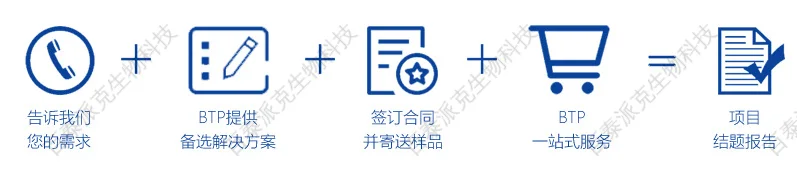
How to order?