






What is the difference between targeted proteomics and untargeted proteomics?
Targeted Proteomics and Untargeted Proteomics are two common but fundamentally different strategies in proteomics research. They differ significantly in research objectives, method selection, data output, and applicable scenarios. Understanding the distinctions between the two is crucial for researchers to design experiments rationally, interpret data, and select appropriate technical platforms.
1. Different Research Objectives: Quantitative Precision vs Comprehensive Exploration
✅ Untargeted Proteomics: Comprehensive Scanning, Focus on Exploration
Untargeted Proteomics, also known asDiscovery Proteomics, primarily aims toidentify and quantify proteins in a sample as comprehensively as possible without predefined targets. The common data acquisition methods usedare Data-Dependent Acquisition (DDA)orData-Independent Acquisition (DIA)。
. This approach is particularly suitable for:
-
Biomarker Discovery
-
Disease Mechanism Research
-
Preliminary Exploration of Biological Systems
✅ Targeted Proteomics: Precise Detection, Focus on Validation
In Targeted Proteomics, specific proteins/peptides are selected based on prior research, forhigh sensitivity and high reproducibilityquantitative detection. Common data acquisition methods includeMultiple Reaction Monitoring (MRM)orParallel Reaction Monitoring (PRM). This method is often used for:Biomarker Validation。
Development of Clinical Detection Methods
-
Monitoring of Specific Targets in Pharmacodynamics/Toxicology Research
-
2. Differences in Experimental Design: Openness vs High Customization
-
3. Data Output Forms: Quantity vs Precision
Untargeted Proteomics: Outputs identification and quantification information of thousands of proteins, enabling the construction of protein expression profiles, pathway enrichment, cluster analysis, etc.
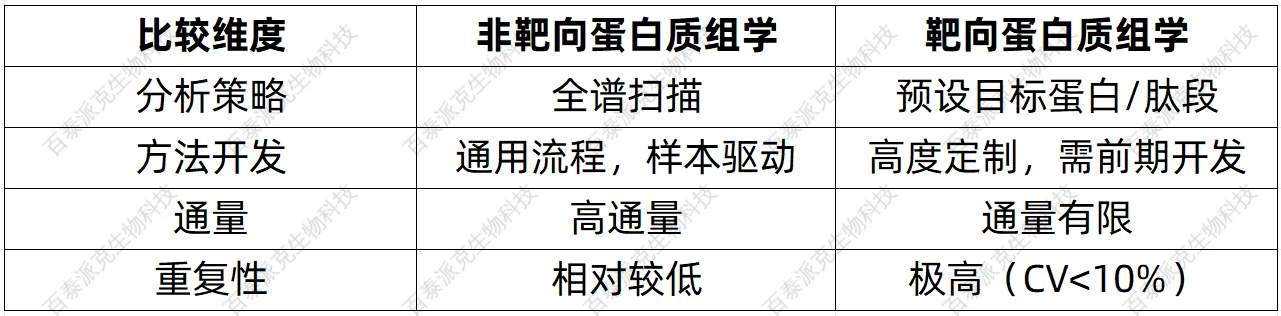
Targeted Proteomics: Outputs precise abundance data of dozens to hundreds of specific proteins, more suitable for constructing quantitative models and comparisons under controlled conditions.
-
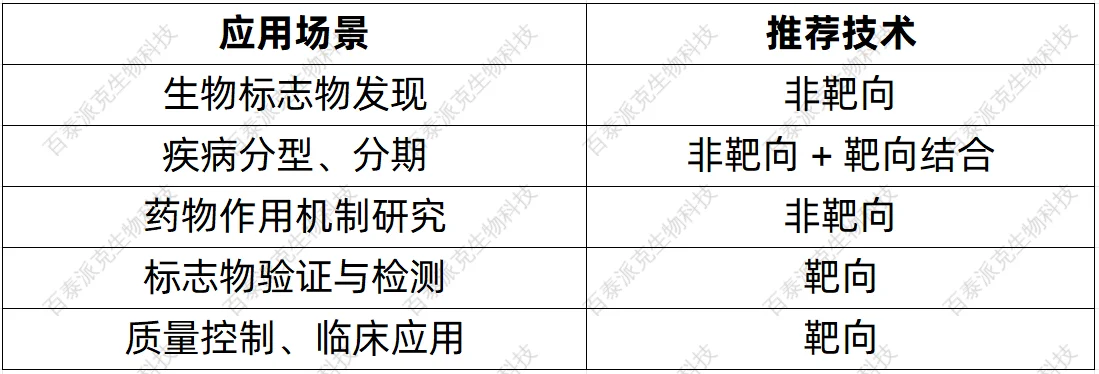
For example, in the development of cancer biomarkers, untargeted proteomics is used to discover candidate proteins, while targeted proteomics is used to further validate the expression differences of these candidate biomarkers in large samples.
-
4. Application Scenarios
Currently, more and more studies are adopting a 'Untargeted Discovery + Targeted Validation' combined strategy to complement the advantages of both, enhancing research depth and reliability.
Targeted and Untargeted Proteomics are not about which is superior, but are crucial links in the exploration-validation-application chain. Scientific research often starts with wide-range scanning in untargeted proteomics and ultimately lands in precise validation in targeted proteomics. Combining both enables the construction of a truly reliable proteomics research system. Biotech Packer offers high-throughput mass spectrometry platforms for targeted proteomics analysis services, including MRM and PRM quantitative proteomics analysis, as well as absolute quantification analysis. We welcome you to contact us for customized technical consultation and service plans.
Biotech Packer - Quality Service Provider for Bioproduct Characterization and Multi-Omics Mass Spectrometry Detection
Related Services:
Targeted Proteomics
Targeted Proteomics
How to order?




