






Determination of Protein Molecular Weight by SDS-PAGE
SDS-PAGE (sodium dodecyl sulfate polyacrylamide gel electrophoresis) is a simple, quick, and highly repeatable method for determining protein molecular weight, making it a commonly used technique. Biotyper Bio provides protein molecular weight determination services based on SDS-PAGE or mass spectrometry.
SDS-PAGE
SDS-PAGE, or sodium dodecyl sulfate polyacrylamide gel electrophoresis, is a discontinuous electrophoresis system commonly used for separating proteins with molecular weights ranging from 5 to 250 kDa. By using a combination of sodium dodecyl sulfate (SDS) and polyacrylamide gel (PAG), it eliminates the effects of structure and charge, allowing proteins to be separated solely based on differences in molecular weight.
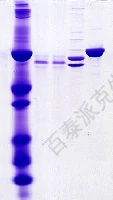
Determination of protein molecular weight by SDS-PAGE
Determination of protein molecular weight by SDS-PAGE
Protein molecular weight, or relative molecular mass of a protein, is the sum of the relative atomic masses of each atom in the protein's chemical formula. Correct protein molecular weight often indicates correct protein structure and function. There are many methods to determine protein molecular weight, with SDS-PAGE being one of the main and most commonly used methods in laboratories. In SDS-PAGE, standard proteins of known molecular weight and unknown samples are electrophoresed simultaneously. After staining, a standard curve can be obtained based on the relative mobility and logarithm of the molecular weight of the standard proteins. The molecular weight of the unknown sample can be determined using its relative mobility on the standard curve. Additionally, SDS-PAGE can be divided into reducing and non-reducing electrophoresis. In reducing electrophoresis, protein disulfide bonds are reduced, allowing the protein to fully extend, thus providing more accurate measurement results.
Related services
1D SDS-PAGE and IEF services
Protein molecular weight determination
How to order?




