






Protein Amino Acid Composition Determination
The determination of protein amino acid composition refers to measuring the percentage of each amino acid within a protein, which can be used to ascertain the composition and content of amino acids in proteins or peptides. Biotech company Betopark offers amino acid composition analysis among other protein analysis services.
Protein Amino Acid Composition
Amino acids are the basic units that make up proteins and are involved in neurotransmitter transport and biosynthesis. Currently, over 500 amino acids have been discovered, of which 22 are used in protein synthesis. The amino acid composition of a protein refers to the percentage of each amino acid in the protein's sequence. This percentage, sometimes referred to as molar percentage, is calculated by dividing the number of each of the 22 standard amino acids by the total number of amino acids in the protein chain or molecule.
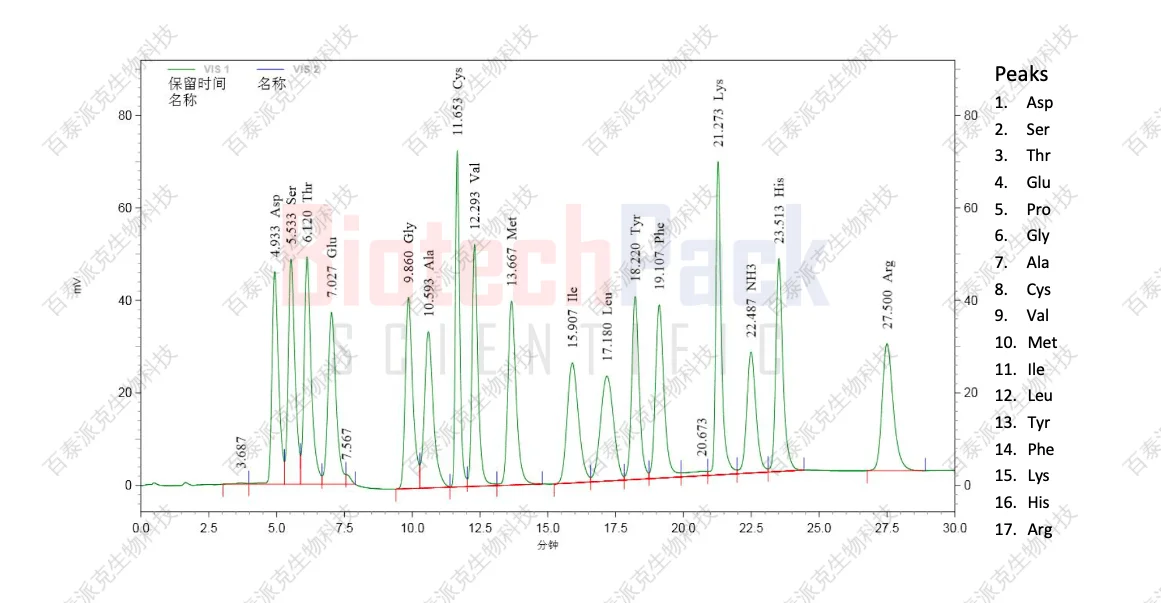
Protein Amino Acid Composition Determination
Protein Amino Acid Composition Analysis
The composition of amino acids is one of the characteristics of peptides and proteins. Amino acid composition analysis is a classic protein analysis technique used to assess protein levels, identify proteins, and complement techniques such as peptide mass fingerprinting or tandem mass spectrometry sequencing. Amino acid composition analysis is an essential step before full protein sequence determination and is a powerful confirmation of the primary structure of proteins. Amino acid composition is often used to infer the characteristics of proteins, protein families, and proteomes, as well as in the research and development of peptide or protein biologics. Generally, amino acid composition analysis involves acid hydrolysis of the protein sample followed by liquid chromatography analysis.
Related Services
How to order?




