






Detection Methods for Protein Post-Translational Modifications
Mass spectrometry is one of the common techniques for detecting post-translational modifications of proteins. It can be used for both known and unknown post-translational modification detection. Biotech-Pack provides mass spectrometry-based protein post-translational modification analysis and proteome analysis services.
Detection of Protein Post-translational Modifications
Protein post-translational modifications (PTMs), such as phosphorylation, acetylation, ubiquitination, SUMOylation, glycosylation, etc., significantly increase the complexity of the proteome. Detecting protein post-translational modifications and understanding how they work, affect the proteome, and regulate the genome will greatly enhance our understanding of genetics and epigenetics. Target protein PTM studies usually require an enrichment step as modified proteins are generally low in abundance. Most PTM detection methods are developed in combination with enrichment strategies to optimally identify, validate, and study the function of PTMs in target proteins.
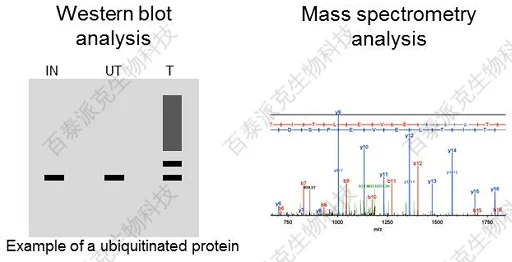
Detection Methods of Protein Post-translational Modifications
Detection Methods for Post-translationally Modified Proteins
Detection techniques for post-translationally modified proteins include immunoprecipitation, western blot, mass spectrometry, and in vitro biochemical analysis, among others. Immunoprecipitation is a key step in most post-translational modification detections. It uses protein-specific antibodies or specific antibodies for certain post-translational modifications to enrich target proteins, which are then analyzed using western blot or mass spectrometry. Both western blot and mass spectrometry can be used for downstream detection of protein post-translational modifications. Western blot is relatively simple but relies on specific antibodies and cannot identify changes in individual proteins, whereas mass spectrometry can detect almost all PTMs, including unknown ones, though it is more costly and requires expertise to analyze the large amounts of data generated. Researchers can choose appropriate methods for detection based on cost, availability of antibodies, and target availability.
Related Services
How to order?




