






Proteomics Detection of Protein Expression Levels
The level of protein expression is the state of proteins in a system, including their synthesis, modification, and regulation in an organism. Proteomics detection includes the detection of protein expression levels, which involves determining the content of proteins at the omics level. Techniques such as protein spectrum identification and quantitative proteomics enable the detection of protein expression levels. Biotech company Biotree provides mass spectrometry-based quantitative proteomics analysis and post-translational modification analysis services.
Proteomics detects protein expression levels
Proteomics is the science of studying all proteins within a cell and their dynamic changes. Proteomics detection includes the detection of protein expression levels, which involves determining protein content at the omics level. Techniques such as protein spectrum identification and quantitative proteomics enable the detection of protein expression levels. Proteomics is one of the most important methods for understanding gene function. Changes in gene expression levels can be used to differentiate between two biological states of a cell through transcriptomics or proteomics analysis. Proteins are effectors of biological functions, and their levels depend not only on mRNA levels but also on the cell's translational control and regulation. Therefore, proteomics provides the most relevant data set for characterizing a biological system. Detecting protein expression levels at the omics level helps understand the changes in protein abundance within cells under different conditions, aiding in the screening of biomarkers and exploring the impact of proteins on life processes.
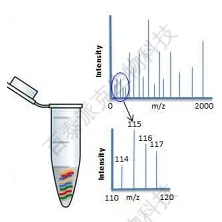
Proteomics detects protein expression levels
Common proteomics techniques for detecting protein expression levels
Mass spectrometry can be used for quantitative studies in proteomics. Mass spectrometry-based quantitative proteomics techniques can be divided into labeled quantification and label-free quantification. Label-free quantification involves directly quantifying proteins without using labeling techniques, while labeled quantification involves labeling proteins first and then performing quantification. Common labeling techniques are further divided into in vitro labeling, such as iTRAQ and TMT, and in vivo labeling, such as SILAC and 15^N labeling.
Related services
Quantitative proteomics analysis
Protein mass spectrometry identification
Label-free quantitative proteomics analysis
SILAC/Dimethyl labeling-based quantitative proteomics analysis
TMT/iTRAQ/MultiNotch quantitative proteomics analysis
How to order?




