






DDA and PRM in Proteomics Analysis
DDA (data-dependent acquisition) and PRM (parallel reaction monitoring) are different data acquisition modes in mass spectrometry. DDA is mainly used for non-targeted proteomics research, while PRM is used for targeted proteomics research. Bio-Techne offers mass spectrometry-based DDA, MRM/PRM, and DIA proteomics analysis services.
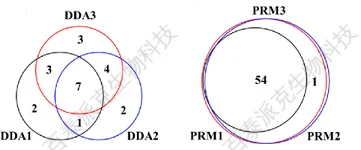
DDA and PRM in Proteomics Analysis
DDA
DDA (data-dependent acquisition) is a data-dependent scanning mode, which is the earliest and simplest data acquisition mode in mass spectrometry, primarily used in proteomics research with the main goal of sampling and discovering proteins. In the DDA data-dependent scanning mode, the most abundant subset of ions reaching the mass spectrometer detector during MS1 scanning is isolated and fragmented in MS2 sequential scanning, and each MS2 scan can be analyzed using bioinformatics. DDA data-dependent scanning mode can typically identify thousands of proteins. However, if too many peptides co-elute and appear in a single MS1 scan, the DDA mode will randomly sample the most abundant peptides and ignore the rest, which reduces analysis reproducibility and hinders the determination of low-abundance peptides. Therefore, when the main goals of a proteomics study are precise quantification, reproducibility, and validation, targeted proteomics such as MRM and PRM emerged.
PRM
PRM (parallel reaction monitoring) is a data acquisition technique based on high-resolution and high-accuracy mass spectrometry, derived from MRM (multiple reaction monitoring), and can be used in targeted quantitative proteomics for studying target protein molecules. Unlike the DDA mode where the instrument selects precursor ions based on abundance, in MRM and PRM, the precursor ions to be analyzed are fixed by the user. MRM and PRM focus MS1 and MS2 scans on a small group of predefined and identified peptides, avoiding the imprecision and non-reproducibility of DDA. Although DDA has disadvantages, it has a broad detection range and is easy to set up and analyze, serving as the main method for screening target proteins of interest before PRM targeted proteomics analysis. Techniques like iTRAQ, TMT, Label-free, and SILAC proteomics are based on DDA.
Related Services
Quantitative Proteomics Analysis
Parallel Reaction Monitoring (PRM) Services
How to order?




