






TMT Proteomics
TMT is a chemical labeling technology primarily used in conjunction with mass spectrometry for quantitative proteomics research. Biotech company provides mass spectrometry-based services.TMT quantitative proteomics analysisservices.
TMT proteomics
TMT proteomics mainly refers to the quantitative analysis of the proteome using TMT technology. TMT (Tandem Mass Tags) is a chemical labeling technology developed by Thermo Fisher Scientific in the USA, used for the quantification and identification of biomolecules (such as proteins, peptides, and nucleic acids) based on mass spectrometry (MS). TMT belongs to a family of reagents known as isobaric mass tags, offering an alternative to gel-based or antibody-based quantitative methods. In addition to aiding in quantitative proteomics analysis, TMT tags can enhance the detection sensitivity of certain highly hydrophilic analytes (such as phosphopeptides) in RPLC-MS analysis.
Principle of TMT quantitative proteome analysis
TMT utilizes multiple stable isotope tags, specifically labeling the amino groups of peptides for tandem mass spectrometry analysis, allowing for simultaneous comparison of the relative abundance of proteins across up to 10 different samples. All TMT tags share the same chemical structure, consisting of a reporter group, a balance group, and a peptide reactive group. However, each tag contains isotopes substituted at different positions, giving the reporter group and balance group within each tag different molecular masses. The combined groups have the same total molecular weight and structure, making molecules labeled with different tags indistinguishable during chromatographic or electrophoretic separation and in single MS mode. Upon fragmentation of the labeled molecules in MS/MS mode, sequence information can be obtained from the fragmented ions, and quantitative data can be acquired from the fragmentation of the tags, thereby achieving quantitative proteome analysis.
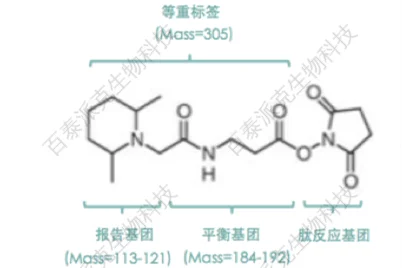
TMT proteomics
related services
How to order?




