


Analysis of the Advantages and Disadvantages of Untargeted Metabolomics
In life science research, metabolomics acts as a crucial bridge connecting the genotype to the phenotype. Metabolites, as the 'end products' of life activities, directly reflect the comprehensive response of cells, tissues, or organisms to genetic regulation, environmental stimuli, and disease states. Untargeted metabolomics, with its advantages of 'broad coverage and high discovery rate', has been widely applied in areas such as disease mechanism analysis, drug mechanism of action, nutritional metabolism, and environmental toxicology.
I. Definition and Core Technologies of Untargeted Metabolomics
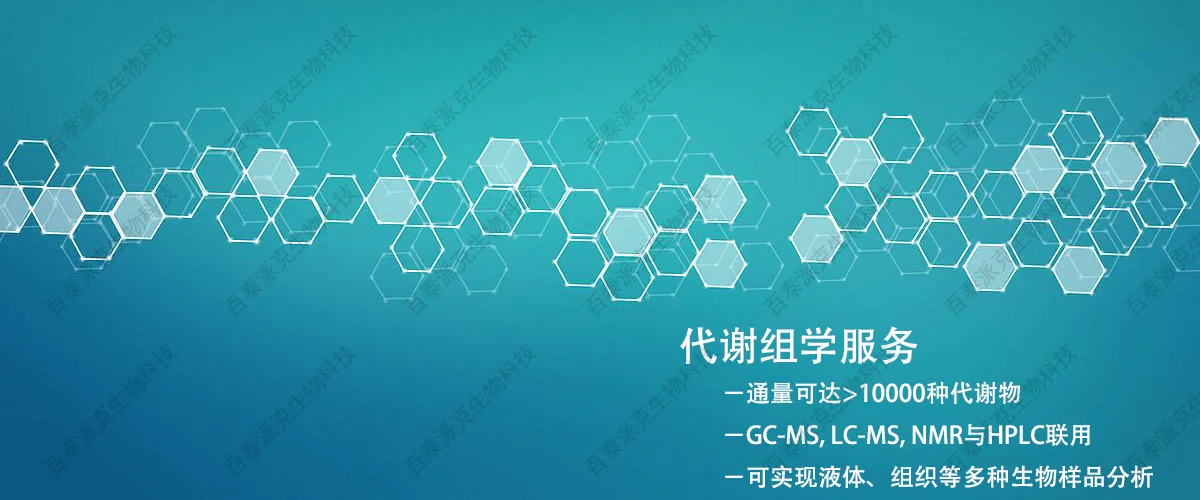
Untargeted metabolomics refers to the comprehensive detection and analysis of as many metabolites as possible in a sample without presetting target metabolites. Researchers are not limited to a specific class of compounds; instead, they construct a broad-spectrum metabolite profile using high-resolution mass spectrometry (such as Orbitrap or TOF) combined with chromatography techniques (like LC-MS, GC-MS).
Core processes include:
-
Sample pretreatment (extraction, deproteinization, derivatization, etc.);
-
High-resolution mass spectrometry detection;
-
Data preprocessing (peak extraction, alignment, normalization);
-
Multivariate statistics and pattern recognition;
-
Metabolite identification and pathway enrichment analysis.
At BioTrey Biotech, we offer untargeted metabolomics solutions with broad coverage and high reproducibility, based on high-resolution mass spectrometry platforms (such as the Thermo Orbitrap Exploris series) and an independently optimized metabolite database, helping researchers extract key metabolic signals from complex biological samples.
II. Advantages of Untargeted Metabolomics
1. Comprehensive metabolite coverage, suitable for mechanism exploration
The untargeted approach does not depend on a predefined list of metabolites and can capture both known and unknown metabolites, providing possibilities for new mechanism discovery and disease biomarker screening.
2. Strong data-driven discovery capability
Relying on multivariate statistical methods (like PCA, PLS-DA) and machine learning algorithms, untargeted metabolomics supports the mining of potential biomarkers and metabolic patterns from high-dimensional data. It is especially suitable for research questions without clear biological hypotheses.
3. Applicable across species and tissue types
Whether serum, urine, tissue, cells, or animal and plant samples, the untargeted approach is highly adaptable. Its platform universality makes it ideal for constructing global metabolic maps or conducting comparative metabolic studies across different species.
4. Supports downstream targeted validation and pathway expansion
Untargeted screening can serve as a first-step discovery method, further combined with targeted quantitative techniques (like MRM) to validate key metabolites. It can also provide insights for functional experiments through metabolic pathway enrichment analysis.
III. Limitations and Challenges of Untargeted Metabolomics
1. Difficulty in qualitative analysis: Identification of unknown metabolites remains a bottleneck
Despite rapid developments in mass spectrometry technology, the existing database coverage is limited when facing a large number of 'unknown peaks', and metabolite structure identification still relies on standard comparisons or manual interpretation of fragment spectra, which may become a bottleneck in data interpretation for certain studies.
2. Relatively low quantitative accuracy
Compared to targeted metabolomics, which uses internal standard calibration and has a defined quantitative linear range, untargeted metabolomics is limited in absolute quantification ability due to factors such as signal drift and matrix effects, and typically uses relative abundance for comparisons.
3. High requirements for batch effect and reproducibility control
Untargeted experiments demand extremely high instrument stability and sample processing consistency, as batch differences may significantly affect analytical results, requiring strategies such as QC samples and signal correction to control variability.
4. Complex data processing, high demands on analysts
The large data volume, numerous variables, and complex data preprocessing and statistical analysis workflows require researchers to have strong data analysis capabilities or rely on professional platforms for analytical support.
IV. Applicable Research Scenarios for Untargeted Metabolomics
| Application Direction | Research Objectives | Examples |
|---|---|---|
| Disease Mechanism Research | Reveal metabolic abnormal pathways | Cancer, diabetes, autoimmune diseases |
| Drug Mechanism of Action | Discovery of efficacy and toxicity metabolic biomarkers | Traditional Chinese medicine formulations, candidate drug screening |
| Environmental Exposure Analysis | Impact of exogenous substances on metabolism | Environmental pollution, heavy metal exposure research |
| Microbial Metabolism Research | Analysis of metabolic product characteristics | Gut microbiota, fermentation engineering |
| Plant and Animal Nutritional Metabolism | Quality evaluation, stress resistance mechanism research | Agricultural product quality, crop salt-alkali tolerance |
Untargeted metabolomics opens a new window for observing the metabolic panorama in life science research with its 'unbiased, high-throughput' characteristics. It is not only an important tool for disease biomarker discovery but also a crucial means for understanding the complexity of life systems. Of course, science and technology are never perfect, and the use of untargeted metabolomics needs to be balanced with research objectives, sample types, and budget considerations. In practical applications, we recommend using it as a precursor for exploratory research, combined with targeted quantitative strategies, to achieve deeper mechanism exploration and functional validation. BioTrey Biotech has been deeply engaged in mass spectrometry and omics analysis for over ten years, with a mature untargeted metabolomics platform, rich project experience, and a professional bioinformatics analysis team. BioTrey Biotech not only focuses on data acquisition but also on how data can be transformed into publishable scientific results. Contact BioTrey Biotech for free experimental design consultation and project evaluation, allowing metabolomics data to truly serve your research goals.
BioTrey Biotech - A premium service provider for bioproduct characterization and multi-omics mass spectrometry detection
Related Services:
How to order?