

CUT&Tag Sequencing and Sample Preparation Recommendations
In recent years, the CUT&Tag (Cleavage Under Targets and Tagmentation) technology has rapidly become an important method in epigenetic research due to its high sensitivity, low background, and low cell number requirements. Compared to ChIP-seq, CUT&Tag can achieve higher resolution protein-DNA interaction maps with lower input amounts, making it more suitable for studying chromatin in rare cell populations or clinical samples. The success of CUT&Tag sequencing largely depends on the standardization and scientific nature of the sample preparation stage. Systematic research into the principles and advantages of CUT&Tag technology is a crucial foundation for helping researchers avoid common pitfalls, optimize experimental design, and enhance data reliability.
I. Brief Introduction to the Principles of CUT&Tag Technology
CUT&Tag is a technique that combines antibody recognition of target proteins with Tn5 transposase-mediated library construction. The core process includes:
- Cell fixation or permeabilization
- Specific antibodies bind to target proteins
- Protein A/G-Tn5 complex binds to the antibody
- Activation of Tn5 transposase to cleave and insert adapters in situ
- PCR amplification to generate sequencing libraries
This process not only simplifies experimental steps but also significantly reduces background noise, achieving high signal-to-noise ratio detection of enriched regions.
II. Comparative Analysis of CUT&Tag and ChIP-seq
| Comparison Dimensions | CUT&Tag | ChIP-seq |
| Sample Requirement | Extremely low (~1000 cells) | Typically >1 million cells |
| Background Noise | Extremely low | Usually high |
| Data Resolution | High, near single nucleotide resolution | Moderate |
| Experimental Process Time | 1-2 days | 3-5 days |
| Cost | Lower | Higher |
For studies with high throughput demands or limited samples, CUT&Tag is a more cost-effective choice.
III. Recommendations for CUT&Tag Sample Preparation: Key Factors Affecting Success
1. Cell Collection and Handling
(1) Uniform cell state: It is recommended that cells are in the logarithmic growth phase to avoid stress or apoptosis.
(2) Minimum input amount: Theoretically, CUT&Tag can be performed with 100–10,000 cells, but the recommended input is 10,000–50,000 cells per sample.
(3) Maintain integrity: Avoid excessive stirring or freeze-thaw cycles to preserve nuclear structure.
2. Fixation vs. Non-fixation Processing
(1) CUT&Tag supports in situ detection and generally does not require cross-linking fixation.
(2) For certain samples that are not easily preserved (such as tissue sections or frozen samples), mild formaldehyde cross-linking (0.1–0.5%) can help maintain structure, provided the de-crosslinking step is optimized.
3. Antibody Selection: Determining Specificity and Enrichment
(1) Preferably use validated CUT&Tag antibodies.
(2) For transcription factors, verify antibody binding activity and target specificity.
(3) Avoid using unverified or highly cross-reactive antibodies to prevent signal deviation.
4. Sample Preservation and Transport Recommendations
(1) If samples cannot be processed immediately, two options are recommended:
① Mildly fix and store at -80°C;
② Freeze using cell preservation solution (e.g., Cellbanker).
(2) During transport, use dry ice or liquid nitrogen to avoid repeated freeze-thaw cycles.
IV. Data Analysis Considerations: Signal Evaluation and Background Control
1. Standard Quality Control Metrics
(1)Mapping rate ≥ 80%
(2) FRiP Value (Fraction of Reads in Peaks) > 0.3 is a high-quality standard
2. Background Assessment
Setting up an IgG control group can effectively exclude non-specific binding signals.
3. Common Analysis Tools
(1) SEACR: Signal Region Identification
(2) deepTools: Signal Visualization
(3) IGV: Genome Browser
V. CUT&Tag Solutions by BioTuring
- Providing a variety of popular histone modification and transcription factor antibodies
- Offering optimized solutions for low cell count (supporting ≤5000 cells)
- Implementing full-process QC control (antibody validation, fragment length detection, library complexity assessment)
- Providing detailed bioinformatics analysis reports (peak annotation, GO/KEGG analysis, motif discovery, etc.)
With its excellent resolution and sensitivity, the CUT&Tag technology is becoming an important tool in chromatin research. A reasonable sample preparation strategy, including cell processing, antibody selection, and preservation and transport, is key to ensuring the success of the experiment. BioTuring combines cutting-edge experimental technology with a professional bioinformatics team to assist you from sample to data in one-stop, efficiently embarking on the journey of exploring epigenetic regulation. To learn more about specific technical solutions, sample submission standards, or to obtain experimental advice, please visit our website or contact our technical support team.
BioTuring - Characterization of Biological Products and High-quality Multi-omics Mass Spectrometry Services
Related Services:
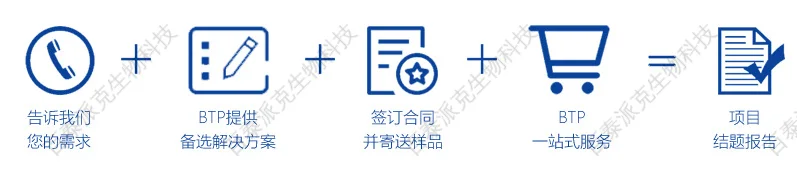
How to order?