

How to enrich membrane proteins? What are the most effective methods?
Membrane proteins are critical bridges connecting the intracellular and extracellular signaling pathways, accounting for over 30% of the human genome proteins, including numerous drug targets (such as GPCRs, ion channels, receptors, etc.). However, due to their strong hydrophobicity, poor solubility, and low expression levels, membrane proteins are often 'difficult to identify' in proteomics analysis. Therefore, membrane protein enrichment is a key prerequisite for high-quality membrane protein research.
I. Why do membrane proteins need to be enriched separately?
Membrane proteins primarily distribute in biological membrane structures such as the cell membrane, mitochondrial membrane, Golgi apparatus, and endoplasmic reticulum, presenting the following challenges:
1. Strong hydrophobicity: They easily aggregate and precipitate, making it difficult to dissolve them in conventional buffers.
2. Low abundance: They comprise a small proportion of total proteins and are often masked by high-abundance soluble proteins.
3. Coexistence with membrane lipids: During extraction, they are easily co-extracted with lipids, cholesterol, and other components, affecting mass spectrometry signals.
4. Complex multi-transmembrane structures: They are difficult to fully enzymatically digest, leading to low MS identification efficiency.
Therefore, employing specialized membrane protein enrichment methods is the foundation for conducting high-sensitivity membrane protein mass spectrometry analysis.
II. Comparison of Common Membrane Protein Enrichment Methods and Principles
| Method | Principle | Advantages | Limitations |
| Ultracentrifugation Method | Separates membrane components (cell membrane, organelle membranes) through multistage centrifugation. | Low cost, complete separation structures | Complicated operation, requires large sample volumes, low throughput |
| Alkaline Carbonate Extraction Method (Na2CO3) | Disrupts membrane structure under alkaline conditions, releasing peripheral membrane proteins, while retaining integral membrane proteins. | Good selectivity, suitable for extracting integral membrane proteins | Significant damage to some membrane structures, easily losing hydrophobic proteins |
| Phase Separation Method (TritonX-114) | Forms biphasic system upon heating with non-ionic surfactant, concentrating membrane proteins in the bottom phase. | Simple operation, good reproducibility | Low selectivity for certain proteins, potential introduction of impurities |
| SDS Buffer Lysis + Agarose Bead Method | Utilizes SDS for efficient membrane protein solubilization, coupled with agarose bead binding and elution. | High extraction efficiency, suitable for mass spectrometry | SDS requires post-treatment removal to avoid MS interference |
| Membrane Protein Enrichment Kit | Commercial solutions combining precipitation and selective buffers | Convenient operation, suitable for medium to high throughput | Higher cost, significant differences between brands |
III. Recommendations for Three Most Effective Membrane Protein Enrichment Strategies
1. Ultracentrifugation with Purification Gradient
(1) Suitable for: Large sample volumes (>10^8 cells), aiming for complete membrane component structures.
(2) Technical Process:
-
Buffer lyses cells;
-
Low-speed centrifugation removes nuclear fragments;
-
Multistage ultracentrifugation separates cell membrane, mitochondrial membrane, etc.;
-
Can be further purified using sucrose density gradients.
(3) Advantages: Enables subcellular localization protein enrichment.
(4) Considerations: Requires ultracentrifuge, time-consuming.
Baitai BioScience supports combined separation and enrichment schemes for membrane and organelle proteins (such as mitochondria, endoplasmic reticulum), balancing structural specificity and high throughput.
2. Triton X-114 Phase Separation Method (Classic and Practical)
(1) Suitable for: Quantitative research on membrane proteins in cell/tissue samples.
(2) Technical Process:
-
Use Triton X-114 to lyse cells;
-
Raise the temperature to 20–37°C to form two phases;
-
Upper phase contains hydrophilic proteins, lower phase concentrates hydrophobic membrane proteins;
-
Wash and remove impurities, precipitate proteins for subsequent analysis.
(3) Advantages: Simple process, high reproducibility, suitable for parallel processing of multiple samples.
(4) Disadvantages: Low extraction rate for certain peripheral membrane proteins.
3. Alkaline Carbonate Treatment + SDS Lysis Combined Strategy
(1) Applicable Target: Aiming for deep coverage of integral membrane proteins.
(2) Technical Workflow:
-
First, treat cell lysates with Na2CO3 (pH 11.3) to remove non-membrane-bound proteins;
-
After membrane structure precipitation, use 1% SDS lysis to release hydrophobic membrane proteins;
-
Subsequent removal of SDS (e.g., FASP, S-Trap) is necessary for mass spectrometry.
(3) Advantages: Wide coverage, particularly suitable for mass spectrometry analysis.
(4) Notes: SDS residues must be thoroughly removed, and it is recommended to combine with desalting and digestion optimization strategies.
4. Recommendations for Mass Spectrometry Analysis After Membrane Protein Enrichment
Enrichment of membrane proteins is only the first step; subsequent mass spectrometry adaptation and data analysis are crucial. Recommendations are as follows:
1. Use the S-Trap method for proteolysis of SDS buffer samples to enhance efficiency and remove interfering substances;
2. Use DIA (Data Independent Acquisition) technology to reduce the issue of 'missing values' in membrane protein identification;
3. Construct a membrane protein spectral library to improve database search matching rates;
4. Enhance database annotation of hydrophobic peptide segments to improve transmembrane region identification ability;
5. Focus on functional annotation: transmembrane structure, cellular localization, and GO 'membrane' related pathways.
5. Betapack Biotech Membrane Protein Enrichment and Proteomics Solutions
Betapack Biotech has established a customized enrichment and mass spectrometry analysis platform specific to membrane protein characteristics, featuring:
1. Efficient membrane protein extraction schemes (supports Triton X-114, Na2CO3, SDS combined processes);
2. Orbitrap Exploris + DIA mode, achieving high sensitivity identification and quantification;
3. Membrane protein transmembrane structure annotation + enrichment pathway analysis + visualized result reporting;
4. Expandable to GPCR and ion channel protein enrichment and functional studies.
Research on membrane proteins has never been a simple 'extraction-machine-identification' process; it is a systematic project. From sample processing, buffer optimization, enrichment technology selection, to digestion strategies and mass spectrometry platform matching, every step determines the depth and accuracy of the research. Betapack Biotech is committed to solving the 'difficult-to-extract, difficult-to-identify' challenges in membrane protein enrichment. Contact us for personalized technical solution evaluation and free initial consultation.
Betapack Biotech--A premium service provider for bioproduct characterization and multi-omics mass spectrometry detection.
Related Services:
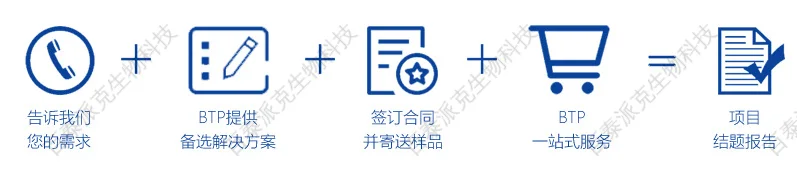
How to order?