






Immunoprecipitation-Mass Spectrometry: A Precise Tool and Frontier Progress in Analyzing Biopharmaceutical Interactions
Research and development of biopharmaceuticals require an in-depth understanding of protein-protein interactions, especially the interactions between biopharmaceuticals and intracellular targets. In this regard, immunoprecipitation-mass spectrometry (IP-MS) has become a powerful tool. This article focuses on introducing the principles, applications, and recent advances of immunoprecipitation-mass spectrometry to help readers better understand the importance and value of this technology in the study of biopharmaceutical interactions.
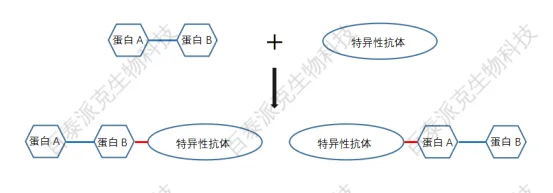
Figure 1
I. Principle:
Immunoprecipitation-mass spectrometry combines immunoprecipitation and mass spectrometry analysis to analyze specific proteins and their interacting protein complexes. First, specific antibodies are used to selectively immunoprecipitate the target protein along with its interacting proteins. Subsequently, mass spectrometry is employed to quantitatively analyze and identify the immunoprecipitated samples to determine the identity and abundance of interacting proteins.
II. Applications:
1. Identifying Protein Interactions:
Immunoprecipitation-mass spectrometry can be used to identify proteins interacting with a specific target protein. By selectively immunoprecipitating the target protein and using mass spectrometry, potential binding partners interacting with the target protein can be identified. This is crucial for understanding the mechanism of action of biopharmaceuticals, signal transduction pathways, and the composition and function of protein complexes.
2. Exploring Biopharmaceutical Targets:
Immunoprecipitation-mass spectrometry helps researchers identify the targets of biopharmaceuticals. By immunoprecipitating biopharmaceuticals with proteins in cells or tissues and using mass spectrometry for identification, proteins interacting with the biopharmaceutical can be identified, revealing its mechanism of action and targeting pathways.
3. Discovering New Biomarkers:
Immunoprecipitation-mass spectrometry can aid in identifying and discovering new biomarkers, which is of significant importance for disease diagnosis and treatment. By analyzing protein interaction networks related to diseases in biological samples, protein markers closely associated with disease progression can be discovered, providing new targets for diagnosis and treatment.
III. Recent Advances:
1. Spatially Resolved Immunoprecipitation-Mass Spectrometry:
Traditional immunoprecipitation-mass spectrometry mainly analyzes protein interactions at the whole-cell or tissue level. Emerging spatially resolved immunoprecipitation-mass spectrometry allows researchers to analyze protein interactions at the subcellular level, providing deeper insights into the mechanism of action of biopharmaceuticals within cells.
2. Super-Resolution Immunoprecipitation-Mass Spectrometry:
With the continuous development of mass spectrometry instrumentation, super-resolution immunoprecipitation-mass spectrometry has become possible. This technique utilizes high-resolution mass spectrometers and advanced sample preparation methods to provide more accurate and detailed identification of protein complexes, revealing more details about biopharmaceutical interactions.
As a precise tool for analyzing biopharmaceutical interactions, immunoprecipitation-mass spectrometry offers researchers a powerful means to explore protein interactions, identify targets, and discover new biomarkers. With ongoing advancements and innovations, the application prospects of immunoprecipitation-mass spectrometry in biopharmaceutical research will become even broader.
BaiTaiPack Biotech—A leading service provider in bioproduct characterization and multi-omics mass spectrometry analysis.
Related Services:
Protein Interaction Analysis using Co-Immunoprecipitation (CO-IP) coupled with Mass Spectrometry
Protein-Protein Interaction Mass Spectrometry Analysis
Protein Interaction Analysis using GST Fusion Protein Pull-down coupled with Mass Spectrometry
Protein Interaction Analysis using SILAC combined with Co-Immunoprecipitation and Mass Spectrometry
Protein-Protein Interaction Mass Spectrometry Analysis
How to order?




