






How to Read Infrared Spectra
An infrared (IR) spectrum is a chart that shows the intensity of light absorption by a substance at different infrared wavelengths. These absorptions correspond to specific molecular vibrations, such as stretching and bending of bonds. Interpreting an IR spectrum requires an understanding of the components of the chart and a basic knowledge of the correlation between absorption peaks and specific types of chemical bonds and functional groups.
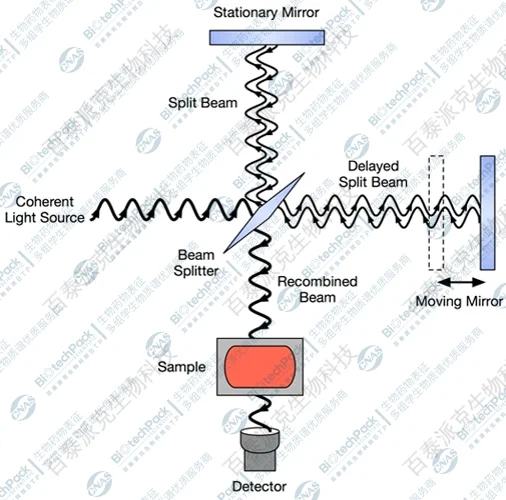
Figure 1. Fourier Transform Infrared Spectroscopy (FT-IR) Analysis
1. Understanding the axes:
1. X-axis:
Represents wavenumber (usually incm^−1units), with the higher wavenumber side typically on the right (indicating shorter wavelength, higher energy light).
2. Y-axis:
Displays absorption intensity or transmittance, usually expressed as a percentage. Areas of high absorption intensity indicate that infrared light of that wavenumber (energy) is strongly absorbed by the sample.
2. Identifying functional groups:
1. Determine wavenumber regions:
(1) 4000 - 1500: Typically the functional group region, used to determine the presence of various functional groups in the molecule (e.g., OH, NH, C=O, C=C, C≡N, etc.).
(2) 1500 - 400: Known as the fingerprint region, which usually contains many overlapping peaks and can be used to distinguish very similar compounds.
2. Locate and identify absorption peaks:
(1) The shape of the absorption peak (e.g., sharp, broad) can provide additional information. For example, a broad O-H absorption peak may indicate the presence of a hydroxyl group.
(2) The intensity of the absorption peak (i.e., the height of the peak) can give clues about the concentration of specific functional groups.
3. Analyzing the fingerprint region:
1. The lower wavenumber region of the IR spectrum (approximately below 1500 cm⁻¹) is called the “fingerprint region” because the complex absorption patterns here are unique, like a fingerprint. The absorption peaks in the fingerprint region are usually caused by complex vibrations within the molecule.
2. The absorption peaks in the fingerprint region are particularly useful for identifying specific compounds because they provide highly specific information.
4.Comparison with known spectra:
Comparing the sample's IR spectrum with a library of standard spectra for known substances can help confirm the composition of the sample.
Bio-Techne - A premium service provider in bioproduct characterization and multi-group mass spectrometry analysis.
Related services:
Infrared Spectroscopy Analysis (FT-IR)
Disulfide Bond/Free Cysteine Detection
Protein Circular Dichroism Analysis
How to order?




