






Basic Methods and Techniques of Infrared Spectroscopy
The following are the basic steps and key points of infrared spectroscopy analysis:
1. Understanding the Basics:
1. Infrared spectroscopy is mainly divided into two regions:the near-infrared region (~4000-1400 cm⁻¹) and the far-infrared region (~1400-400 cm⁻¹).
2. Different chemical bonds and functional groups absorb infrared light in different wavenumber ranges.
2. Identifying Wavenumbers:
1. Observe the absorption peaks on the spectrum and record their wavenumbers.
2. Refer to an infrared spectroscopy table or database to match the absorption at specific wavenumbers with particular chemical bonds or functional groups.
3. Pay Attention to Peak Characteristics:
1. Position:
Certain functional groups absorb in specific wavenumber ranges.
2. Intensity:
Intensity may indicate the presence of a certain functional group.
3. Shape:
For example, the absorption of hydroxyl (OH) is usually broad and weak, while the absorption of carbonyl (C=O) is sharp.
4. Common Absorption Wavenumbers:
OH (alcohol or acid): ~3200-3600 cm⁻¹
CH (alkyl): ~2850-2960 cm⁻¹
C=O (ketone or aldehyde): ~1700-1750 cm⁻¹
C=C (carbon-carbon double bond): ~1600-1680 cm⁻¹
5. Consider Other Factors:
1. Impurities or Solvents:
The purity of the sample and the solvents used may produce absorption peaks in the spectrum.
2. Moisture:
If there is moisture in the sample or equipment, an OH absorption peak may appear around 3400 cm⁻¹.
6. Combine with Other Spectroscopic Data:
Combining with Nuclear Magnetic Resonance (NMR), Mass Spectrometry (MS), or other spectroscopic data can provide more comprehensive structural information about the compound.
Infrared spectroscopy analysis is a very useful tool that can provide valuable information about the functional groups and chemical bonds present in compounds. By becoming familiar and using it frequently, researchers can interpret infrared spectroscopy data more effectively.
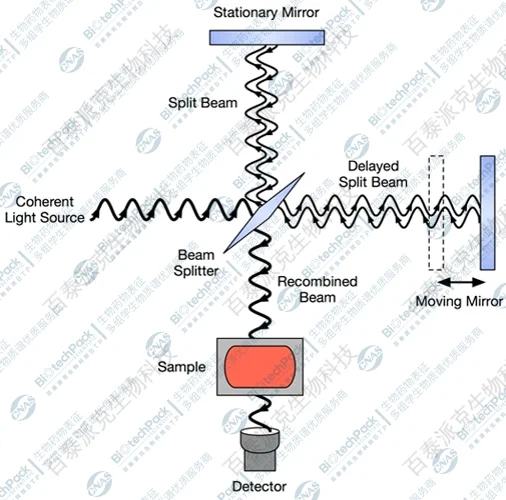
Figure 1. Fourier Transform Infrared Spectroscopy (FT-IR) Analysis
BiotechPack, A Biopharmaceutical Characterization and Multi-Omics Mass Spectrometry (MS) Services Provider
Related Services:
Infrared Spectroscopy Analysis (FT-IR)
Disulfide Bond/Free Cysteine Detection
Protein Circular Dichroism Analysis
How to order?




