






Detection of Host Cell Residual Proteins (HCP) Based on PRM
Host Cell Proteins (HCP) are protein impurities derived from production cells during the manufacturing process of biological products. These impurities may affect the safety, purity, and efficacy of the final product. Therefore, the detection and quantification of HCPs are of great importance in the production of biological products. Here, we use Parallel Reaction Monitoring (PRM) technology for HCP detection.
1. PRM Technology
PRM is a targeted mass spectrometry technique used for the quantitative study of specific proteins or peptides. This technology utilizes high-resolution and high-sensitivity mass spectrometers to detect and quantify specific mass spectrometry signals of pre-selected peptides or proteins.
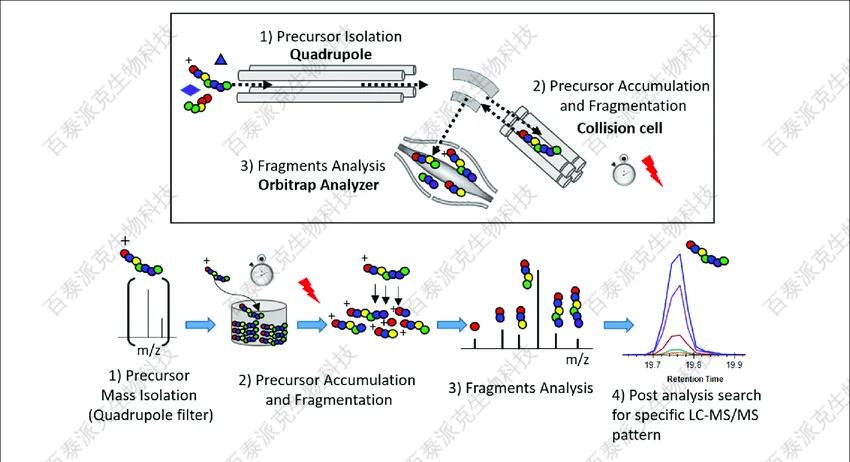
Figure 1
2. Steps for PRM Detection of HCP
1. Sample Preparation
First, we need to extract proteins from the biological product sample and convert them into peptides through enzymatic digestion.
2. PRM Experiment
In the PRM experiment, we pre-set a series of specific peptides related to the target HCPs and then detect them using a mass spectrometer. The mass spectrometer will only detect these pre-set peptides, improving detection sensitivity and specificity.
3. Data Analysis
After collecting the mass spectrometry data, we need to process and analyze the data to confirm and quantify the presence of HCPs.
BiotechPack, A Biopharmaceutical Characterization and Multi-Omics Mass Spectrometry (MS) Services Provider
Related Services:
HCP Antibody Coverage Analysis
Protein Mass Spectrometry Identification
How to order?




