






Circular Dichroism Technology for Analyzing the Structural Diversity and Functional Relationships of Chiral Molecules
Chiral molecules are a class of molecules found in the fields of biology and chemistry, and their chiral structure has a significant impact on their function and activity. Understanding the relationship between the structural diversity and function of chiral molecules is crucial for gaining deeper insights into the mysteries of biological macromolecules. In the field of bioproduct protein structure, circular dichroism (CD) spectroscopy is widely used to analyze the relationship between the structural diversity and function of chiral molecules. This article will detail the importance of CD spectroscopy in analyzing chiral molecules and emphasize the key role of CD spectroscopy in revealing the relationship between the structure and function of chiral molecules.
1.Basic Principles of Circular Dichroism Spectroscopy
Circular dichroism spectroscopy is an analytical technique used to study the structure of chiral molecules by measuring their absorption and rotation of circularly polarized light. Chiral molecules, composed of molecules with chiral centers, exhibit optical rotation effects on circularly polarized light. CD spectroscopy obtains structural information about chiral molecules by measuring the absorption difference of samples between left- and right-handed circularly polarized light.
2.Importance of CD Spectroscopy in Chiral Molecule Structural Analysis
The structural diversity of chiral molecules plays a decisive role in their function and activity. CD spectroscopy is a valuable tool that can provide important information about the structure of chiral molecules. By interpreting CD spectra, key parameters such as the absolute configuration, secondary structure, and chiral transition states of chiral molecules can be determined, thereby revealing the relationship between the structural diversity and function of chiral molecules.
3.Analyzing the Relationship Between Structure and Function of Chiral Molecules
Analyzing the relationship between the structure and function of chiral molecules requires the interpretation of CD spectroscopy along with other relevant information. The shape, position, and intensity of absorption and rotation peaks in CD spectra can provide key clues about the structure and configuration of chiral molecules. By comparing experimental spectra with known reference spectra, the relationship between the structure and function of chiral molecules can be further analyzed.
4.Application of CD Spectroscopy in the Field of Bioproduct Protein Structure
In the field of bioproduct protein structure, the structural analysis of chiral molecules is crucial for drug development and quality control. As a high-resolution and high-sensitivity analytical method, CD spectroscopy plays an important role in the study of bioproduct protein structures. It can help researchers understand conformational changes, chiral transition states, and interactions with other molecules in chiral molecules, providing a basis for the development and production of bioproducts.
5.Conclusion
CD spectroscopy plays an important role in analyzing the structural diversity and functional relationship of chiral molecules. Through the application of CD spectroscopy, we can reveal the structural characteristics of chiral molecules, gaining a deep understanding of the relationship between their structural diversity and function. Exploring the relationship between the structure and function of chiral molecules is of great significance for research and application in the field of bioproduct protein structure.
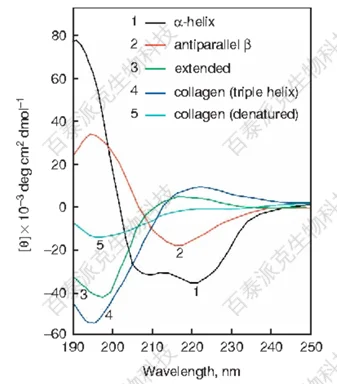
Figure 1
Biotechnology--BioProductsCharacterization, a leading service provider of multi-omics mass spectrometry analysis
Related services:
Protein circular dichroism analysis
Protein structure identification
Protein primary structure determination
Mass spectrometry-based sequence analysis
Protein disulfide bond identification and quantitative analysis
How to order?




