






In-depth Understanding of GST Pull Down Experiment: Revealing the Connection Between Protein Binding and Signal Transduction
Protein-protein interactions are a crucial foundation for signal transduction and cell function regulation within organisms. To gain a deeper understanding of the binding relationships between proteins and the pathways of signal transduction, scientists have developed various experimental methods. Among them, the GST Pull Down assay is a commonly used and reliable method for studying protein-protein interactions and has achieved significant breakthroughs in the field of biopharmaceutical development. This article will detail the principles, applications, and importance of the GST Pull Down assay in the study of protein binding and signal transduction, showcasing its potential and value in biopharmaceutical development.
1. The Principle of GST Pull Down Assay
The GST Pull Down assay is an experimental method based on the principle of protein affinity purification, utilizing the interaction between the GST tag and its binding partner to enrich and purify target proteins. The specific steps include: first, the target protein is fused to a GST tag, forming a GST-target protein complex. Then, using affinity purification methods, the GST-target protein complex is captured along with other interacting protein partners. Finally, through elution and analysis techniques (such as immunoblotting, mass spectrometry, etc.), the enriched protein complexes are detected and identified.
2. Applications of GST Pull Down Assay
1. Revealing Protein Binding Relationships:
The GST Pull Down assay is widely used to study the interaction relationships between proteins. By combining GST-tagged proteins with potential binding partners, scientists can identify and characterize the binding partners of proteins, revealing protein interaction networks and signal transduction pathways. For example, through the GST Pull Down assay, researchers have discovered several important protein binding relationships, such as the interaction between kinases and substrates.
2. Studying Signal Transduction Pathways:
Signal transduction pathways are crucial processes for the transmission of information inside and outside the cell. The GST Pull Down assay can help scientists gain deeper insights into the regulatory mechanisms of signal transduction pathways. By studying the key protein interactions within a signaling pathway, we can uncover the regulatory mechanisms of signal transduction, discovering new signaling molecules and regulatory factors. For instance, through the GST Pull Down assay, researchers have revealed protein interactions within certain signaling pathways, providing new clues for the study of signal transduction.
3. Biopharmaceutical Development:
The GST Pull Down assay plays an important role in biopharmaceutical development. By studying the interactions between drugs and target proteins, we can evaluate the specificity and efficacy of drugs, optimizing drug design and screening processes. This helps to accelerate the progress of biopharmaceutical development, providing more reliable foundations for the development of new drugs. For example, through the GST Pull Down assay, scientists can assess the binding capability of potential drugs with specific proteins and screen out drug candidates with high affinity and specificity.
3. The Importance of GST Pull Down Assay in Protein Binding and Signal Transduction Research
1. The GST Pull Down assay provides an important tool for studying the association between protein binding and signal transduction. By revealing protein binding relationships and the regulatory mechanisms of signaling pathways, this assay can help us gain a deeper understanding of the intracellular signal transduction network, uncovering the regulatory mechanisms of signal transduction. This is of great significance for understanding cell function regulation, disease mechanisms, and drug development.
2. The GST Pull Down assay has broad application prospects in biopharmaceutical development. By studying the interactions between drugs and target proteins, we can evaluate the specificity and efficacy of drugs, optimizing drug design and screening processes. This helps to accelerate the progress of biopharmaceutical development, providing more reliable foundations for the development of new drugs. For example, through the GST Pull Down assay, researchers can assess the binding capability of potential drugs with specific proteins and screen out drug candidates with high affinity and specificity.
3. Additionally, the GST Pull Down assay plays an important role in uncovering disease mechanisms and identifying new therapeutic targets. Many disease mechanisms involve the abnormal regulation of protein binding relationships. By studying the interactions between disease-related proteins and other proteins, we can gain a deeper understanding of the disease development process and provide new targets and strategies for disease diagnosis and treatment. Through the GST Pull Down assay, researchers can reveal the binding networks of disease-related proteins, offering new directions for disease treatment.
However, the GST Pull Down assay also faces some challenges and limitations. For example, the assay requires high expression and purification of target proteins, posing certain difficulties for target proteins that are difficult to express and purify, such as large complex molecules and membrane proteins. Additionally, the sensitivity and specificity of the technique need further improvement to meet the research needs of low-abundance and weak interaction protein complexes.
As an important method for studying protein-protein interactions, the GST Pull Down assay provides a reliable tool for revealing the association between protein binding and signal transduction. Through this assay, scientists can gain deep insights into the binding relationships between proteins and the regulatory mechanisms of signal transduction pathways, providing important clues and guidance for biopharmaceutical development and disease treatment.
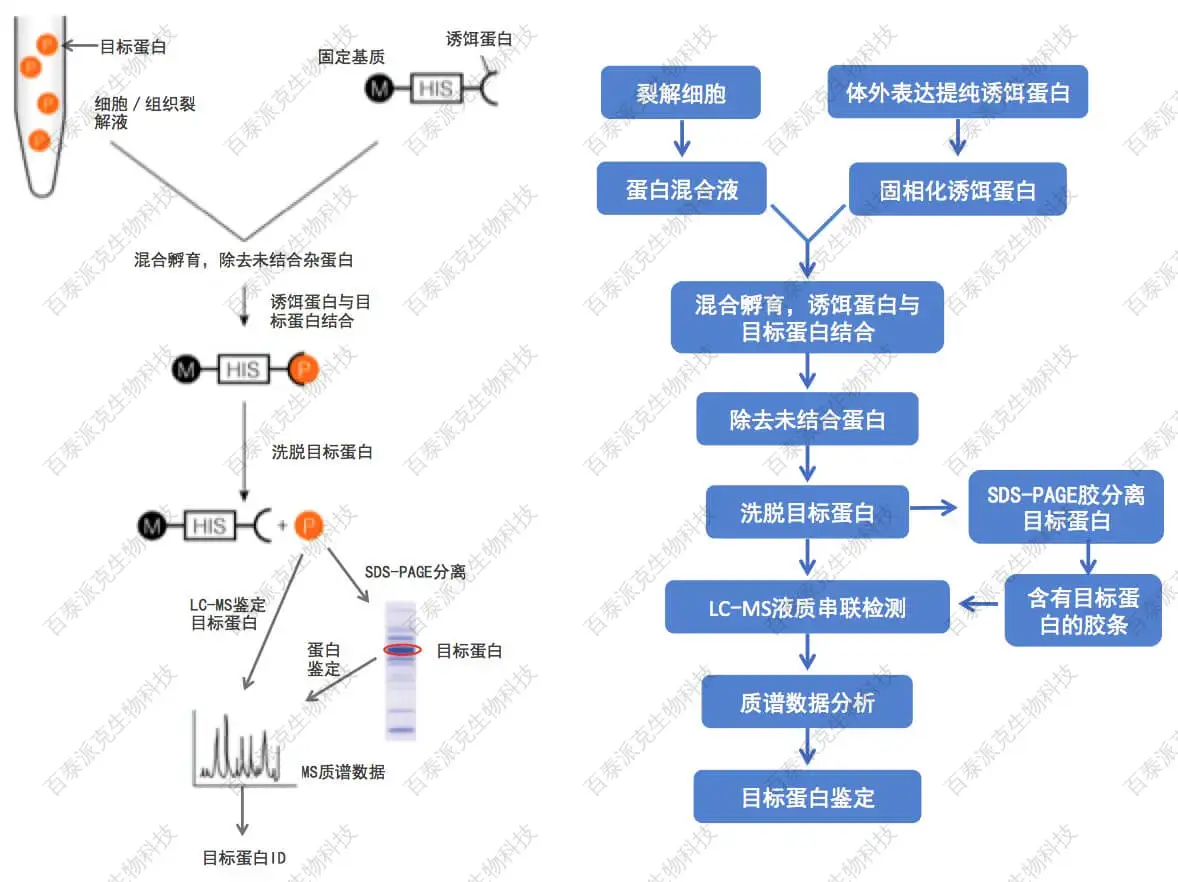
Figure 1
Biomarker Technologies – A quality service provider for bioproduct characterization and multi-omics mass spectrometry analysis
Related Services:
GST Pull-Down Protein Interaction Analysis
Protein Interaction Mass Spectrometry Analysis
Pull-Down Target Protein Mass Spectrometry Identification
SILAC and Co-Immunoprecipitation Mass Spectrometry Combined Protein Interaction Analysis
How to order?




