






Exploration of Methods and Techniques for Protein Crosslinking Experiments
Protein-protein interactions are complex and crucial molecular communication methods within organisms. Protein cross-linking experiments are an important approach to studying protein interactions by chemically or physically linking specific sites within proteins, thereby revealing protein interaction networks and complex structures. This article introduces the significance and applications of protein cross-linking experiments, with a focus on common cross-linking methods and related technologies.
I.The Significance and Applications of Cross-linking Experiments
1. Revealing Protein Interactions:
Protein cross-linking experiments help us understand the relationships between interacting proteins. By cross-linking specific sites within proteins, we can identify interacting proteins and explore their structures and functions.
2. Analyzing Complex Protein Structures:
Protein cross-linking experiments are significant for analyzing complex protein structures. Complex protein structures often contain multiple domains and subunits, and cross-linking experiments can reveal the relationships and conformations among these structures.
II.Common Methods for Protein Cross-linking Experiments
1. Chemical Cross-linking:
Chemical cross-linking uses cross-linking agents to connect specific amino acid residues in proteins. Common cross-linking agents include DTSSP, DSS, and BS3. Chemical cross-linking can be performed in solution and is suitable for studying protein interactions and distance constraints.
2. Photocrosslinking:
Photocrosslinking uses photosensitive cross-linking agents and UV irradiation to link specific sites within proteins. Photocrosslinking can be performed in situ and is advantageous for studying protein interactions in biological environments.
III.Related Protein Cross-linking Technologies
1. Gel Electrophoresis:
Gel electrophoresis is a commonly used technique for analyzing cross-linked proteins. By separating cross-linked protein samples through gel electrophoresis, cross-linked products can be detected, and protein interactions and complex structures can be inferred.
2. Mass Spectrometry Analysis:
Mass spectrometry plays an important role in protein cross-linking experiments. Through mass spectrometry, cross-linking sites can be identified and the mass, structure, and composition of cross-linked products can be analyzed.
3. Structural Analysis Techniques:
Structural analysis techniques, such as X-ray crystallography and nuclear magnetic resonance, can further resolve the three-dimensional structures and conformations of cross-linked products, providing deeper insights into protein interactions and complex structures.
IV.Optimization and Challenges of Protein Cross-linking Experiments
1. Optimization of Cross-linking Conditions:
Selecting suitable cross-linking agents, concentrations, and reaction times are key to successful cross-linking experiments. Optimizing cross-linking conditions can improve efficiency and accuracy.
BiotechPack, A Biopharmaceutical Characterization and Multi-Omics Mass Spectrometry (MS) Services Provider
Data generated from protein cross-linking experiments requires comprehensive analysis and interpretation. The challenge lies in accurately interpreting complex cross-linking data and analyzing protein interaction relationships and structures.
Protein cross-linking experiments are essential for studying protein interactions and complex structures. By selecting appropriate cross-linking methods and related technologies, we can uncover protein interaction networks and resolve complex structures, providing important support for biopharmaceutical research and related fields.
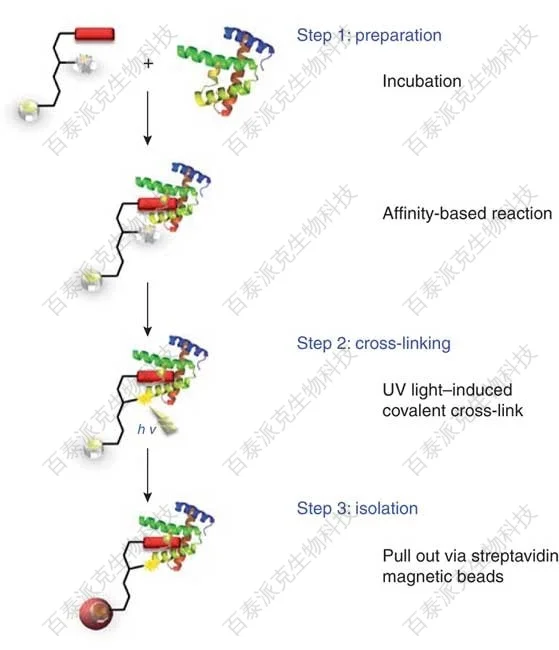
Figure 1
Biotech Company - BiologicalProductsCharacterization, Multi-group Biological Mass Spectrometry Service Provider
Related Services:
Cross-linking Method Protein Interaction Analysis
Protein Interaction Mass Spectrometry Analysis
CO-IP Co-immunoprecipitation Protein Interaction AnalysisAnalysis
GST Pull-down Protein Interaction Analysis
SILAC and Co-immunoprecipitation Mass Spectrometry Combined Protein Interaction Analysis
How to order?




