






High-throughput Proteomics: Accelerating the Analysis of Protein Complexity and Function
With the development of high-throughput proteomics technologies, we can analyze the complexity and functionality of the proteome more quickly and comprehensively. This article will provide a detailed introduction to the concepts and methods of high-throughput proteomics, emphasizing how this technology accelerates the analysis of the complexity and functionality of the proteome, and exploring its importance and application value in biomedical research.
1. Overview of High-Throughput Proteomics Technologies
High-throughput proteomics is a technology that can simultaneously analyze a large number of proteins. It combines multiple steps such as separation, detection, and quantification to rapidly acquire information about the proteome. Common high-throughput proteomics technologies include mass spectrometry and immunoassays.
2. Accelerating the Analysis of Proteome Complexity
High-throughput proteomics technologies can accelerate the analysis of proteome complexity. By analyzing a large number of proteins simultaneously, we can obtain more comprehensive proteomic information. This helps us understand protein interactions, signaling pathways, and functional networks. Compared to traditional methods, high-throughput proteomics technologies can more quickly reveal the complexity of the proteome and aid in better understanding biological processes.
3. Revealing Proteome Functionality
High-throughput proteomics technologies can also accelerate the revelation of proteome functionality. By extensively analyzing the expression levels, modification states, and interactions of proteins, we can identify functionally related proteins and explore their roles in cellular processes, development, and diseases. This helps accelerate functional annotation and the analysis of biological processes, providing more clues and strategies for biomedical research.
4. Application Areas and Importance
High-throughput proteomics technologies have widespread application value in biomedical research. Firstly, they can be used for studying the molecular mechanisms of diseases, identifying potential biomarkers and drug targets, and promoting early diagnosis and treatment of diseases. Secondly, these technologies can be used in drug development for efficacy evaluation and side effect analysis, improving the efficiency and safety of drug development. Additionally, high-throughput proteomics technologies can be applied in agricultural and environmental research, such as crop improvement and environmental pollution monitoring.
5. Technical Challenges and Future Development
High-throughput proteomics technologies still face challenges such as complexities in sample processing, data handling, and standardization. Future development directions include improving the sensitivity and accuracy of the technology, optimizing sample processing and data analysis methods, and enhancing integration with other omics technologies to achieve more comprehensive and systematic bioinformatics analysis.
6. Conclusion
High-throughput proteomics technologies have accelerated the analysis of the proteome, enabling us to understand the complexity and functionality of the proteome more quickly and comprehensively. Reasonable selection and optimization of each step in the analysis process can improve the reliability of experiments and the accuracy of data. High-throughput proteomics technologies have significant application value in biomedical research and drug development.
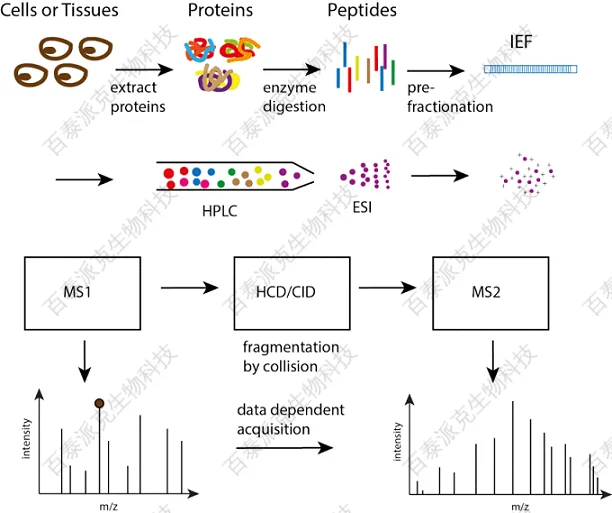
Figure 1
Biotech Pack -- BiotechnologyProductsCharacterization, High-Quality Multi-Omics Mass Spectrometry Detection Service Provider
Related Services:
Shotgun Proteomics Identification
Protein Mass Spectrometry Identification
Quantitative Proteomics Analysis
Pull-Down Target Protein Mass Spectrometry Identification
Peptide Mass Spectrometry Identification
How to order?




