






Key Technologies for Decoding Protein Sequences: Identification and Analysis of Protein Composition
Proteins are essential components within living organisms, undertaking various biological functions such as catalyzing reactions, providing structural support, and transmitting signals. Identifying and analyzing protein composition is crucial for understanding cellular processes, disease mechanisms, and the development of biopharmaceuticals. This article focuses on key techniques for decoding protein sequences, with an emphasis on protein identification and sequence analysis methods, and explores the importance of mass spectrometry in this process.
1. Protein Identification
Protein identification is the process of determining the identity and quantity of proteins present in a sample. It involves extracting proteins from the sample, reducing complexity, separating and purifying the proteins, and using suitable techniques for identification. Currently, commonly used protein identification methods mainly include mass spectrometry and antibody-based methods.
1. Mass Spectrometry
Mass spectrometry is a method based on measuring the mass-to-charge ratio (m/z) of protein ions. By ionizing protein samples and analyzing them through a mass spectrometer, a mass spectrum of the protein can be obtained. These mass spectra are compared with known protein databases to determine the identity of proteins in the sample.
2. Antibody-Based Methods
Antibody-based methods utilize specific antibodies that bind specifically to the target protein to determine its presence and quantity. Common methods include immunoblotting, immunohistochemistry, and immunoprecipitation.
2. Protein Sequence Analysis
Protein sequence refers to the order of amino acids in a protein molecule. Protein sequence analysis aims to determine the complete sequence of a protein, revealing its structure and function. Common methods of protein sequence analysis include mass spectrometry, gene sequencing, and protein chip technology.
1. Mass Spectrometry
Mass spectrometry plays a significant role in protein sequence analysis. The high sensitivity and high resolution of mass spectrometry instruments make it possible to identify amino acid composition and modifications in proteins, and further deduce the sequence information of proteins.
2. Gene Sequencing
Gene sequencing is a method of deriving protein sequence information by determining the genomic DNA sequence. The development of modern sequencing technology has made high-throughput gene sequencing possible, allowing for the rapid acquisition of large amounts of protein sequence information.
3. Protein Chip Technology
Protein chip technology is based on a high-throughput protein detection platform that can simultaneously identify and quantify large numbers of proteins. It can be used to discover new protein biomarkers, study protein interactions, and signal pathways.
3. Application Areas
Protein identification and sequence analysis have wide applications in biomedical research and biopharmaceutical development.
1. Biopharmaceutical Development
Identifying and analyzing protein composition is crucial for the development of biopharmaceuticals. These techniques can be used to determine the quality of biopharmaceuticals, confirm protein sequences and modifications, and evaluate product stability and consistency.
2. Disease Research
Protein identification and sequence analysis are significant for disease diagnosis and treatment. They can help in finding biomarkers, understanding disease mechanisms, and discovering new therapeutic targets.
The key techniques for decoding protein sequences include protein identification and sequence analysis methods, and the importance of mass spectrometry within these processes. These techniques play a crucial role in biomedical research and biopharmaceutical development, providing powerful tools for a deeper understanding of the composition, function, and related disease mechanisms of proteins within living organisms.
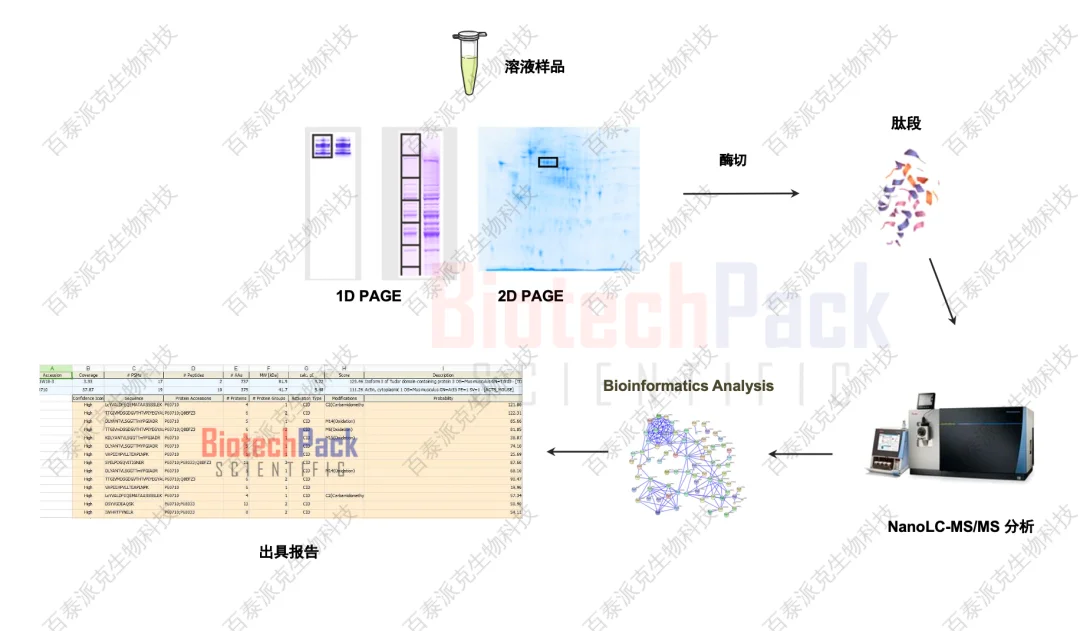
Figure 1
Biotech Company - BiologicalProductsCharacterization, multi-omics biomolecular mass spectrometry high-quality service provider
Related Services:
Complete Protein Sequence Determination
Protein Mass Spectrometry Identification
Quantitative Proteomics Analysis
Label-based Protein Quantification Techniques - iTRAQ, TMT, SILAC
TMT/iTRAQ/MultiNotch Quantitative Proteomics Analysis
Protein Molecular Weight Determination
How to order?




