






What common techniques and methods are used in glycomics mass spectrometry analysis?
Glycomics is the study of the composition, structure, and function of carbohydrate molecules in living organisms. Carbohydrate molecules play important roles in biological processes such as cell signaling, protein modification, and immune response. Research in glycomics is crucial for understanding disease mechanisms, drug development, and bioengineering. Mass spectrometry is one of the commonly used techniques in glycomics research. This article will introduce common techniques and methods of mass spectrometry in glycomics.
1. MALDI-TOF Mass Spectrometry Analysis
MALDI-TOF (Matrix-Assisted Laser Desorption/Ionization Time of Flight) mass spectrometry analysis is a commonly used technique in glycomics. This technique utilizes the principle of matrix-assisted laser desorption/ionization time-of-flight mass spectrometry. It involves mixing the sample with a matrix, and after laser radiation, ions are generated, which travel in an electric field and are detected. MALDI-TOF mass spectrometry offers high sensitivity, high resolution, and high throughput, allowing for rapid analysis of the composition and structure of carbohydrate molecules.
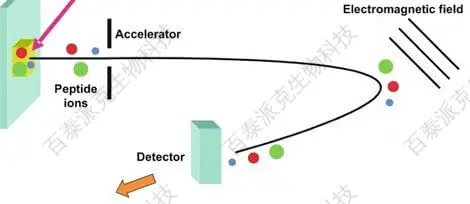
Figure 1
2. ESI-MS Mass Spectrometry Analysis
ESI-MS (Electrospray Ionization Mass Spectrometry) is another commonly used technique in glycomics. This technique uses the principle of electrospray ionization, where sample solutions are ionized using an electrospray ion source, and then analyzed by a mass spectrometer to acquire mass-to-charge ratio information of the ions. ESI-MS offers high sensitivity, high selectivity, and high resolution, and can be used for qualitative and quantitative analysis of carbohydrate molecules.
3. Glycosidase Digestion Mass Spectrometry
Glycosidase digestion mass spectrometry is a commonly used method in glycomics. This method involves using specific glycosidases to enzymatically digest carbohydrate molecules, generating specific sugar fragments, which are then analyzed by mass spectrometry. Glycosidase digestion mass spectrometry can determine the structure and modification of carbohydrate molecules, playing an important role in studying their functions and biological significance.
4. Carbohydrate Labeling Mass Spectrometry
Carbohydrate labeling mass spectrometry is a commonly used technique in glycomics. This technique involves tagging carbohydrate molecules with specific labeling molecules, then analyzing the labeled carbohydrates using mass spectrometry. Carbohydrate labeling mass spectrometry allows for qualitative and quantitative analysis of carbohydrates, and also studies their metabolic pathways and signaling mechanisms.
5. Carbohydrate Mass Spectrometry Database Analysis
Carbohydrate mass spectrometry database analysis is a commonly used method in glycomics. This method involves comparing experimental mass spectrometry data with known carbohydrate mass spectrometry databases to determine the composition and structure of carbohydrate molecules. Carbohydrate mass spectrometry database analysis enables rapid identification of carbohydrates, accelerating the progress of glycomics research.
Glycomics mass spectrometry analysis is an important tool for studying the composition and structure of carbohydrates. By using techniques such as MALDI-TOF mass spectrometry, ESI-MS mass spectrometry, glycosidase digestion mass spectrometry, carbohydrate labeling mass spectrometry, and carbohydrate mass spectrometry database analysis, we can gain an in-depth understanding of the functions and biological significance of carbohydrates, providing important references for disease diagnosis and drug development. The continuous development of glycomics mass spectrometry analysis will further advance glycomics research, contributing to human health and the development of biological sciences.
Biotech Pack Biological Technology - A quality service provider in bioproduct characterization and multi-omics biological mass spectrometry testing
Related Services:
MALDI TOF Molecular Weight Analysis
Molecular Weight Determination
High Resolution Mass Spectrometry Molecular Weight Identification
Protein Molecular Weight Determination
Mass Determination of Protein Complexes, Protein-Small Molecule Complexes
How to order?




