






Best Practices for Sample Preparation in Amino Acid Analysis
Amino acid analysis is an important technology in the field of biopharmaceuticals, playing a significant role in drug research, production, and quality control. However, the accuracy and reliability of amino acid analysis largely depend on the quality of sample preparation. This article will detail the best practices for sample preparation in amino acid analysis, helping readers understand and master this key technology.
1. The Importance of Amino Acid Analysis
Amino acids are the foundation of life, serving as the basic units that make up proteins. Through amino acid analysis, we can understand the structure and function of proteins, thereby gaining deeper insights into the physiological and pathological processes of organisms. In the biopharmaceutical field, amino acid analysis is a crucial step in drug development and production processes. It helps determine the composition and purity of drugs and monitors quality control during production.
2. Key Steps in Sample Preparation
Sample preparation is the first and most critical step in amino acid analysis. The quality of sample preparation directly affects the accuracy and reliability of the analysis results. Sample preparation mainly includes the collection, preservation, processing, and extraction of samples.
Firstly, samples should be collected under appropriate conditions to prevent degradation or conversion of amino acids. Secondly, the preservation of samples is crucial and should be done under suitable temperature and humidity conditions to maintain sample stability. Then, sample processing usually involves steps such as protein hydrolysis and amino acid derivatization, which require precise control to ensure the accuracy of analysis results. Finally, sample extraction involves isolating amino acids from the sample, requiring the selection of appropriate extraction methods and conditions to ensure efficiency and purity.
3. Best Practices in Sample Preparation
There are best practices in the sample preparation process for amino acid analysis that can help improve the accuracy and reliability of the analysis.
Firstly, appropriate sample collection and preservation methods should be chosen to maintain sample stability. For example, freezing methods can be used to store samples under low-temperature conditions to prevent the degradation or conversion of amino acids.
Secondly, the sample processing process should be precisely controlled to ensure the accuracy of analysis results. For instance, high-performance liquid chromatography (HPLC) can be employed for protein hydrolysis and amino acid derivatization, allowing precise control of reaction conditions to ensure the accuracy of analysis results.
Finally, appropriate extraction methods and conditions should be selected to ensure extraction efficiency and purity. For example, solid-phase extraction can be used to isolate amino acids from the sample, effectively enhancing the accuracy and reliability of the analysis.
Conclusion
In summary, sample preparation in amino acid analysis is a complex and precise process that requires accurate control over the steps of sample collection, preservation, processing, and extraction. By following the best practices mentioned above, we can enhance the accuracy and reliability of amino acid analysis, providing more accurate and reliable data support for the development and production of biopharmaceuticals.
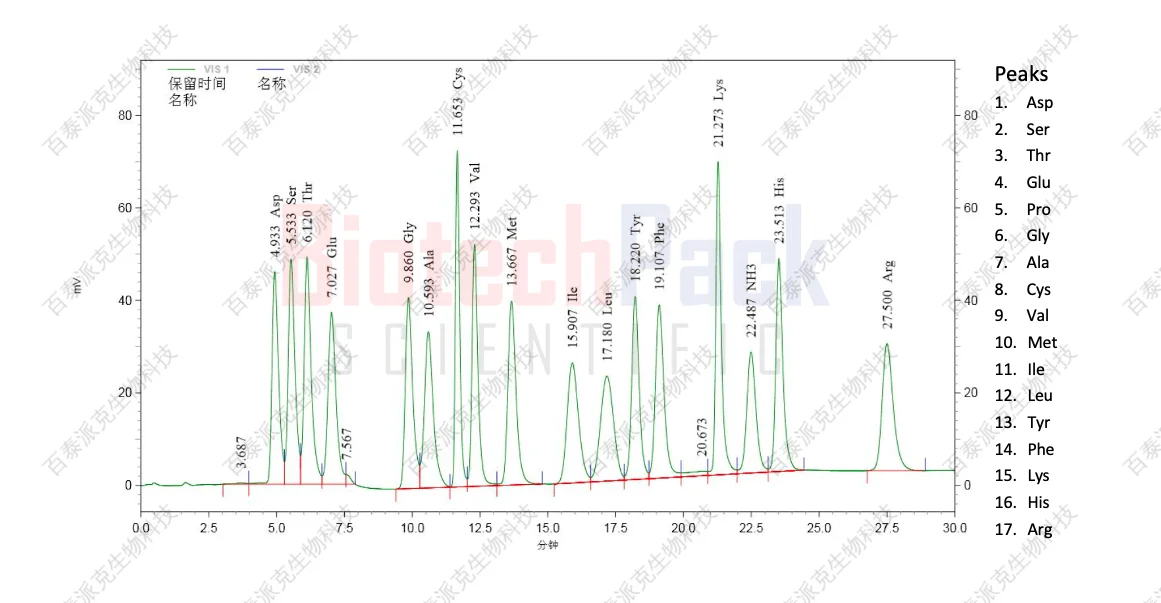
Figure 1
Bio-Techne Corporation — A leading provider of biopharmaceutical characterization and multi-omics mass spectrometry analysis services
Related Services:
Amino Acid Composition Analysis
Amino Acids and Their Derivatives
How to order?




