






Practical Guide to Monosaccharide Composition Analysis: Effectively Improve Sample Analysis Efficiency
Monosaccharides are the basic units that form polysaccharides, and they hold significant importance in the research and development within the biopharmaceutical field. Monosaccharide composition analysis is a key technique that helps researchers understand the structure and properties of polysaccharides. However, traditional methods of monosaccharide composition analysis face efficiency challenges. This article will introduce some methods and tips to improve the efficiency of monosaccharide composition analysis, aiding researchers in conducting sample analysis more efficiently.
1. Choose the Appropriate Analysis Method
Before conducting monosaccharide composition analysis, it is crucial to choose the appropriate analytical method. Common monosaccharide analysis methods include High-Performance Liquid Chromatography (HPLC), Capillary Electrophoresis (CE), and Mass Spectrometry (MS). Each method has its own advantages and disadvantages, and researchers can select the most suitable method based on actual needs. For example, HPLC is suitable for analyzing multiple samples, while CE is more appropriate for scenarios involving small sample quantities.
2. Optimize Sample Preparation Process
Sample preparation is one of the critical steps in monosaccharide composition analysis. Optimizing the sample preparation process can effectively improve analysis efficiency. First, select an appropriate extraction method, such as enzymatic digestion, acid hydrolysis, or enzyme-linked immunosorbent assays. Next, perform suitable pretreatment on the samples, such as impurity removal and sample concentration. Finally, choose the appropriate eluent and solvent to enhance separation and detection effectiveness.
3. Optimize Analysis Conditions
When conducting monosaccharide composition analysis, rationally optimizing analysis conditions can enhance efficiency. First, choose a suitable chromatographic column and mobile phase for effective separation of monosaccharides. Then, optimize chromatographic conditions such as flow rate, temperature, and gradient to improve separation and detection results. Additionally, appropriately select detectors and detection wavelengths to enhance detection sensitivity and selectivity.
4. Use Automated Equipment
Automated equipment can significantly improve the efficiency of monosaccharide composition analysis. For instance, using an automatic sampler allows for continuous analysis of multiple samples, saving operational time. Moreover, automated equipment can reduce human error, improving data accuracy and reliability.
5. Data Analysis and Interpretation
The results of monosaccharide composition analysis need to be analyzed and interpreted. Researchers can use specialized data analysis software such as GlycoWorkbench and GlycoMod to process and interpret the analysis results. Additionally, by consulting literature and database information, researchers can more accurately determine the composition and structure of monosaccharides.
Monosaccharide composition analysis is an important technology in the research field of biopharmaceuticals. By choosing the appropriate analysis method, optimizing sample preparation, optimizing analysis conditions, using automated equipment, and conducting data analysis and interpretation, the efficiency of monosaccharide composition analysis can be effectively improved. It is hoped that this practical guide will help researchers conduct sample analysis more efficiently and advance the practical guide for monosaccharide composition analysis in the biopharmaceutical field.
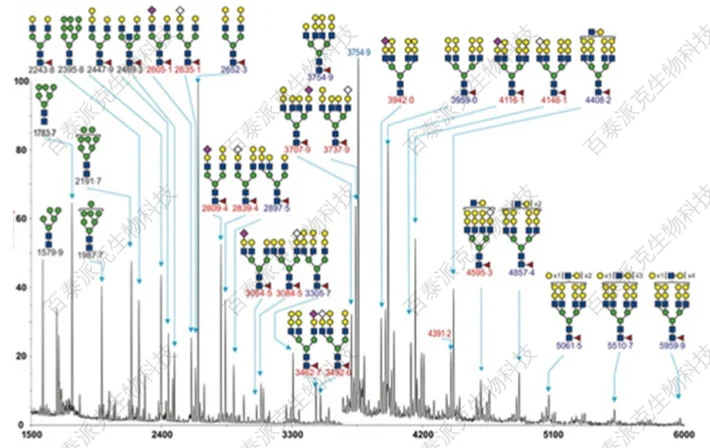
Figure 1
BiotechPack, A Biopharmaceutical Characterization and Multi-Omics Mass Spectrometry (MS) Services Provider
Related Services:
Complete Glycosylation Analysis
How to order?




