






Infrared Spectrum Analysis Steps: From Spectrum to Compound Information Interpretation
Infrared spectroscopy is a commonly used analytical tool that can help scientists determine the structure and function of compounds. By analyzing infrared spectra, we can understand the presence and type of functional groups and chemical bonds in compounds. This article will detail the steps of infrared spectrum analysis to help readers better understand and interpret infrared spectra.
1. Step One: Obtain the Infrared Spectrum
Before analyzing an infrared spectrum, it is first necessary to obtain the spectrum of the compound to be analyzed. This can be achieved using an infrared spectrometer. The spectrometer emits infrared light into the sample and measures the absorption of light at different wavelengths. Through this process, we can obtain an infrared spectrum.
2. Step Two: Observe the Overall Shape of the Spectrum
After obtaining the infrared spectrum, we first observe the overall shape of the spectrum. Infrared spectra typically have wavenumber as the horizontal axis and absorption intensity as the vertical axis. We can note the absorption peaks and bands in the spectrum. Absorption peaks usually indicate the presence of specific functional groups, while absorption bands indicate the presence of chemical bonds.
3. Step Three: Determine the Positions of Absorption Peaks
Next, we need to determine the positions of the absorption peaks in the infrared spectrum. Different functional groups and chemical bonds have specific absorption positions in the spectrum. By comparing the infrared spectra of known compounds with that of the compound being analyzed, we can preliminarily determine the positions of the absorption peaks.
4. Step Four: Interpret the Intensity of Absorption Peaks
In addition to the positions of the absorption peaks, the intensity of these peaks is also an important aspect of infrared spectrum analysis. The intensity can reflect the content of specific functional groups or chemical bonds in the compound. By comparing the intensity of absorption peaks, we can infer the relative content of different functional groups or chemical bonds in the compound.
5. Step Five: Analyze the Shape of Absorption Bands
Apart from absorption peaks, the absorption bands in the infrared spectrum also provide important information. The shape of absorption bands can help us determine the type of chemical bonds. For example, a C=O bond typically appears as a sharp absorption band, while an -OH bond appears as a broad and flat band.
6. Step Six: Integrate the Information to Analyze the Compound
By observing the positions, intensities, and shapes of the absorption peaks and bands in the infrared spectrum, we can gradually analyze the structure and function of the compound. We can compare the spectrum of the compound being analyzed with known infrared spectra from databases to find similar spectra and thus determine the structure and function of the compound.
7. Conclusion
Infrared spectrum analysis is an important chemical analysis method that can help scientists determine the structure and function of compounds. By observing the positions, intensities, and shapes of absorption peaks and bands in the spectrum, we can interpret information about the compound. We hope this article helps readers understand the steps of infrared spectrum analysis and better interpret spectra in practical applications.
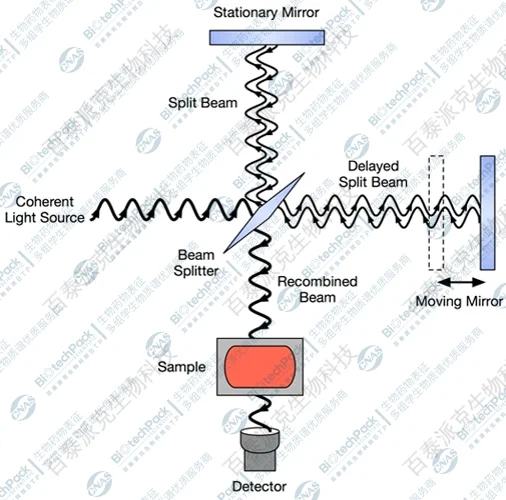
Figure 1
BiotechPack, A Biopharmaceutical Characterization and Multi-Omics Mass Spectrometry (MS) Services Provider
Related Services:
Infrared Spectroscopy Analysis (FT-IR)
Disulfide Bond/Free Cysteine Detection
Protein Circular Dichroism Analysis
How to order?




