






co-ip ms: Decoding the Construction of Protein Interaction Networks
Proteins are the most fundamental functional molecules within living organisms. They interact with each other to form complex protein interaction networks, participating in the regulation of cellular physiological processes. Analyzing protein interaction networks is crucial for understanding cell function and disease mechanisms. In the field of biopharmaceuticals, a widely used technique is co-immunoprecipitation mass spectrometry (co-ip ms), which helps us decode the construction of protein interaction networks.
1. What is co-ip ms?
Co-immunoprecipitation mass spectrometry (co-ip ms) is a technique used to detect protein interactions. It is based on the principle of immunoprecipitation, where specific antibodies are used to precipitate the target protein along with its interacting partners. Mass spectrometry is then used to identify the protein components in the precipitate. By analyzing the proteins in the precipitate, we can understand the interaction relationships between the target protein and other proteins, thereby revealing the construction of protein interaction networks.
2. Steps of co-ip ms
The co-ip ms technique includes the following main steps:
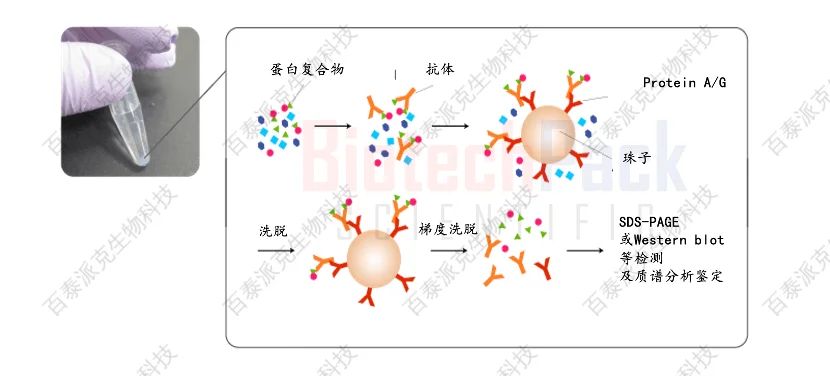
Figure 1
1. Immunoprecipitation
First, we need to select specific antibodies to bind with the target protein. These antibodies can be commercially purchased or prepared in-house. The antibodies are mixed with the proteins in the sample to form an immune complex. Then, by adding a precipitating agent like protein A/G agarose or magnetic beads, the immune complex is precipitated.
2. Washing
After precipitation, the immune complex needs to be washed to remove nonspecifically bound proteins and impurities. Washing conditions need to be optimized according to experimental requirements to ensure that only proteins interacting with the target protein remain after washing.
3. Protein Separation
After washing, the proteins in the immune complex are separated. This can be achieved through heat denaturation or acidic or basic conditions. The separated proteins can be analyzed by methods such as SDS-PAGE to determine the interactions between the target protein and other proteins.
4. Mass Spectrometry Analysis
Finally, the separated protein samples undergo mass spectrometry analysis. This can be achieved using liquid chromatography-tandem mass spectrometry (LC-MS/MS). By comparing with protein sequence databases, the protein components in the precipitate can be identified.
3. Applications of co-ip ms
The co-ip ms technique has wide applications in the biopharmaceutical field. It can help us reveal protein interaction networks, thereby deepening our understanding of cellular physiological processes and disease mechanisms. Specific applications include:
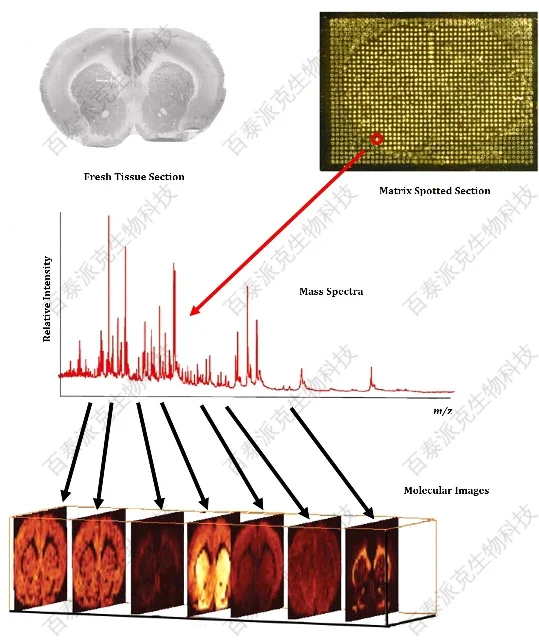
Figure 2
1. Drug Target Identification
Co-ip ms can help us identify drug targets. By analyzing interactions between drugs and proteins, we can determine the mechanism and targets of drug action, providing important guidance for drug development.
2. Disease Mechanism Research
Co-ip ms can help us reveal the mechanisms of disease onset. By comparing differences in protein interaction networks between normal and diseased cells, we can identify key proteins related to diseases, providing new clues for disease diagnosis and treatment.
3. Protein Function Research
Co-ip ms can assist in studying protein functions. By analyzing protein interactions, we can understand the functions and regulatory mechanisms of proteins within cells, laying a foundation for further research.
The co-ip ms technique is a powerful tool that can help us decode the construction of protein interaction networks. By analyzing protein interactions, we gain deep insights into cellular physiological processes and disease mechanisms. In the biopharmaceutical field, the application of co-ip ms technology will provide significant support for drug development and disease treatment. With continuous advancements in technology, it is believed that co-ip ms will play an even greater role in the future.
BiotechPack, A Biopharmaceutical Characterization and Multi-Omics Mass Spectrometry (MS) Services Provider
Related Services:
CO-IP Co-Immunoprecipitation Protein Interaction Analysis
Protein Interaction Analysis
Protein Interaction Mass Spectrometry Analysis
SILAC and Immunoprecipitation Mass Spectrometry for Protein Interaction Analysis
Cross-Linking Protein Interaction Analysis
Far-Western Blot Analysis
Label Transfer Protein Interaction Analysis
Pull-Down Target Protein Mass Spectrometry Identification
How to order?




