






CO-IP Immunoprecipitation: Revealing the Composition of Protein Complexes
1. What is CO-IP Co-Immunoprecipitation?
CO-IP Co-Immunoprecipitation is a commonly used biochemical technique for studying protein-protein interactions and the composition of protein complexes. Through this technique, we can understand the interactions between proteins within cells, revealing mechanisms of important biological processes such as cell signaling and metabolic regulation.
2. The Principle of CO-IP Co-Immunoprecipitation
The principle of CO-IP Co-Immunoprecipitation is based on the specific binding of antibodies. First, we select a specific antibody that can bind to the target protein of interest. Then, this antibody is combined with a solid-phase carrier such as magnetic beads or agarose to form an immune complex. Next, this immune complex is mixed with a lysate from cells or tissues to allow the target protein to bind to the antibody. Subsequently, through operations such as centrifugation, the immune complex is separated from other non-specifically bound proteins. Finally, through steps such as washing and elution, the target protein is released from the immune complex for further analysis.
3. Applications of CO-IP Co-Immunoprecipitation
CO-IP Co-Immunoprecipitation is widely used in biomedical research. Here are some common application areas:
1. Revealing Protein Interactions
CO-IP Co-Immunoprecipitation can help us understand the interactions between proteins. By selecting different antibodies, we can analyze how one protein binds with others, revealing the composition and function of protein complexes.
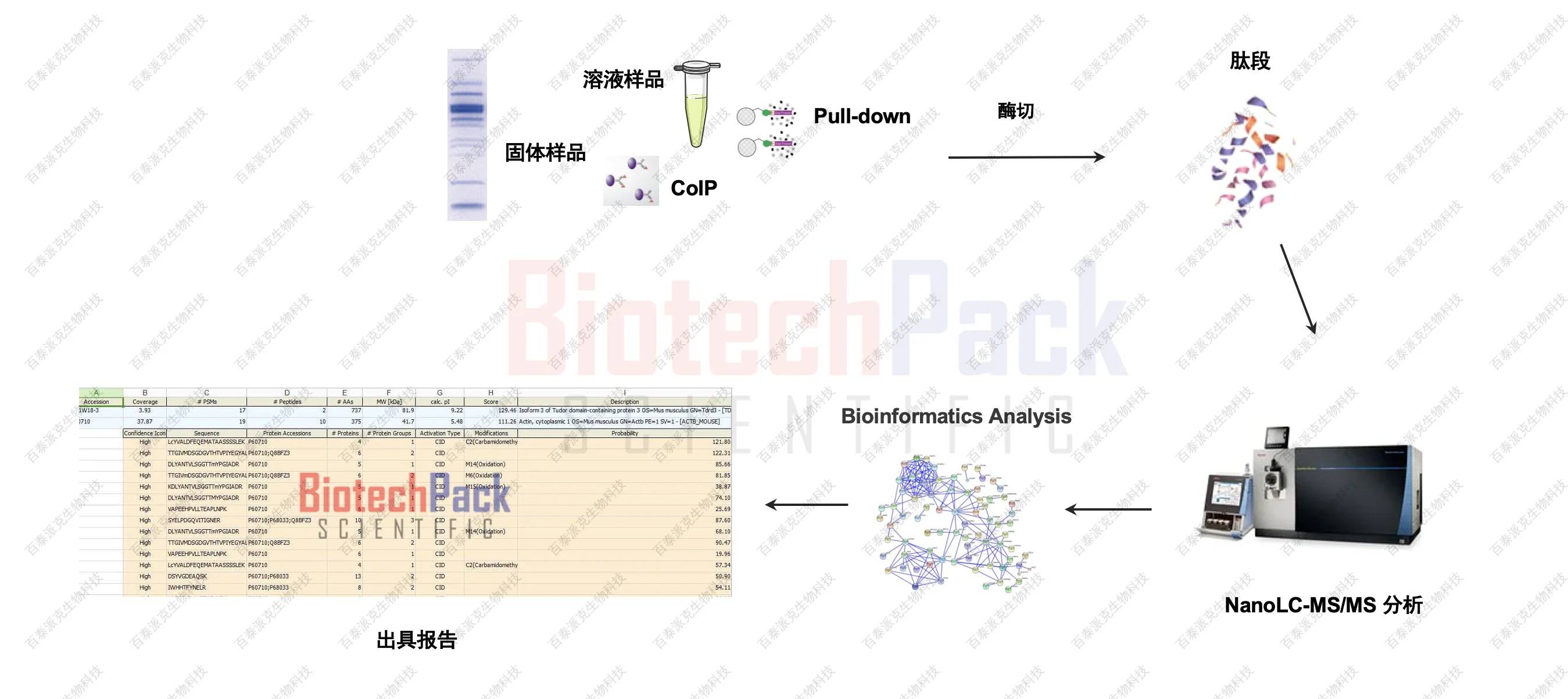
Figure 1
2. Studying Signaling Pathways
CO-IP Co-Immunoprecipitation can be used to study cellular signaling pathways. By analyzing protein interactions within signaling pathways, we can understand the mechanisms of signal transduction and reveal regulatory relationships at various stages within the cell.
3. Identifying Protein Modifications
CO-IP Co-Immunoprecipitation can help us identify protein modifications. By selecting specific antibodies, we can analyze whether proteins are phosphorylated, acetylated, etc., to understand how these modifications impact protein function.
4. Researching Disease Mechanisms
CO-IP Co-Immunoprecipitation is also crucial in researching disease mechanisms. By analyzing the interactions of disease-related proteins, we can understand the mechanisms of disease development, providing new insights for diagnosis and treatment.
4. Advantages and Limitations of CO-IP Co-Immunoprecipitation
CO-IP Co-Immunoprecipitation has many advantages but also some limitations.
1. Advantages
(1) High specificity: CO-IP Co-Immunoprecipitation can highly specifically enrich target proteins and their interaction partners by selecting specific antibodies, reducing non-specific interference.
(2) High sensitivity: CO-IP Co-Immunoprecipitation can detect low-abundance protein interactions, aiding in the discovery of new protein complexes.
(3) Quantitative analysis available: CO-IP Co-Immunoprecipitation can quantitatively analyze the abundance of target proteins and their interaction partners through methods like Western blotting, helping to understand the composition and dynamic changes of protein complexes.
2. Limitations
(1) Antibody selection limitations: The success of CO-IP Co-Immunoprecipitation largely depends on the selection of antibodies. If good specific antibodies are unavailable, it may be challenging to enrich target proteins and their interaction partners successfully.
(2) Cross-reactivity interference: In CO-IP Co-Immunoprecipitation, antibodies may have cross-reactivity issues, leading to non-specific interference.
(3) Highly dependent on prior knowledge: CO-IP Co-Immunoprecipitation requires some understanding of target proteins and their interaction partners to select appropriate antibodies and conditions for experimentation.
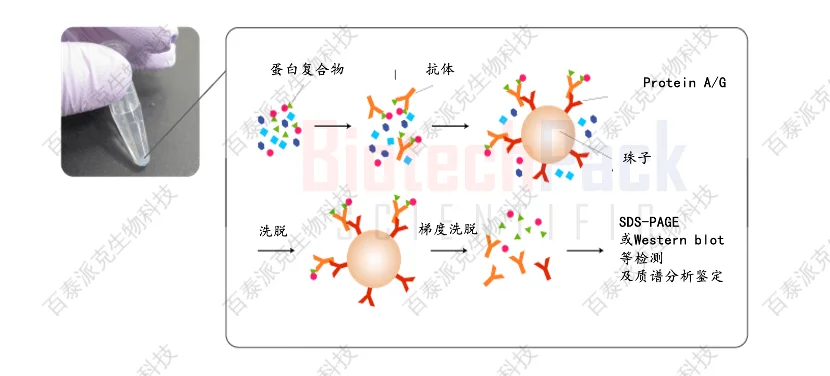
Figure 2
CO-IP Co-Immunoprecipitation is a vital technique for studying protein interactions, revealing the composition and function of protein complexes. It is widely used in biomedical research to help understand protein interactions, study signaling pathways, identify protein modifications, and research disease mechanisms. However, CO-IP Co-Immunoprecipitation also has limitations, such as antibody selection constraints and cross-reactivity interference. Therefore, careful consideration of experimental design and conditions is needed when using CO-IP Co-Immunoprecipitation to ensure the accuracy and reliability of results.
BiotechPack, A Biopharmaceutical Characterization and Multi-Omics Mass Spectrometry (MS) Services Provider
Related Services:
CO-IP Co-Immunoprecipitation Protein Interaction Analysis
Protein-Protein Interaction Analysis
Protein-Protein Interaction Mass Spectrometry Analysis
SILAC and Co-Immunoprecipitation Mass Spectrometry for Protein Interaction Analysis
Crosslinking Method Protein Interaction Analysis
Far-Western Blot Analysis
Label Transfer Method Protein Interaction Analysis
Pull-down Target Protein Mass Spectrometry Identification
How to order?




