






Does co-ip-ms require IgG control?
1. What is co-ip-ms?
Co-ip-ms is a commonly used experimental technique in the field of biopharmaceutical research. Its full name is co-immunoprecipitation mass spectrometry. It combines co-immunoprecipitation and mass spectrometry to study the interactions between proteins.
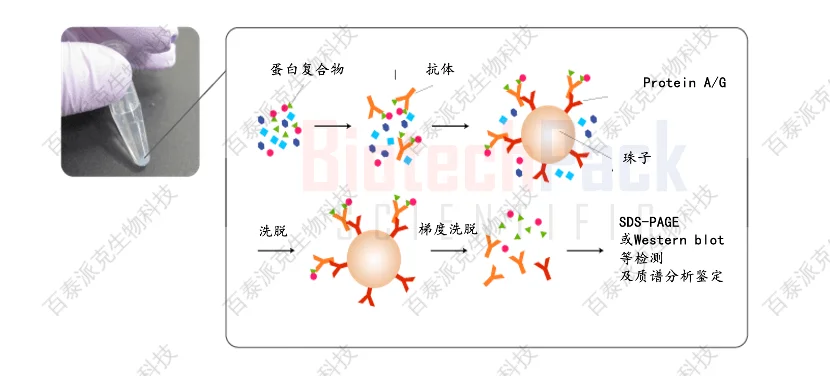
Figure 1
2. Principle of co-immunoprecipitation
Co-immunoprecipitation is a technique that utilizes antibodies to specifically recognize and bind to target proteins. In the experiment, a specific antibody is chosen to bind with the target protein, forming an antigen-antibody complex. Then, a precipitating agent is added to isolate the complex. Finally, through washing and centrifugation, the complex is separated from other proteins and impurities.
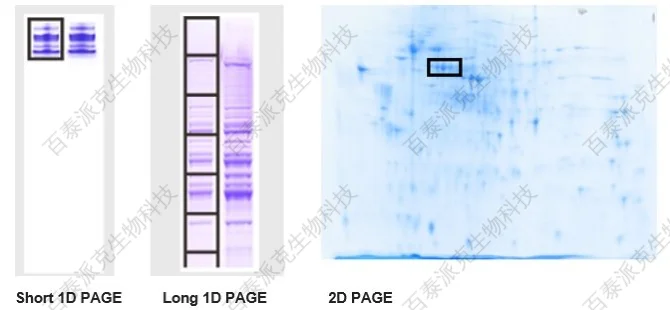
Figure 2
3. Role of mass spectrometry
Mass spectrometry is a technique used to determine the molecular structure and composition of substances. In co-ip-ms experiments, the precipitated complex is analyzed using mass spectrometry, allowing for the identification of protein components. Through mass spectrometry, we can understand the interactions between target proteins and other proteins, revealing signaling and regulatory mechanisms in biological processes.
4. Role of the IgG control
In co-ip-ms experiments, the IgG control is a commonly used experimental control. IgG is an immunoglobulin that does not specifically bind to the target protein. Therefore, using IgG as a control can help determine whether the experimental results are affected by non-specific binding.
5. Why is the IgG control needed?
In co-ip-ms experiments, it is often necessary to determine the specific interactions between target proteins and other proteins. However, due to the complexity of experimental conditions and the complexity of proteins, non-specific binding is often unavoidable. This non-specific binding can interfere with our assessment of the true interactions between the target protein and other proteins.
To eliminate the influence of non-specific binding, the IgG control is introduced. By performing co-immunoprecipitation with IgG along with the target protein, we can determine the extent of non-specific binding under experimental conditions. By comparing the co-precipitation of the target protein with IgG, we can accurately assess the specific interactions between the target protein and other proteins.
6. Functions of the IgG control
In co-ip-ms experiments, introducing an IgG control can serve several functions:
1. Assess the extent of non-specific binding
By performing co-immunoprecipitation with IgG and the target protein, we can determine the extent of non-specific binding under experimental conditions. If co-precipitation with IgG is observed, unrelated to the target protein, it can be inferred that these co-precipitates are due to non-specific binding. This allows us to accurately assess the specific interactions between the target protein and other proteins.
2. Determine specific interactions
By comparing the co-precipitation of the target protein with IgG, we can further determine the specific interactions between the target protein and other proteins. If co-precipitation with the target protein is strong and weak or absent with IgG, it can be inferred that there is a specific interaction between the target protein and other proteins.
3. Enhance the reliability of experimental results
Introducing an IgG control can help eliminate the influence of non-specific binding, enhancing the reliability of experimental results. By designing experiments appropriately, including selecting the right IgG control and controlling experimental conditions, we can better understand the interactions between proteins, providing strong support for biopharmaceutical research.
In co-ip-ms experiments, the IgG control is an important experimental control. It helps assess the extent of non-specific binding, determine specific interactions, and enhance the reliability of experimental results. By designing experiments appropriately and introducing an IgG control, we can better understand the interactions between proteins, providing strong support for biopharmaceutical research.
Biotech-Pacific Bio-Tech -- A quality service provider for biological product characterization and multi-group biomolecule mass spectrometry detection
Related services:
CO-IP immunoprecipitation protein interaction analysis
Protein interaction analysis
Protein interaction mass spectrometry analysis
SILAC and immunoprecipitation mass spectrometry combined protein interaction analysis
Cross-linking method protein interaction analysis
Far-Western Blot analysis
Label transfer method protein interaction analysis
Pull-down target protein mass spectrometry identification
How to order?




