






Protein Post-Translational Modification Analysis Strategy
Much of the early work in proteomics focused on changes in protein expression levels at different stages of cell growth or after disease or mitogen stimulation. However, many life processes are controlled not only by the relative abundance of proteins but also by the reversible post-translational modifications (PTMs) of their spatiotemporal distribution. Therefore, uncovering the patterns of PTMs is a prerequisite for understanding the complexity and diverse biological functions of proteins. PTMs of proteins are complex processes. Currently, the most common types of modifications discovered are glycosylation, ubiquitination, and phosphorylation.
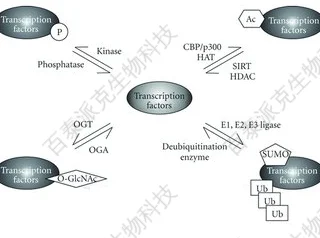
Strategies for Analyzing Protein Post-Translational Modifications
The low abundance and wide dynamic range of post-translationally modified proteins in samples pose significant challenges for related research. Based on the heterogeneity and low relative abundance of PTM proteins, gels, mass spectrometry, and bioinformatics tools are mainly used to study them. Mass spectrometry methods for PTM analysis are similar to those used for 'conventional' protein identification, including bottom-up, middle-down, and top-down proteomics analysis.
Bottom-up Analysis Strategies for Post-Translational Modifications
Bottom-up proteomics is a peptide-based analysis technique. Specific analysis strategies differ for different types of post-translational modifications.
Glycosylation
Protein glycosylation is heterogeneous. Different sugar chains can attach to the same site, and different sites can attach to different sugar chains on the same protein. The heterogeneity of glycosylation severely hinders the separation and analysis of glycoproteins. The same protein with different sugar types will appear as dispersed bands on electrophoresis, leading to signal dispersion. Additionally, poor specificity for low-abundance proteins results in poor separation of glycoproteins in chromatograms and indistinct, inaccurate peaks in mass spectrometry.
Currently, the main strategy for studying protein glycosylation is to use existing technology systems to separate and enrich glycosylated peptides of glycoproteins, eliminating glycosylation heterogeneity and its effects on mass spectrometry, and labeling glycosylation sites. This enables high-throughput identification of glycoproteins and glycosylation sites. Common glycoprotein separation and enrichment techniques include: a. Lectin affinity techniques; b. Hydrazide chemistry enrichment; c. Hydrophilic interaction chromatography; d. β-elimination/Michael addition reactions. Mass spectrometry-based glycoprotein identification and glycosylation site determination methods include: a. PNGase F enzymatic method; b. Endo H enzymatic method; c. Trifluoromethanesulfonic acid (TFMS) method.
Related Services
Quantitative Proteomics Studies of Glycosylation
Ubiquitination
Ubiquitin is a polypeptide composed of 76 amino acids and is highly conserved in eukaryotes. It can covalently attach to the lysine residues of target proteins through isopeptide bonds. Enrichment of ubiquitinated proteins is mainly based on labeling. Ubiquitin is labeled with affinity tags (typically 6xHis) and ubiquitinated proteins are extracted using nickel chelate chromatography affinity. Because ubiquitin's C-terminal is an Arg-Gly-Gly structure, after trypsin digestion, Gly-Gly remains on the modified protein peptide chain, increasing the peptide mass by 114. This serves as a mass tag for ubiquitin localization sites. Samples are pre-separated by HPLC, and ubiquitinated peptides are enriched using antibodies specific to certain residue structures, greatly increasing the concentration of ubiquitinated proteins. Tandem mass spectrometry can identify ubiquitination sites.
Related Services
Quantitative Proteomics Studies of Ubiquitination
Phosphorylation
Research on phosphorylated proteomes mainly focuses on the phosphorylation of serine, threonine, and tyrosine, which are common in eukaryotes. Due to the low abundance of phosphorylated proteins in vivo, they must be separated and enriched before analysis. Currently, commonly used techniques for the separation and enrichment of phosphorylated proteins include immobilized metal affinity chromatography (IMAC), immunoprecipitation (IP), strong cation exchange (SCX) chromatography, strong anion exchange (SAX) chromatography, and reverse phase chromatography. These techniques are integrated and optimized for the analysis of phosphorylated proteomes in different biological samples.
Related Services
Quantitative Proteomics Studies of Phosphorylation
Middle-Down Analysis Strategies for Post-Translational Modifications
Middle-down proteomics technology can be used for the analysis of histone modifications. Sample preparation is the same as the widely used bottom-up analysis strategies until purified histones are obtained. After extracting histones, digestion is carried out with GluC. Then, weak cation exchange/hydrophilic interaction chromatography (WCX-HILIC) is combined with high-resolution mass spectrometry equipped with electron transfer dissociation (ETD) for optimal separation of the samples. Spectral identification can be performed using conventional software, but due to the issue of estimating appropriate false discovery rates, results need to be filtered.
Top-Down Analysis Strategies for Post-Translational Modifications
Top-down techniques allow the direct introduction of intact proteins and their fragmentation in a tandem mass spectrometer, without the need for protein hydrolysis digestion. Currently, there are two methods for fully separating proteins: offline and online. The former uses a four-dimensional separation method, while the latter uses WCX-HILIC.
How to order?




