






Application of Two-Dimensional Electrophoresis in Proteomics
Two-dimensional electrophoresis is one of the classic techniques in proteomics, often used for protein separation in proteomics research to find differential proteins, among other things. Biotech company Biotech Pack offers two-dimensional electrophoresis services and mass spectrometry-based proteomics analysis services.
Two-dimensional electrophoresis
Two-dimensional electrophoresis, also known as two-dimensional gel electrophoresis (2-DE), is a type of gel electrophoresis frequently used to analyze proteins. Two-dimensional electrophoresis was independently introduced by O'Farrell and Klose in 1975. In the first dimension, protein molecules are separated linearly according to their isoelectric points. Then, in the second dimension, the protein molecules are separated at a 90-degree angle to the first electrophoresis map according to molecular mass. Because it is unlikely for two protein molecules to be similar in two different characteristics, 2-D electrophoresis can separate protein molecules more effectively than 1-D electrophoresis.
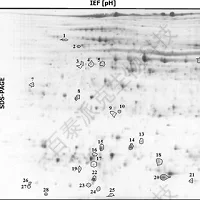
Application of two-dimensional electrophoresis in proteomics
Application of two-dimensional electrophoresis in proteomics
The experimental process of proteomics mainly includes sample preparation, protein separation, and protein identification. Two-dimensional electrophoresis is a classic research technique in proteomics, often used for protein separation. In two-dimensional electrophoresis, proteins in a protein mixture sample are separated based on their isoelectric points and molecular weights, and are ultimately displayed on a PAGE gel after staining. Each protein spot on the gel can then be identified by high-throughput mass spectrometry, enabling the analysis of the proteome. As a protein separation technique, two-dimensional electrophoresis can be used in proteomics to study differential proteins, interacting proteins, and protein modifications, which can help discover disease-related proteins and establish protein databases.
Related services
How to order?




