






Protein Phosphorylation Mass Spectrometry Detection
Mass spectrometry for protein phosphorylation can detect the types and sites of protein phosphorylation, and can be used for quantitative phosphoproteomics research. Biotech company Biotyper providesquantitative phosphoproteomics researchservices.
Protein phosphorylation mass spectrometry
As the name suggests, protein phosphorylation mass spectrometry uses mass spectrometry technology to detect protein phosphorylation. Mass spectrometry analysis of protein phosphorylation includes: identifying the presence of phosphorylated peptides, determining the type of phosphorylation according to the amino acid sequence, identifying phosphorylation sites, and quantifying phosphorylated proteins. Due to the low abundance and wide dynamic range of phosphorylated proteins in biological samples, signals from phosphorylated peptides are easily suppressed by non-phosphorylated peptides. Therefore, before using mass spectrometry to analyze samples, it is necessary to enrich phosphorylated proteins and peptides to increase their abundance. Common methods for enriching phosphorylated proteins and peptides include immobilized metal affinity chromatography and high-affinity antibody immunoprecipitation.
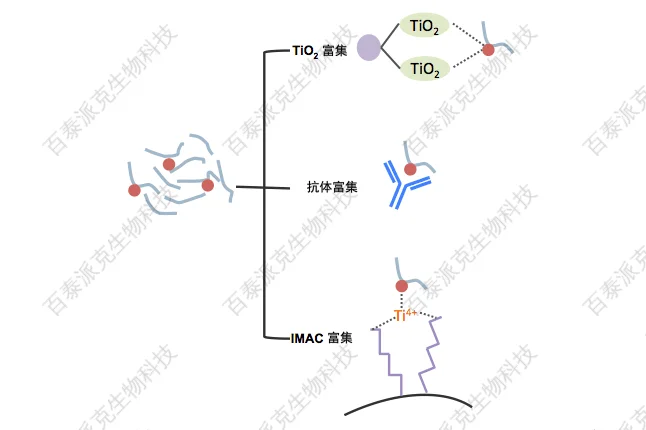
Protein phosphorylation mass spectrometry
Principle of protein phosphorylation mass spectrometry
In mass spectrometry for protein detection, protein is first digested into peptide fragments which are then ionized. Due to differences in mass-to-charge ratios, the peptides are separated in the analyzer, and the protein can be identified by measuring the parameters of the separated peptide ions and analyzing them with software. Phosphorylated peptide fragments are generally unstable and may undergo spontaneous metastable decomposition or collision-induced dissociation in mass spectrometry. When treated with phosphatase, phosphorylated peptides may lose an HPO3 or H3PO4 molecule. These characteristics can be used to identify phosphorylated peptides.
Related services:
How to order?




