






The Difference Between Discovery Proteomics and Targeted Proteomics
Targeted proteomics is typically used following discovery proteomics to quantify specific proteins identified during the discovery screening. Biotech company Bio-Techne offers mass spectrometry-based services for both discovery proteomics and targeted proteomics analysis.
Discovery Proteomics and Targeted Proteomics
The purpose of discovery proteomics is to gather information about all proteins and protein forms in a biological sample. With minimal prior knowledge of the sample, discovery proteomics can identify thousands of proteins and protein forms in a single experiment. It typically involves a small set of samples and maximizes the evaluation of protein quantities within the sample, thereby identifying and quantifying key target proteins across multiple pathways and biological processes. These proteins can then be validated and confirmed using targeted proteomics in a large number of samples focused on a smaller, more targeted set of proteins to illustrate biological differences.
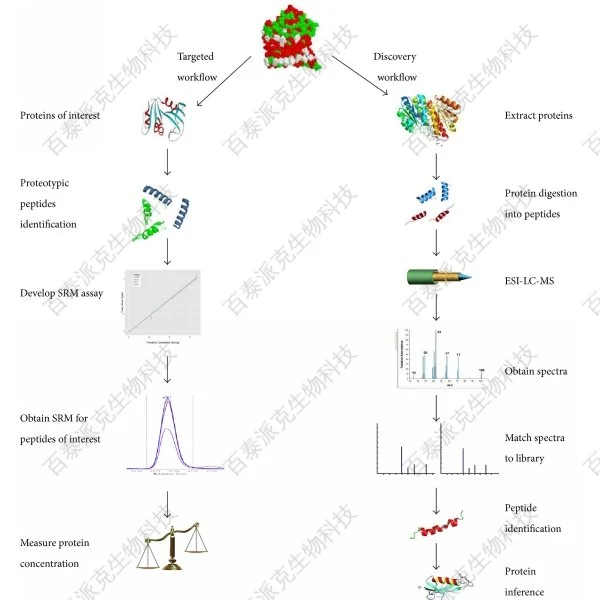
Differences between Discovery Proteomics and Targeted Proteomics
Differences between Discovery Proteomics and Targeted Proteomics
Discovery proteomics optimizes protein identification by spending more time and effort on each sample and reducing the number of samples analyzed. In contrast, targeted proteomics focuses on hundreds or thousands of samples, limiting the number of features to be monitored, and then optimizing chromatography, instrumentation, and acquisition methods to achieve the highest sensitivity and throughput. Discovery proteomics aims to identify and quantify as many proteins as possible over a wide dynamic range, whereas targeted proteomics is typically used to quantify fewer than 100 proteins with very high precision, sensitivity, specificity, and throughput.
Related Services
How to order?




