






DIA Proteomics
DIA proteomics refers to the study of proteomics using DIA technology. DIA has advantages such as high reproducibility and high quantification accuracy. SWATH is one type of DIA technology. Biotech company Baitai Parker providesSWATH quantitative proteomics services.
DIA technology
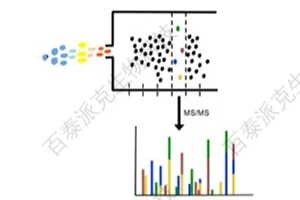
DIA (data-independent acquisition) is a new holistic mass spectrometry data acquisition mode. In DIA, after primary mass spectrometry detection, all precursor ions within a specific m/z range are fragmented, and fragments of all precursor ions are collected. The adjacent wide windows of precursor ions are scanned rapidly in sequence to obtain complete peptide information, greatly enhancing quantification reproducibility. DIA allows for relative or absolute quantification of proteins.
DIA proteomics
DIA proteomics refers to the study of proteomics using DIA technology, including qualitative and quantitative analysis of proteomes. Traditional proteomics research methods, such as iTRAQ, TMT, Label-free, and SILAC, are based on data-dependent acquisition (DDA) techniques. These DDA techniques tend to focus on scanning high-abundance peptides during precursor ion selection, and therefore, only the top 20 most intense signals in the primary spectrum are collected, leading to information loss and poor reproducibility for large sample sets or multi-batch experiments. DIA technology was developed to address this issue. In DIA, all ions within the selected m/z range are fragmented and analyzed in the second stage of tandem mass spectrometry. Compared to DDA quantitative proteomics, DIA offers advantages such as high sensitivity, high reproducibility, and high quantification accuracy. SWATH technology is one form of DIA.
DIA proteomics
Related services
How to order?




