






DIA Proteomics and iTRAQ Proteomics
DIA proteomics is the study of proteomes using DIA technology (such as SWATH), while iTRAQ proteomics is the study of proteomes using iTRAQ technology. Biotech company BGI providesSWATH proteomicsandiTRAQ proteomicsanalysis services.
DIA proteomics
DIA is a mass spectrometry acquisition technique, and DIA proteomics refers to the study of proteomes using Data-Independent Acquisition (DIA) technology. In the DIA mode, the instrument focuses on a narrow precursor ion mass window during each cycle, obtaining MS/MS data from all precursor ions detected within that window. This mass window systematically spans the entire mass range, collecting MS/MS data from every mass and all detected precursor ions. There is no pre-selection of precursor ions, allowing for the acquisition of fragment information from all ions. The most common method in DIA is SWATH. SWATH technology allows for quantitative analysis of sample proteins without labeling, enabling the quantification of nearly all detectable molecules in complex samples.
iTRAQ proteomics
iTRAQ proteomics refers to the study of proteomes using iTRAQ (isobaric tag for relative and absolute quantitation) technology, which is a Data-Dependent Acquisition (DDA) mass spectrometry technique. In iTRAQ, samples need to be differentially labeled with iTRAQ reagents. The same peptide segment from different samples will have identical mass peaks in the first-stage mass spectrometry, and the selected mass peaks are fragmented. In the second-stage mass spectrometry, the same peptide segments from different samples can be distinguished due to differently labeled reporter groups, allowing for quantification based on the intensity of their mass peak signals. iTRAQ proteomics enables the simultaneous comparison of the relative and absolute protein content in multiple samples in a single experiment.
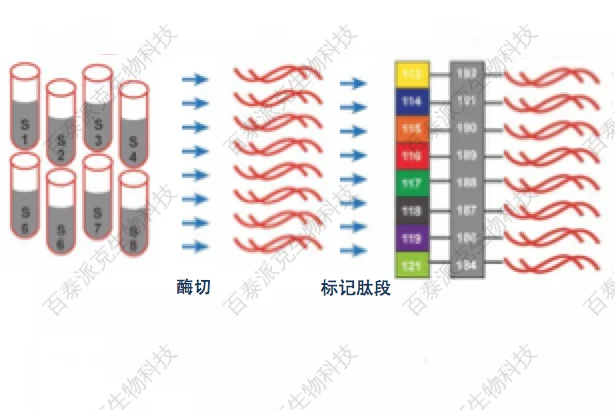
DIA proteomics and iTRAQ proteomics
Comparison between DIA proteomics and iTRAQ proteomics
Compared to iTRAQ, DIA does not result in the loss of low-abundance protein information, provides higher quantitative accuracy, and offers better data reproducibility, but it does not allow for the direct visualization of which precursor ion the fragments in the MS/MS spectra originate from. In contrast, iTRAQ allows for direct observation of the precursor ion origin of fragments in MS/MS spectra and enables simultaneous analysis of multiple samples. Researchers can choose based on their specific experimental needs.
Related services:
SWATH quantitative proteomics services
TMT/iTRAQ/MultiNotch quantitative proteomics analysis
How to order?




