






Applications of Quantitative Proteomics from Experimental Design to Data Analysis
Quantitative proteomics, as a powerful technical means, provides important tools for the research and development of biopharmaceuticals. By revealing the abundance and dynamic changes of proteins, quantitative proteomics can help researchers gain in-depth understanding of drug mechanisms of action, drug metabolism processes, and disease development mechanisms. This article focuses on experimental design and data analysis, detailing the application of quantitative proteomics in the field of biopharmaceuticals, aiming to provide readers with a deeper understanding of this field.
1. Experimental Design
In quantitative proteomics research, reasonable experimental design is a key factor to ensure the accuracy and reproducibility of results. Experimental design should include elements such as sample selection, control group setup, and experimental replication. Sample selection should consider the research purpose and sample characteristics, such as cell lines, animal models, or clinical samples. Setting up control groups can help evaluate differences in protein abundance and eliminate potential interfering factors. Replicated experiments can enhance data reliability and the effectiveness of statistical analysis.
2. Sample Preparation
Sample preparation is a crucial step in quantitative proteomics research. It includes processes such as cell lysis, protein extraction, digestion, and labeling. The choice of cell lysis method should consider cell type and protein characteristics. Protein extraction methods can include solution extraction or precipitation. Digestion is the process of breaking down proteins into peptides, with commonly used digestive enzymes being trypsin and chymotrypsin. Labeling techniques such as isotopic labeling or chemical labeling can introduce specific markers into samples to achieve quantitative analysis of proteins.
3. Mass Spectrometry Analysis
Mass spectrometry analysis is the core technology of quantitative proteomics. Liquid chromatography-tandem mass spectrometry (LC-MS/MS) is one of the commonly used mass spectrometry methods. During mass spectrometry analysis, proteins in the sample are broken down into peptides, which are then converted into ions by the mass spectrometer. Ions are analyzed and quantified in the mass spectrometer based on their mass and charge-to-mass ratio. Through mass spectrometry analysis, mass spectra and peak areas of proteins in the sample can be obtained, allowing the calculation of protein abundance and changes.
4. Data Analysis
Data analysis in quantitative proteomics involves extracting key information about protein abundance and changes from large amounts of raw mass spectrometry data. Data analysis includes steps such as data preprocessing, differential protein identification, and functional enrichment analysis. Data preprocessing is used to remove noise, correct batch effects, and normalize data. Differential protein identification involves comparing mass spectrometry data across different groups to identify proteins whose abundance changes under different conditions. Functional enrichment analysis helps us understand the functional characteristics and biological processes involved with the differential proteins.
The application of quantitative proteomics, from experimental design to data analysis, is a complex and critical process. Reasonable experimental design and sample preparation ensure data accuracy and reproducibility, while mass spectrometry analysis and data analysis reveal important information about protein abundance and dynamic changes. The application of quantitative proteomics in biopharmaceutical research provides us with a window to deeply understand drug mechanisms of action and disease development mechanisms.
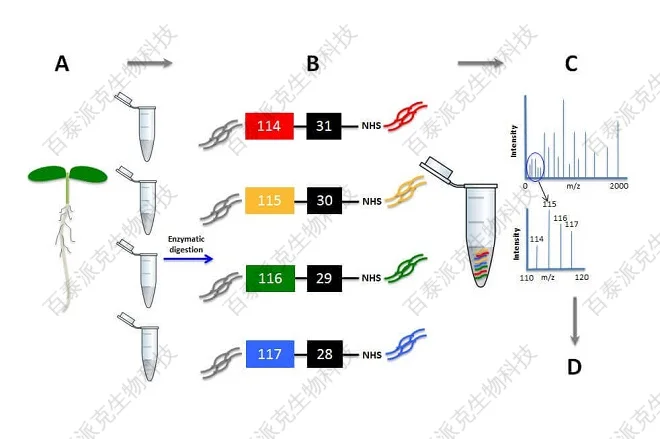
Figure 1
Biotyper Biotech - A premium service provider for bioproduct characterization and multi-omics mass spectrometry detection
Related Services:
Label-free quantitative proteomic analysis
Label-based protein quantification techniques - iTRAQ, TMT, SILAC
DIA quantitative proteomics
Semi-quantitative proteomic analysis
Relative protein quantification
Quantitative proteomic analysis
Quantitative proteomic analysis of post-translational modifications
Peptidomics
Targeted proteomics
4D proteomics
Sample proteomics
Proteomics analysis strategies
How to order?




