






Levels of Protein Structure and Determination Methods
Protein structure is a core area of study in biomolecular research because their structure is closely related to their function. Protein structures are usually divided into four levels: primary structure, secondary structure, tertiary structure, and quaternary structure.
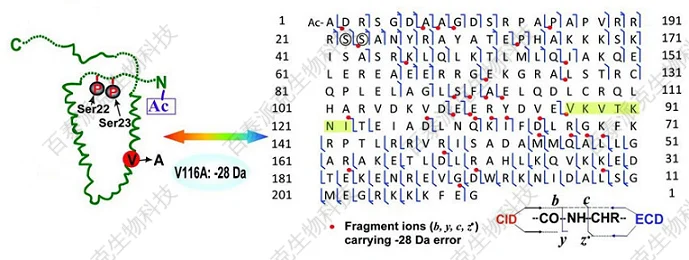
Figure 1
1. Primary Structure:
(1) Describes the amino acid sequence of a protein.
(2) This continuous chain of amino acids is linked by peptide bonds.
(3) The primary structure determines the identity and many biological properties of the protein.
(4) Determination methods:
- Amino acid sequencing: For example, the Edman degradation method can sequentially cleave and identify amino acids from one end of the protein.
- Mass spectrometry: Especially tandem mass spectrometry, can be used to identify and determine amino acid sequences.
2. Secondary Structure:
(1) Describes local folding patterns of proteins, such as α-helices and β-sheets.
(2) These are local stable structures caused by hydrogen bonds formed between the backbone of amino acids.
(3) These patterns provide a framework for the three-dimensional structure of proteins.
(4) Determination methods:
- Circular dichroism (CD): Used to detect the content of α-helices, β-sheets, and random coils in proteins.
- Infrared spectroscopy (IR): Can be used to analyze the secondary structure of proteins.
3. Tertiary Structure:
(1) Describes the complete three-dimensional structure of a single polypeptide chain.
(2) The tertiary structure is caused by interactions between the R groups of amino acids, such as hydrophobic interactions, ionic bonds, hydrogen bonds, and disulfide bonds.
(3) Describes the overall spatial arrangement of the protein.
(4) Determination methods:
- X-ray crystallography: Analyzes purified and crystallized protein samples to obtain high-resolution three-dimensional structure of proteins.
- Nuclear magnetic resonance (NMR) spectroscopy: Obtains three-dimensional structure information of proteins under liquid conditions.
- Cryo-electron microscopy (Cryo-EM): Used to obtain the three-dimensional structure of large molecular complexes.
4. Quaternary Structure:
(1) Describes how multiple polypeptide chains (subunits) assemble to form a complete protein complex.
(2) Not all proteins have quaternary structure. Only proteins composed of two or more polypeptide chains have it. For example, hemoglobin is composed of 4 polypeptide chains.
(3) Determination methods:
- X-ray crystallography and cryo-electron microscopy: Both can be used to analyze the structure of large molecular complexes.
- Gel filtration chromatography and affinity chromatography: Can be used to determine interactions and assembly between subunits.
BaiTaiPike Biotechnology - Characterization of Biological Products, High-Quality Services for Multi-Groups Biological Mass Spectrometry
Related services:
Protein structure identification
Determination of protein primary structure
How to order?




